



My Reading and Writing Journey
A few days before my debut novel ‘Girls Who Stray’ was published, people have been asking me whether I have always been a big reader and writer since my childhood. It’s not something I thought of particularly until now.
Dear poet/writer, we’d love to know you better.
What are you writing?
In prose, you prefer…
To stay informed about articles related to poetry writing,
would you like to get emails from us?
We don’t spam and you can unsubscribe any time.
In prose, you prefer…
To stay informed about articles related to fiction writing,
would you like to get emails from us?
And we’re happy to throw in two free courses, too
We don’t spam and you can unsubscribe any time.
To stay informed about articles related to prose and poetry writing,
would you like to get emails from us?
And we’re happy to throw in two free courses, too
We don’t spam and you can unsubscribe any time.
To stay informed about articles related to non-fiction writing,
would you like to get emails from us?
And we’re happy to throw in two free courses, too
We don’t spam and you can unsubscribe any time.
Was I always a reader? Did I always love books? Did I love characters more than real people? Did their lives affect me more than the lives of those I loved and lived with, and those that loved me back? Or if not more or less, did their lives affect me in at least some significant sense? Where did it emerge from, this love and fascination with language and words and stories and literature? The more I think about it, I realise my fascination with literature always did run deep. I was that kid who preferred the quiet passages of the library over running around with the others or playing hide and seek during breaktime at school. I was the kid who others would come to for book recommendations, and I would spend too much time delving into the stories, characters and plot points with my friends.
Although I read voraciously, I was never a writer. As a child, I never did write stories, except in class when I had to. I enjoyed these writing exercises very much but a general lack of discipline, low self esteem and inability to take a serious plunge and self-belief – that any writing, especially fiction takes – prevented me from doing what I loved. I wrote a diary, I wrote about the boys I liked and did not, my feelings about the school picnic, some stray thoughts on my friends or teachers, but that’s about it.
It’s no surprise then that while I excelled in literature, I was terrible at maths and science, year after year especially as I grew older. I was terrified of the clean abstractions of maths, the pure logic of it. It did not offer scope for empathy. But literature took me deep inside the lives and minds of people living in places I had never heard of, in times far removed from our own. People we would never know, those that were not even real, I had to remind myself. It was like forming the closest friendships one could have and travelling with them through their lives. It was relatable – the mess these characters made of their lives, the astonishing contradictions inside them. Someone could be both happy and sad at once, I realised. They felt real, these people I read about in my literature class, and in books outside class as well.







{Also read Confessions of a First-time Author.}
The eloquence of Shakespeare stirred something in me, even though I never quite understood exactly what was said, I would read speeches from Tempest and Julius Caesar aloud to myself, feeling an instinctive sense of awe and wonder, of higher thought and subtler understanding, a realm bigger, grander, deeper than the one I existed in. My life in suburban Mumbai, our apartment, the drama of my friends and the ordinariness and comfort of my life with my family seemed dull in comparison. How could it not?
When I think back, there was one teacher in particular who made me think like a writer – she showed us paintings by Van Gogh and gave us an exercise to write an essay imagining we were Van Gogh in the last 24 hours of his life. We listened to Neil Diamond songs and wrote essays about them. Through these exercises, I realised you could make the leap of imagination, you could leave yourself behind, become someone else, as many someones as you wanted to, and strive towards authenticity while doing so. It was thrilling, there was nothing else quite like it.
Literature expanded me, showed me life is much deeper than we think it is, people are far more complicated and interesting than they themselves are aware. Before I realised it, I was applying, or projecting these ‘lessons’ that literature showed me, to my life. I would look at my friends and family, talk to them and think, but what are they really thinking? Surely there’s something more to what they’re saying. What are their dreams? Do demons plague them on a Thursday at 4am? I suppose in these questions lay the instinct somewhere of a novelist, of digging below the surface of life.
{Wondering how Indian writers can get published in UK/USA? We got you covered.}
Studying Literature
So I suppose it’s also natural I would go on to do my BA and then MA in English Literature and Popular Culture. I was lucky to be in one of the best colleges for humanities in the country – St Xavier’s in Mumbai, and then Mumbai University with excellent professors. Those few years were some of the best of my life – class discussions revolved around topics as wide as French New Wave cinema, postmodern critical theory – Derrida and Foucault, modern Egyptian fiction, even a beautiful novel called ‘Ceremony’ about a broken native American war veteran. My life became as wide as the whole world, and zoomed deep inside the minds and torments and loves of the interesting characters I read.
After my degree, I considered working in publishing, after meeting a friend who was working with a big traditional publisher in Delhi. Reading books for a living? What’s not to love. It seemed perfect and glamorous. I moved to Delhi, did a course in publishing with National Book Trust and worked in Navayana, and later Yoda Press and at the Yodakin Bookstore. I later worked with Namita Gokhale on the bookshow Kitaabnama: Books and Beyond and several literary projects, including the Jaipur Literature Festival.
How Girls Who Stray began and my writing journey
Although it was all very stimulating, none of this propelled me to write, until a bad breakup, and the ensuing period of loneliness and heartbreak. Initially my ideas were very vague – I knew I wanted to write about heartbreak and pain and explore it in the context of larger gender inequalities. I wanted to write about female desire and longing, but to do it in among these broader currents of patriarchy and misogyny. I also knew I wanted to write about modernity – what it feels like to feel out of place in this very fast-paced world of globalisation and technology that seems to upgrade every thirty seconds, what it feels like to be left behind. To have all the world’s privilege at your fingertips, and be paralysed and confused precisely because of this.
I wanted to work into the narrative these vague, dissipated feelings about modernity. To identify these feelings, to know what they were and what they were not, because I sensed this sense of overwhelm in everyone around me as well, and it seemed like an important thing to do.
I wanted to write about the distances within a family across generations, but also the deep love and kindness within families, of hope, resilience and a sense of wonderment for life.
Ambiguous, wide themes about everything and nothing. It’s rare that a novel is ever born with the writer saying, okay I want to write about x and y and z and then she sits down to write it. It’s a far messier, more confusing, more fragmented process full of uncertainty and doubt. You don’t know what you’re writing till you’re halfway through, or more.
{Check out Writing Notes from 40+ published authors and editors – how our first draft club helps writers.}
There’s a story I read where someone asks a novelist if they should become an investment banker, or a writer. And the novelist responds – if it’s a choice, then become a banker. Because, and I too believe this, there has to be something bigger than you compelling you to write, something that says, this cannot be lost, something that says, perhaps other people experience this too in the recesses of their minds, or in the light of consciousness – put it down, make something of it, but write, let it not be lost, even if it doesn’t matter to anyone but you in the moment, or ever.
I write and think in ‘scenes’: once I put a sentence down, this leads to the next sentence, then the next, and I can literally ‘see’ the scene, and feel the emotions of the character as I write. It’s a thrilling feeling, the moment one is not conscious one is writing at all, but simply chasing something that feels just out of reach. It’s a slow-burn marathon, as Murakami says.
For me, the novel became a refuge, a safe space to reflect on various feelings and ideas emerging from experiences and situations of my life – through friendships, partners, family, life in new cities and a new country. But it was not just a safe space I realised – that would be a journal. A novel was a fertile grounds to make something, to shape something of those feelings, to meld it into the life of the young protagonist I wrote about, implicated in a crime, something I had never experienced, and see what these feelings mean to her, what she does with it, if it means anything to her at all. A kind of refracted mirror.
But then I realised, why would anyone care about the musings of a lonely young urban woman? There has to be something solid that makes the reader care, propels them to move forward. And for it to not read like a personal essay or academic piece. So although I had a lot of vague ideas, and pages of such ‘scenes’ exploring these themes, it took me a long time to realise I could do this through the narrative of a psychological thriller. Like a lot of people, I devour true crime shows and documentaries, and thrillers. There is something challenging in writing thrillers, and therefore exciting, precisely due to the challenge it throws up. To build up suspense, drip by drip, to know how much information to give, and when. Not too much, not too little. There’s something delicious about this cat-and-mouse like process.
So I wrote about the crime and it’s based on a case that took place in Delhi nearly twenty years ago. It’s only after writing it that I realised what I was writing about was inequality, because the case brought into stark relief the inequalities in our country and unequal access to mechanisms of justice.
{Finished your first draft? Check out Manuscript Editing 101: A Checklist to see if you are ready.}
So finally I began to string the threads together into a coherent narrative. All of this weaving, cutting out the irrelevant bits (and it is hard to know what is relevant and what isn’t a lot of the time), and inserting the narrative into the pieces which read more like an essay, converting them to fiction and allowing them to flow with the rest of the story took a very long time.
And voice. Voice is everything. But what is voice? It’s a strange thing, but once you get it, you get it. It’s like you enter the mind of your character and start seeing the world and story through their eyes. My thoughts are normally all over in my head, anxious, insubstantial, weightless. So the first person narrative, told with a voice that is edgy, sharp, specific gave me a sense of control. I felt like I was holding onto the reins of a wild horse I could manoeuvre.
Overall, I took around eight years on the book! That is a huge amount of time. But for several years in the middle I gave up on the manuscript, I got dejected, busy, caught up with other aspects of life. But some nagging, persistent voice would not allow me to let it be. And so I got back to it and bit by bit built on it. It was the single thread of my life during a lot of upheaval, changes in location, and jobs and personal situations.
On getting an agent and publisher
After a lot of frustration and tears, a rejection from a wonderful editor who initially found the novel to have a fresh voice, after useful feedback from a literary agent, negative feedback from an author friend whom I idolise (she said you’re trying too hard to be a writer. Go back and cut out the excess and stop trying to be so literary. Just be.) So I went back. I realised how much was overwritten. What could be said in three sentences, I was saying in twelve. So I cut out, cut to the essence, let every page move the plot forward. I cut and fretted, I tried very hard to just be. I wrote, wrote some more, more tears and frustration, and then I finally sent it to a few agents in October 2023. I heard back from Jacaranda a few weeks later. I was ecstatic. They made very useful editorial suggestions and I cut down a lot more (nearly 40,000 words!).
The following April, they pitched my novel to Bloomsbury India. The editor liked my book and wanted to acquire it. I soon signed the contract and the book was published on 18th November.
{Get published in India: This nine point checklist will help if you are looking for a guide to get published.}
On Marketing your novel
Being a writer and author are two different roles. I am now navigating the world of marketing, forcing myself to get out of my shell (which lets face it, a lot of writers have an introverted side, it’s hard to stay holed up in your room for years, caring deeply about imaginary characters, if you aren’t).
I am thrilled to have a wonderful agent and editor who have since become my friends and are hugely supportive. As some friends have told me, having a good editor is key. Someone who will champion your work and cares about it. I think this is especially true for fiction where the journey is so emotional.
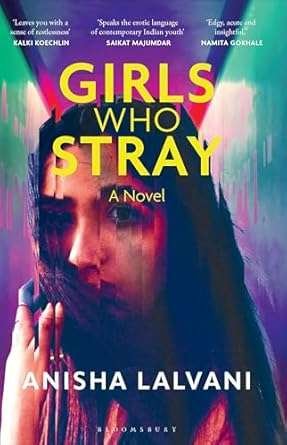
I am grateful to have had Malvika Tewari work on the cover. She has just got the essence of the book. The girl whose fragmented face is half covered by her hair, and the pop neon colours gives the cover an intriguing quality and I have received amazing feedback on it. It has truly been a collaborative process – between the publisher, agent, myself and the designer and overall everyone is very happy with the cover.
I am blessed to have the excellent marketing team at Bloomsbury – from sending the book to bookstagrammers and traditional media houses (digital and print), to building a social media campaign, to supporting events and book signings and supporting connections with appearances at literary festivals. Since I have worked in the literary field myself, I am also using the networks I have built to promote the book.
As much as your agent and publisher loves and is invested in your book, no one could know or care about it the way you do. So go out there and talk about it, promote it, don’t be shy! People want to know about your book and meet you. I am currently connecting with local book clubs and reading groups across Mumbai (discovering the thriving reading culture in this fast-paced city, especially among young people is heartening). It’s quite amazing that something that was so strange and ambiguous in your head for so long, now has a marketing deck to it and a team working on it. I cannot imagine what it’s like for script writers and writers whose novels get made into films, how surreal that feeling must be. People are asking me if I will pitch this as a film. But a novel such as this, which is literary in the sense of having a limited plot, and is psychological and thematic, is hard to make a film of. Nevermind how incredibly competitive and difficult it is for scriptwriters anyway. And I feel like a novel is everything. It is enough, in and of itself.
{Royalties, ethics and publishers – the case of Vinod Kumar Shukla gives you an interesting insight into the Indian publishing scene.}
Since this book has been picked by a publisher, my confidence has naturally increased. And today,I am sure that writing fiction is something I will always do. I am currently working on a novel about marriage, identity and politics. It might be years before I finish it but I am slowly chipping away at it, as I navigate the equally exciting space of promoting my first. Every morning I look forward to getting at least a few hundred words in before the day ends, and if I don’t do this I feel my day has been wasted, even if I might have completed all my tasks on my day job.
I have realised through this process, and listening to the great writers today – those such as Shobha De and Pico Iyer that writing is not a passion, or hobby, or vocation. It’s really a way of being alive, a lens through which one negotiates and lives in this world. And now that I have started this journey, I know there’s no going back.
Himalayan Emerging Writers Group
Earlier this year, I was so thrilled and honoured to be selected for the first batch of Himalayan Emerging Writers, as part of the Residency to work on my second book. I will always cherish the beautiful and quiet room, stunning mountain views, close friendships and support and community. The writing community fostered by the HWR and their support of Girls Who Stray is something I truly am grateful for.
My debut novel Girls Who Stray is available on Amazon here and in a bookstore near you.
One Response
This is an incredibly candid and masterfully structured chronicle of the ‘creative endurance’ required to navigate the modern literary landscape! I was particularly struck by how you’ve demystified the transition from private manuscript to public shelf—moving beyond the romanticized ‘writer’s life’ to expose the ‘professional architecture’ of agenting, editing, and the persistence of the publishing journey. Your breakdown of the specific nuances of literary fiction is a brilliant and necessary roadmap for any author looking to understand how to balance high-level craft with the practical realities of the industry.
I especially appreciated your focus on the ‘internal growth’ that happens during the revision and submission process; you’ve framed the path to publication not just as a career milestone, but as a high-level masterclass in resilience, humility, and artistic integrity. This isn’t just a blog post; it’s a technically rigorous, yet deeply soulful toolkit for the ‘aspiring novelist’ seeking to find their voice in a crowded marketplace. Thank you for providing such a clear, authoritative, and vital guide to the beautiful, grueling marathon of bringing a story to life!