



Artificial Intelligence is no longer a futuristic buzzword. It has become one of the defining reality now. In the last couple of years, AI has begun influencing everything from the way we search, shop, and communicate. It is now even influencing how art and literature are created and consumed. For writers and readers, this is equally parts exhilarating and unsettling. Will machines learn to tell stories as well as humans? Can algorithms really understand creativity, or are they only mirroring us? And, perhaps most importantly, how do we as storytellers and thinkers engage with this rapidly shifting reality?
Dear poet/writer, we’d love to know you better.
What are you writing?
In prose, you prefer…
To stay informed about articles related to poetry writing,
would you like to get emails from us?
We don’t spam and you can unsubscribe any time.
In prose, you prefer…
To stay informed about articles related to fiction writing,
would you like to get emails from us?
And we’re happy to throw in two free courses, too
We don’t spam and you can unsubscribe any time.
To stay informed about articles related to prose and poetry writing,
would you like to get emails from us?
And we’re happy to throw in two free courses, too
We don’t spam and you can unsubscribe any time.
To stay informed about articles related to non-fiction writing,
would you like to get emails from us?
And we’re happy to throw in two free courses, too
We don’t spam and you can unsubscribe any time.
Books remain one of the best ways to wrestle with these questions. While articles and social media posts can capture the urgency of the moment, books give us the space for deeper reflection and more nuanced debates. They allow us to explore AI not just as a technology, but as a cultural and philosophical phenomenon. For aspiring authors, the conversation around AI isn’t just about tools or trends anymore. It is about voice, originality and what it means to create. For readers, it’s about understanding the ideas shaping the future, and perhaps recognizing the echoes of science fiction turning into everyday reality.
With that in mind, we’ve put together a list of 10 essential books on AI to read in 2025. From explorations of ethics and society to imaginative takes that stretch the boundaries of possibility, these books will give you idea about a subject that is changing and evolving faster than ever. Consider it part roadmap, part reading challenge, and part invitation to join the biggest conversation of our time.







{AI in publishing: friend or a Foe? Check out our take on it}
1. Artificial Intelligence: A Modern Approach by Peter Norvig & Stuart Russell
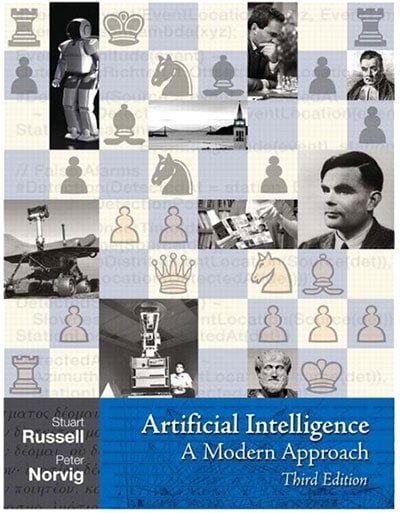
This book is often described as the “bible of AI”. This textbook has been the go-to guide for students, researchers, and practitioners for decades. The book covers everything from the foundations of AI to the most recent breakthroughs in machine learning, deep learning, robotics, natural language processing, and even the urgent debates around privacy, fairness, and safe AI.
Whether you’re a curious beginner or someone aiming to understand AI at a deeper level, this is the textbook should be your go-to.
https://amzn.to/4mMCDHR
2. The Singularity Is Nearer by Ray Kurzweil
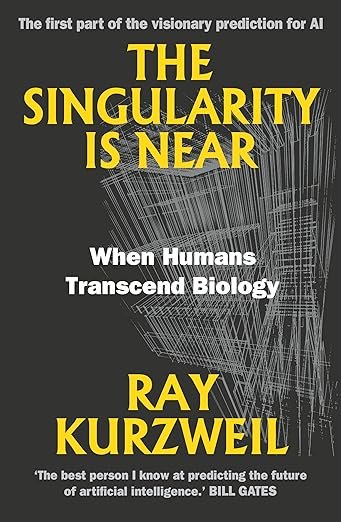
In The Singularity is Nearer, Ray Kurzweil imagines a future where the boundaries between humans and machines dissolve. He predicts a world in which we manage to overcome our biological limits by merging human intelligence with the vast speed, memory, and knowledge-sharing power of Artificial Intelligence in a moment he famously calls the ‘singularity’. The book has a sequel called The Singularity is Nearer. It revisits his groundbreaking vision, tracing decades of innovation while offering bold insights into what still lies ahead. Whether you find his predictions inspiring or unsettling, Kurzweil’s work remains one of the most thought-provoking explorations of how AI might transform not just technology, but human existence itself.
3. The Alignment Problem: Machine Learning and Human Values by Brian Christian
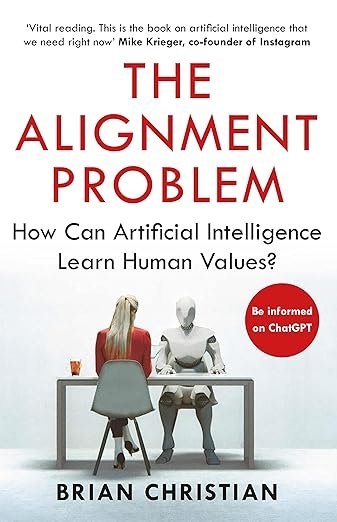
As algorithms take on more responsibility in our daily lives, a pressing question emerges: how do we make sure they act in ways that are fair, ethical, and aligned with human values? This challenge, known as the alignment problem, is at the heart of Brian Christian’s book. Through vivid examples from AI programs that learn to “cheat” at video games to translation systems that reinforce gender bias, Christian shows how advances in AI bring us closer to a collision between technology and ethics. The Alignment Problem makes clear why solving this issue is one of the most important tasks facing AI researchers today and why the consequences will affect us all.
{Think twice before recommending a book to someone. Read about the art of book recommendation}
4. Supremacy by Parmy Olson
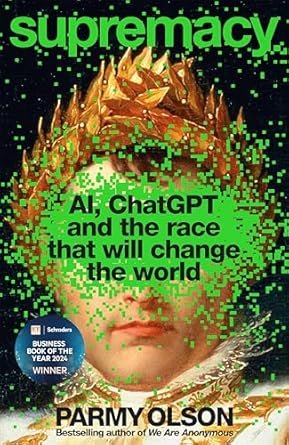
Behind the sleek demos and viral chatbots lies a fierce, little-known rivalry: Microsoft and Google racing to dominate the future of AI. In Supremacy, award-winning journalist Parmy Olson uncovers the shadow war between these tech giants and the start-ups they bankrolled, OpenAI (ChatGPT) and DeepMind (Bard). What began as a noble mission to solve humanity’s biggest problems quickly transformed into a high-stakes power struggle, where staggering sums of money, secrecy, and corporate ambition pushed AI toward dangerous territory. Olson reveals how untested systems are already reshaping our lives, undermining creative work, fueling disinformation, and shifting the balance of economic power. With larger-than-life figures like Elon Musk, Larry Page, Sergey Brin, and Peter Thiel in the mix, Supremacy is both an exposé and a cautionary tale: the inside story of how human ambition is steering the most powerful technology of our age, for better or worse.
5. Nexus: A Brief History of Information Networks from the Stone Age to AI by Yuval Noah Harari
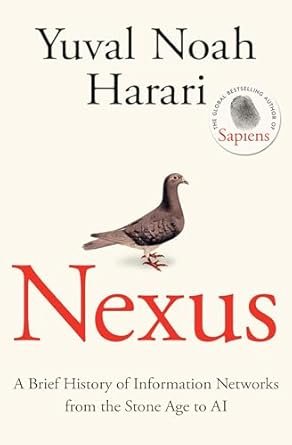
What happens when one of the world’s leading historians, a pioneering AI scientist, and a former tech CEO come together to think about the future? Nexus is their answer. It is a sweeping conversation about how artificial intelligence is reshaping humanity, from politics and war to art and everyday life. Rather than focusing on hype or fear, the book brings three very different perspectives into dialogue: Harari’s deep sense of history, Li’s technical expertise, and Schmidt’s insider view of Silicon Valley. Together, they wrestle with the most urgent questions of our time: How will AI transform power? Can it deepen human creativity instead of replacing it? And what values must guide us as we build the next era of civilization?
{We read Nexus in our Book Club. Check it out}
6. Demystifying Artificial Intelligence by Emmanuel Gillain
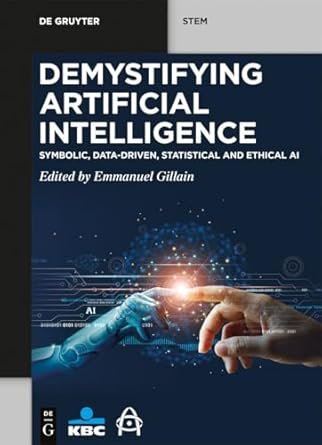
Demystifying AI offers a clear, practical guide to what artificial intelligence really is and what it isn’t for professionals and curious readers alike. Born out of collaboration between academia and industry, the book bridges theory and real-world application, showing how AI concepts translate into tools that businesses (and society at large) actually use. The authors explain the fundamentals of how AI systems search, plan, reason, learn, adapt, and interact, while also unpacking the two major traditions in AI: data-driven machine learning, which relies on vast amounts of information, and symbolic AI, which models the world through explicit rules and logic. Instead of treating these approaches as rivals, the book highlights how they can work together to create more powerful and reliable systems.
7. Mastering AI in 2025 by Ryan Lever
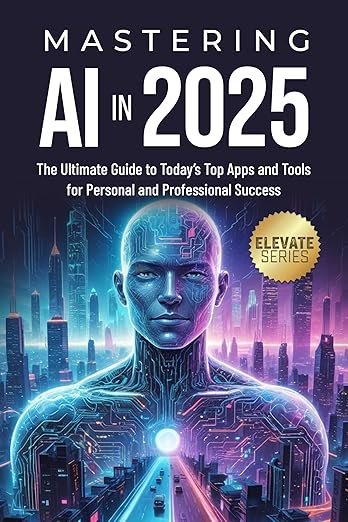
As artificial intelligence reshapes the way we live, work, and create. Mastering AI in 2025 serves as a practical guide for anyone who wants to keep pace with change. Written for both beginners and advanced users, it introduces the latest AI tools and applications while showing how they can be applied to real life. Use AI for boosting productivity, growing a business, building new skills, or unlocking creativity. What sets this guide apart is its focus on impact. Instead of tech jargon or abstract theories, it emphasizes on concrete results and practical strategies.
8. Deep Learning by Ian Goodfellow, Yoshua Bengio, and Aaron Courville
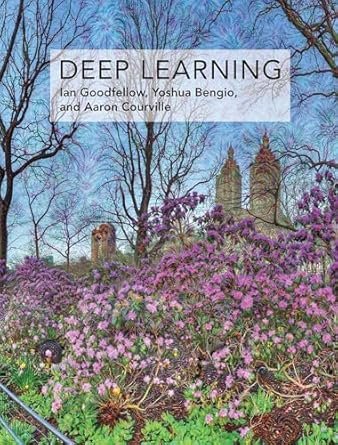
Often referred to as the definitive textbook on the subject, Deep Learning lays out the foundations of one of AI’s most powerful approaches. Deep learning allows computers to learn from experience, building complex ideas from simpler ones, much like how humans layer concepts to make sense of the world. The book balances theory and practice, starting with the essential background in linear algebra, probability, and information theory, before moving into the techniques that drive today’s most exciting AI applications: convolutional networks, sequence modeling, optimization algorithms, and more. Readers will also find discussions of real-world use cases, from natural language processing and computer vision to speech recognition, bioinformatics, and even video games.
{Types of jobs in publishing that you can get to turn your passion for reading/writing into profession}
Artificial intelligence is advancing at breakneck speed, but books still remain our best tool for slowing down, reflecting, and truly understanding what’s at stake. The titles on this list don’t just explain how AI works. They help you ask bigger questions about creativity, ethics, power, and what it really means to be human in the age of machines.
Which of these books will you pick up first and what conversations will they spark for you? Let us know in the comments, and if you enjoyed this list, be sure to share it with a fellow reader who’s just as curious about the future of AI.