



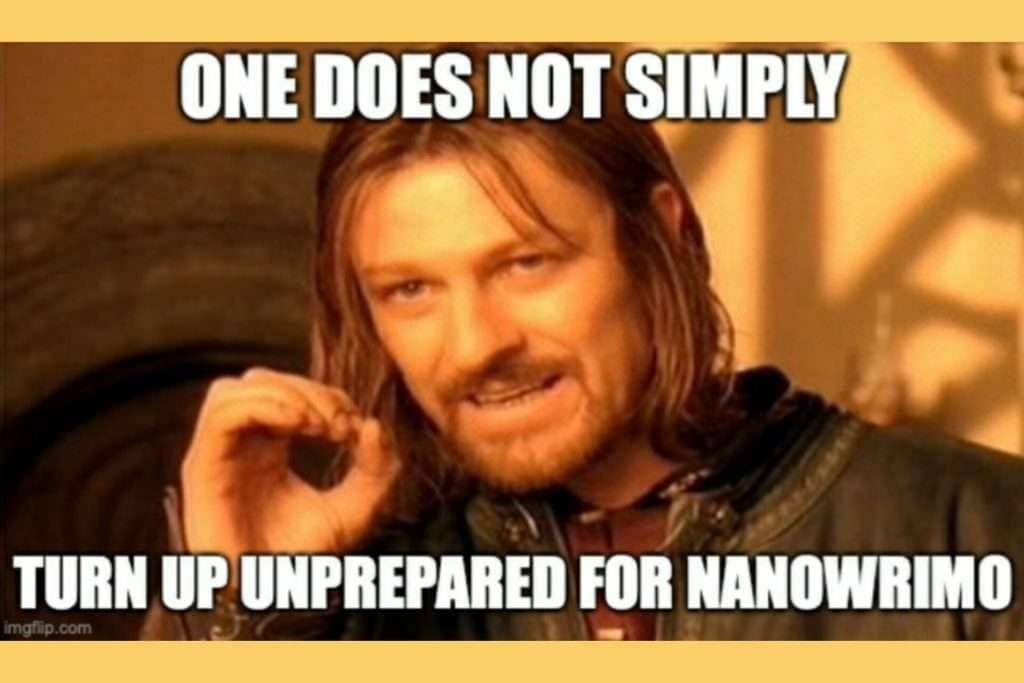
If you are working on a manuscript and considering whether to join something like First Draft Club hosted by The Himalayan Writing Retreat or NaNoWriMo, let us guide you on how to prepare for NaNoWriMo.
Dear poet/writer, we’d love to know you better.
What are you writing?
In prose, you prefer…
To stay informed about articles related to poetry writing,
would you like to get emails from us?
We don’t spam and you can unsubscribe any time.
In prose, you prefer…
To stay informed about articles related to fiction writing,
would you like to get emails from us?
And we’re happy to throw in two free courses, too
We don’t spam and you can unsubscribe any time.
To stay informed about articles related to prose and poetry writing,
would you like to get emails from us?
And we’re happy to throw in two free courses, too
We don’t spam and you can unsubscribe any time.
To stay informed about articles related to non-fiction writing,
would you like to get emails from us?
And we’re happy to throw in two free courses, too
We don’t spam and you can unsubscribe any time.
NaNoWriMo, also expanded to National Novel Writing Month, is the month in which an aspiring novelist finally gets that book down and writes to the end, to the bone. The idea is to really finish that novel. In the same spirit, we at HWR conduct First Draft Clubs every alternate month where novelists across the world come together to give their writing a boost.
We particularly enjoyed providing writing prompts in November 2022 to help the participants. You can check out more details of the event here.







The simple truth is that finishing a whole novel in a month is a herculean task. Most of the people who join the write-your-novel-in-a-month boat usually capsize. Those who skim to the shore live to tell their tale. And when they do, we find that there is a method to madness – there are ways to prepare for NaNoWriMo.
The biggest mistake that people make when they come to the NaNoWriMo is that they do not visualize what this task means every day for a whole month. Participating in writing sprints and reaching your goal significantly alters one’s routine. They need to be able to visualize the number of hours that will go into making a 65k-word manuscript a reality. All this visualization comes naturally when you do these following things a good while before your writing month starts.
How to prepare for NaNoWriMo
- Find out if you’re a Panster, Plotter or a Planster
It is said that one is either a panster in writing or a plotter. While one does not know this to be entirely true because writers come in all shapes and hues, still this simple distinction works for succeeding in NaNoWriMo.
A panster is someone who is said to write by the seat of their pants. They write in the moment and when the moment comes to them. The term is mostly applied to novelists and fiction writers. They do not plan beforehand and let the writing come to them. This is a great way to write a lot and some pantsing is part and parcel of a healthy creative process. A plotter is opposite to the panster – they outline and plot their works, the subplots, the little-big character traits, and even their words. They are spacial and visual thinkers who like mapping and establishing and then filling in the worlds with words. A planster is something in between, kinda like the best of both worlds. These writers have some vague ideas of what is the plot, the aesthetic, the characters but still leave room to make drastic, sudden changes in the plot or sequence of events. All these different avatars of writers have some benefits and also some limitations. Pansters can frequently end up in dead ends and might have to put a lot more work into rewriting their drafts. Plotters sometimes find it hard to break-through in prose creatively. If their plot has loopholes which are recognized later in the process, a lot of subplots can fall flat.
Knowing which one you are helps you get ready beforehand about what your process is going to be. It is always good to have some ideas about how a month of writing your dream novel is going to look like.
- Research beforehand, Write now.
If you’re preparing for NaNoWriMo to write it all down within the time frame of a month, then you have no time for research. All and any type of research, especially the big parts, should be done beforehand. This is because research can take a lot of time especially if one counts all the rabbit holing. One cannot even entirely quit the rabbit hole because it is what makes research exciting and thorough.
If you do your due diligence before joining the NaNoWriMo or any other writing sprint, you will be able to push over more words than ever. It is even advised that you write without an internet connection, maybe offline google docs, so that you simply do not get distracted. Even if you feel the need to google or find something that you feel is entirely crucial to your work, do it in your non-writing time. This way you will be able to get that hard text out on the page. It will also generate a list of areas within the novel where you need further research to seal the text. It will allow you more streamlined research during the editing phase or second draft.
- Sort out Logistics for the Month
If you want to write a novel in a month, then you need to clear out everything else of prime importance from that month.
Let your friends and family know that you are finishing your novel’s first draft this month and that you will not be able to attend any dinners or brunches scheduled for said month. If you have upcoming travel during the month, especially consuming travel, delay if possible. The idea is to wake up every day where the main awareness is that of the work. Figure your groceries, meals, cooking times etc according to your day’s schedule. Your first priority for the month should be getting to your word count for the day.
- StoryBoard Visually
Storyboarding is something that filmmakers do much more than writers. But we at HWR see no harm in borrowing this very helpful method from our fellow creatives. What one needs to do is help your brain visualize what your setting and characters will look like.
Storyboarding can be very simple. It could be in the form of a big chart paper in your workspace with a detailed flowchart about what happens in different chapters. It could be a document containing the overall themes, ideas, character sketches. A storyboard is only different from the outline in the sense that it is in front of you, on a chart paper at all times and contains directional marks, some words circled, some crossed. The idea is that it is more visual because our brain responds to visual cues more coherently.
The story boards can also be much more visual like a board with a lot of pictures and images, it can even be a Pinterest board (if one fancies Pinterest) with all sorts of costumes, room ideas, color schemes etc. that one could want for one’s characters and settings. So get some sketch pens and big white chart papers or sheets and simply get to it. Your NaNoWriMo will go seamlessly.
If you are a Romance writer, we have some tips for you here.
- Kill the Editor in You
Just like research can significantly delay the production of a full first draft, so can your internal critic or editor. The editor’s natural urge is to go back and read again while correcting each word, every feel of the sentence, the tonal quality of the prose. The editor is slow and doubtful, which is the opposite of the requirements of a writer participating in NaNoWriMo. In order to write more than 50,000 words in a month’s frame, one has to be fast, write in the heat of the emotion, and not care about consistency, tonal quality or character inconsistencies. Get it all down on the paper for yourself, you have plenty of time to edit it over the course of the next few months. There is nothing better than the feeling of holding a fresh first draft in your hands. It is the feeling of hope.
You can always take the help of a professional editor once you have completed your first draft and we have a list of 56 Editors in India for Fiction & Non-Fiction ready for you.
- Setting Your Table and Other Daily Rituals
The last but not the least, what will probably help you on a daily basis is simply having some pre-writing and post-writing rituals. One of my favorite ways of getting ‘in the zone’ is wiping my table dust off with a moist towel, arranging my books, note books, pen, paper and laptop on the table, and preparing myself a cup of quality medium-dark roast.
You can also have some stretching rituals throughout the writing process, and a few snacks on the table. Do whatever you have to, to make sure that you have no good reason to get up from your writing desk for the next two to three hours. When you finally close the desk for the day, make sure to have a tall glass of water, maybe listen to a piece of music, shut down all the unnecessary tabs on your laptop (shut them all down for a total fresh start), and then shut your laptop for the day. You could do anything! The idea is to set up some unconscious routines so that the brain naturally takes the cue: it’s time to write.
If you need a bit of a refresher on the types of creative writing, we have a post about 17 types of creative writing that may help you.
Conclusion
Events like NaNoWriMo and the First Draft Club are great opportunities to get it all out on the paper, finish that nagging long draft and convert an idea into reality. It is also an opportunity to convert the solitary act of writing into a one where you have a sense of fellowship and community which comes when you know that there are others in the same boat as yours. The aforementioned tips and ideas will help you prepare for NaNoWriMo and First Draft Club efficiently. Do your research beforehand, quieten the inner critic and line editor, get some healthy snacks for munching between the sprints, hype yourself up well before the month and don’t doubt.