



Why is this so?
The answer is simple. Writing – while brutally difficult – can be easier than selling. Many authors don’t generate enough demand for their books.
Fortunately, if you plan a bit in advance, these statistics can be in your favour. The road can be difficult especially for first-time authors, however if you plan your book launch and marketing well, your book sale numbers will look up.
Caveat : We’re assuming it is a decent book to start with.
At Aurelius Media, I have worked with several published authors from publishers such as Penguin Random House, River Heads, Harper Collins, Bloomsbury, and more. I’ve worked with the likes of Karan Bajaj (200,000+ books sold), Ira Trivedi (4 high-selling books) and many others. And, I’ve learnt a lot of lessons along the way while promoting the books I’ve promoted.
There are some strategies that are very effective. And, there are some which are not. In this article, I am going to break down what you should be focusing on to promote your books.
“It is not daily increase but daily decrease, hack away the inessential.” – Bruce Lee
Build Your Audience
Let me be honest here. It’s much easier for an influencer with 350k audience to sell the first 5000 copies of a book than a first time unknown author. Having an email list of 10,000+ subscribers with a book relevant to your audience’s interests can help you a lot in selling your first few thousand copies as well.
A writer with an reachable audience has a greater chance of success than one without. However, even if you have a built-in audience, you still need to learn how to leverage those audiences for maximum effectiveness.
And, what if you don’t have a reachable audience or a mailing list? There is no need to fret. We’ve worked with authors who had <1000 followers and have sold 50k copies as well. There are always outliers, and alternative marketing strategies that can take your online book marketing to the next level. And, we’re going to cover some of those as well in the post.
Advance Review Copies (ARC) (Pre-Launch)
Sending Advance Review Copies (ARC) is basically a pre-publishing exercise. An advanced review copy is the manuscript which has not been published yet. It could be your first draft or it could be your final draft depending on the stage you’re at in your publishing and marketing efforts.
Sending advanced review copies (ARC) helps you build early buzz around your book and a very important tool of online book marketing strategies. Basically, you have a team of people who have read the book, and are ready to post their reviews on platforms like GoodReads or Amazon on the launch day or earlier. Here are the places where you could consider sending your advance review copies to:
Friends, Family, Colleagues: These are the people that may have supported you early in your book publishing journey. This is the easiest set of people in ARC to approach.
Journalists: Getting a journalist to review / feature your book can be difficult, but incredibly rewarding. If you could get a piece written on magazines such as “Outlook” or an article on “The Hindu”, it adds a lot of credibility to your book.
Book Reviewers: You can send your advance review copy to notable book reviewers or authors in the similar genre. They might be willing to help.
GoodRead Readers: GoodReads has a passionate community of readers. Hosting giveaways with GoodReads and reaching out to reviewers on the platform can prove to be valuable.
Influencers or Book Bloggers: Conduct thorough research to ensure that you’re targeting the right influencers and book bloggers. The target audience of the influencer needs to match the target audience of your book.
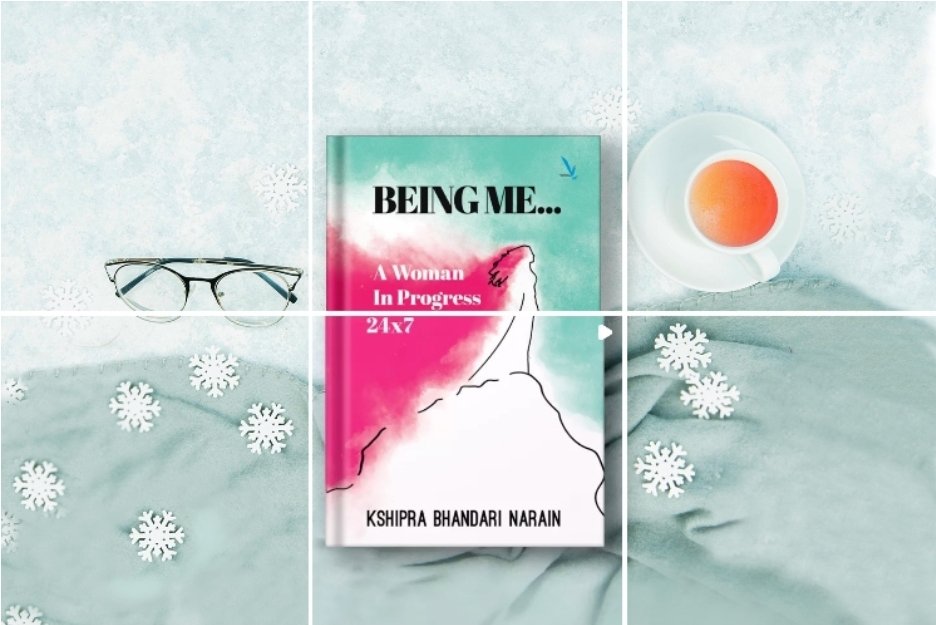
Mailing List (Handpick People): If you have a mailing list, then you can leverage your mailing list and ask people to reply to an email where you offer them an advance review copy (ARC).
Social Media Followers: You can send out a tweet, or post a story on Instagram that you’re trying to get early reader feedback for your book. And, they can DM you if they’re interested in getting an advanced copy.
Getting 50-150 reviews on the launch day or launch weeks should be your goal. Advance Review copies (ARC) can prove to be very effective in getting early reviews and helping build an early buzz around your book.
Mailing List (Pre-Launch + Post Launch)
“The average ROI from email marketing is about $38 per $1 spent” – Campaign Monitor
Having a mailing list can prove to be very effective for your online book marketing efforts. The mailing list you have can be used in both pre-launch (ARC) and post-launch book marketing efforts. Growing a mailing list can take a significant amount of time and effort (however, there are ways to grow your mailing list fast).
The fastest way to grow a mailing list is to give the audience a useful resource for free. A lot of authors on their personal website post an offer on a landing page which the reader can sign up for.
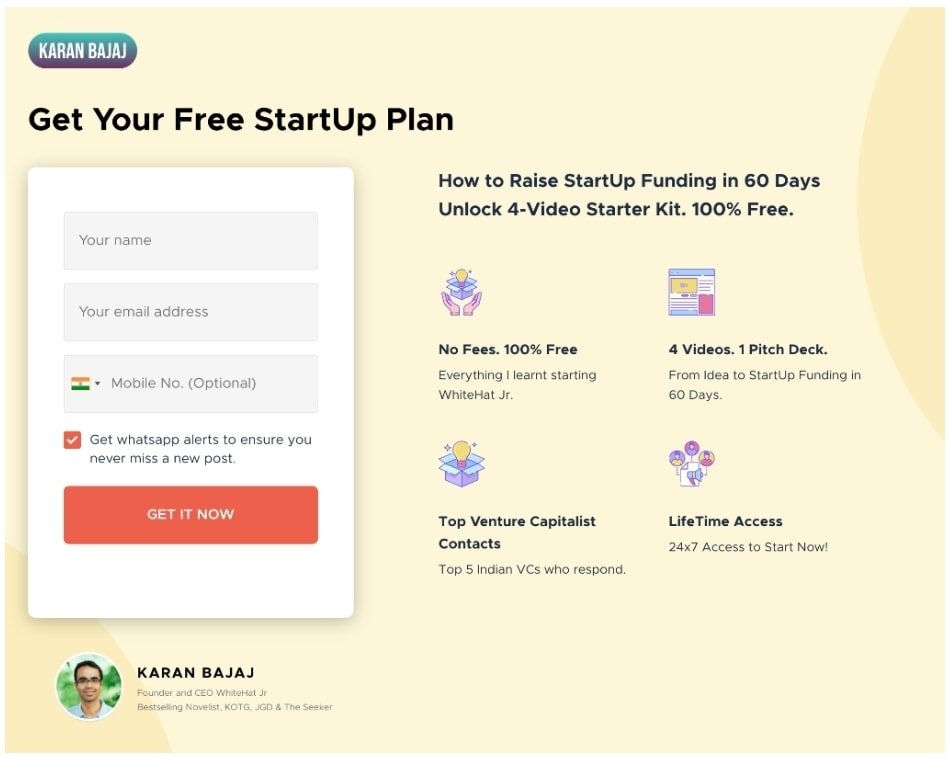
Aside from building a high converting landing page, establishing trust and credibility with your mailing list is extremely important.
Delivering value upfront (useful resource) and regularly engaging with your mailing list with useful content is the key. For every ten emails you send, nine should contain valuable content, while only one should focus on promoting yourself. By maintaining this ratio, you build trust and credibility with your subscribers, ensuring a more engaged and loyal mailing list.
Once your book launches, promote it to your mailing list. Incentivise them (e.g. – free bonus digital download) to get a copy of your book. In the future series, we are going to cover in-depth on how you can develop your mailing list.
However, here are some ways you can use to grow your mailing list:
Offer a Free Resource: Offering a free resource such as cheat sheet, e-book or even a free preview of your book could help in increasing subscribers.
Host a Giveaway: An amazon gift card, signed copy of your book or a paid course? Be careful with giveaways though. In my experience its a double edged sword. Sometimes, people sign up just because they want to participate in the giveaway.
Leverage Social Media: Promote your free resource / mailing list on your social media. Share teasers of the content subscribers can expect. You can also participate in relevant communities offering valuable insights
Include Opt-In Forms on Website: Place opt-in forms strategically throughout your website. However, in my experience, having a dedicated landing page about your book / free resource with an opt-in form works best.
Paid Advertising: Paid advertising is a very powerful approach to build your mailing list rapidly. Last year, we helped a client gain 20k subscribers via paid social ads within a month’s time frame. We will elaborate on this a bit more in this article.
Book Trailer for online book marketing:
Creating a captivating book trailer can help generate buzz and drive sales by creating interest in the book. A book trailer is often similar to a movie trailer with the aim to capture viewers attention by using compelling visuals, audio and script that will make the viewers want to read the book.
When creating a book trailer, keep in mind the following tips:
Focus on the hook: The first few seconds of your trailer are very important, having a strong hook ensures that you have engaged your viewers from the very beginning. A strong hook will create a sense of anticipation and intrigue that will carry the viewer through the rest of the trailer, and hopefully, leave them eager to learn more about your book.
Keep it short: Ideal trailer length for a book hovers between 60 seconds to 2 minutes. Do not exceed the two minute mark with your book trailer. With longer trailers, you risk losing the audience’s attention.
Engaging Visuals: The last thing you want to do is bore your audience. If your trailer doesn’t start off strong, and lacks engaging visuals, your audience will scroll right through you. If we’re being honest, we’ve seen way too many poorly edited DIY trailers. Investing in high-quality visuals and thoughtful editing can leave a lasting impression on viewers and entice them to explore your book further.
Tell a Story: A story is what hooks the viewers and makes readers curious about your book. A good story establishes a connection between the reader and the book. The story can be told in different ways: through narration, text, dialogue, animation, music, sound effects or images.
Here are some examples of trailers that tell a story:
Some examples of book trailers that tell a story are:
- These Infinite Threads by Tahereh Mafi: This trailer uses animation and narration to create a dystopian world where people are divided by their threads of fate.
- The Betrayed by Kiera Cass: This trailer uses live-action footage and dialogue to show a royal romance gone wrong.
- Concrete Rose by Angie Thomas: This trailer uses music and images to show the life of a young black man in a gang-ridden neighbourhood.
And, here’s my personal favourite:
Finish Strong: Lastly, your book trailer should leave an impact on the viewers and want them craving for more. You want to end your trailer with a bang, and not a whimper. A good ending should do three things: introduce a twist, create suspense, and call to action.
Paid Advertising:
What is Book Advertising and How is it Different from Book Publicity?
Book publicity is the process of generating media coverage and word of mouth without paying for it. You get book publicity through journalists, book reviewers, book bloggers, interviews, mentions, endorsements, awards etc. The main goal of book publicity is to create awareness and interest for your book and establish credibility for you as an author.
Book publicity is often earned by you and your publisher, and sometimes slow to create traction. Reaching out to newspapers, radio, journalists, TV, podcasts etc. is an amazing way to generate buzz about your book. However, it is a time consuming process and publishers are not always efficient about the whole process.
Enter Book Advertising
Book Advertising is the complete opposite of book publicity. It is efficient, it is fast, and gives you greater control over marketing your book. Book advertising gives you instant access to millions of readers through platforms such as Google and Facebook Ads.
While book publicity focuses on building author credibility and awareness, book advertising primarily aims to drive sales. Social Media channels such as Facebook and Instagram give a wide range of targeted audience options.
While book advertising has immense benefits in terms of reach, scale, control and immediate results. Not all book campaigns are created equal.
Running a successful book advertising campaign requires specialized knowledge and careful planning.
Here are some tips to help you get the most out of your book advertising:
Set Your Goals and Budget: You need to define your primary goals from the book campaign. Are you looking to build more awareness, engagement, grow your mailing list, get reviews, pre-orders or boost book sales? Then you need to decide how much you’re willing to spend and how you will measure your return on investment (ROI).
Define Target Audience and Messaging: You need to identify who your readers are. You need to identify your readers interests, their goals and aspirations, as well as their pain points. Based on this, you need to craft a compelling message that will appeal to your target audience. Here’s an example of a reader persona of someone who’d be interested in a self help book:
Name: Priya Age: 32 Location: Bangalore, India Occupation: Aspiring entrepreneur, currently working as a software engineer
Background: Priya is a tech-savvy professional working in a leading software company. Despite having a stable job, she dreams of starting her own business in the near future. She is constantly seeking ways to improve her skills, knowledge, and personal development.
Interests:
- Entrepreneurship and startups
- Technology and innovation
- Personal growth and self-improvement
- Productivity and time management
- Networking and mentorship
- Work-life balance and mindfulness
Goals:
- Find a unique and impactful startup idea
- Learn how to navigate the startup ecosystem
- Develop leadership and management skills
- Achieve personal growth and balance in life
- Successfully launch and grow a business
Pain Points:
- Uncertainty about how to develop a winning startup idea
- Limited knowledge of the startup funding process
- Struggling with time management and work-life balance
- In need of guidance from successful entrepreneurs
Choose Your Platforms and Channels: Now that you have defined your objectives, figured out your reader persona and messaging. It’s time to choose the right advertising platform to reach your customers. You can find your audiences on these platforms:
- Facebook: With over 2.8 billion active users, Facebook is a great platform to reach your target audience. Facebook Ads offer you various targeting options such as age, location, interests, behaviors and more.
- Instagram: Instagram is the go to platform of Gen Z, and millennials. Ads on Instagram are managed through Facebook Ads (Meta) platform. Same advanced targeting options as Facebook are available for Instagram. Since Instagram is a more visually-driven platform, a well crafted video ad or a carousel ad could help you effectively reach your target audience.
- Twitter: While Twitter is not the best platform when it comes to paid advertising, the platform can nevertheless be used to drive email subscribers. If you have a giveaway that solves a customer need, then twitter paid ads can be a great platform to promote the giveaway.
- Amazon Advertising: Amazon ads offer an opportunity to reach millions of readers who are already in the mindset to purchase books. You can promote your book on Amazon through sponsored product ads, sponsored brand ads, and display ads.
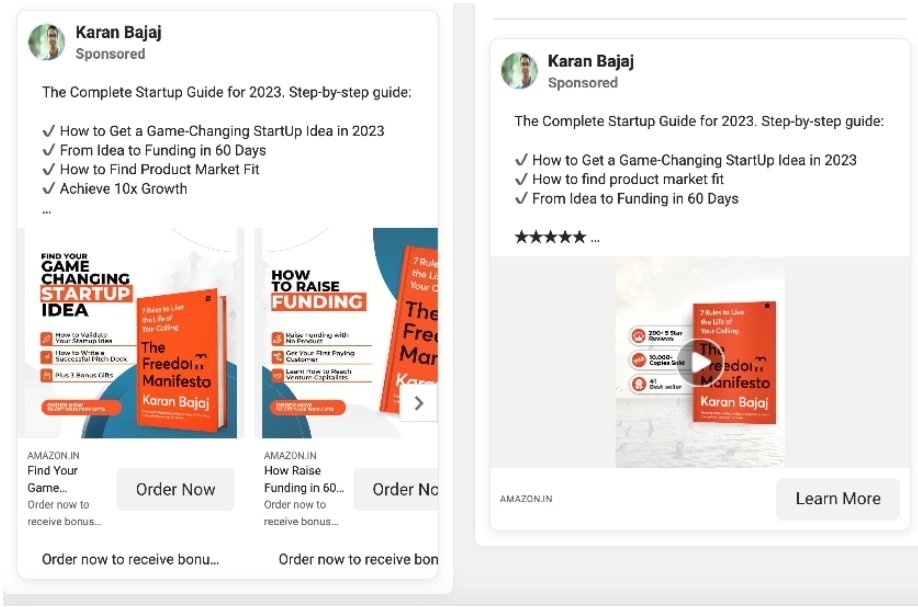
Create and Test Your Ads: Just like how we highlighted that a great “hook” is required to capture your audience’s attention, in a similar way your book advertising graphics and copy need to be eye-catching and persuasive. Invest time in designing visually appealing and professional-looking ads, and write compelling ad copy that resonates with your target audience.
To maximize the effectiveness of your ads, you should test different versions of your ad copy, images, and targeting options. Keep track of your ad performance and make data-driven decisions to optimize your campaigns. A/B testing is a great way to identify which ad variations work best for your audience.
Optimize Your Campaigns
There are multiple things that need to be looked into while optimizing an online book marketing campaign:
- Creative Performance: Which ad is driving more engagement? Suppose you promoted 3 videos, which video resulted in lowest cost per acquisition or highest engagement?
- Audience Performance: If you have multiple audiences in the campaign, A/B test those audiences against each other to optimize performance
- Placement Performance: Facebook Ads offer multiple placement options such as Facebook Newsfeed, Instagram Newsfeed, Instagram Stories, Facebook Audience Network and more. It is essential to check time to time which placements are driving effective results.
- Engagement: Testing audiences and creatives for engagement is a crucial indicator in the beginning stages of the campaign
- Optimize for KPIs: Metrics like click-through-rate (CTR) and cost per click (CPC) are important and worth looking into. However, they’re not the sole indicators. A lower CPC does not necessarily mean better ad performance.
Youtube Ads (Advanced)
If you have a significant marketing budget for your book, then Youtube Ads are worth looking into. Youtube has over 2 billion logged-in monthly users, making it an excellent platform to reach a wide audience. With Youtube Ads, you can target users based on their interests, demographics, and viewing habits.
There are various ad formats available on Youtube, such as:
- In-stream ads: These are video ads that play before, during, or after other videos on Youtube. Viewers can skip these ads after 5 seconds.
- Discovery ads: These ads appear alongside related Youtube videos, in the search results, or on the Youtube homepage.
- Bumper ads:These are short, non-skippable video ads that play before a viewer’s chosen video.
- Outstream ads: These are mobile-only video ads that appear on partner websites and within apps. They play automatically with sound off and can be a cost-effective way to reach a wider audience.
Some tips for successful Youtube Ads:
- Create engaging and high-quality video content that captures your audience’s attention within the first few seconds.
- Use clear call-to-actions (CTAs) to encourage viewers to take the desired action, such as visiting your website or purchasing your book.
- Test different ad formats, targeting options, and video content to find the most effective strategy for your book promotion.
- Monitor your ad performance and make necessary adjustments to optimize your campaigns.
While Youtube is a great advertising platform, we do not recommend it to first time authors or novice advertisers. Google Ads targeting criteria and ad platform is complex and if you don’t know what you’re doing, it is easy to lose your money fast and not see any results. We recommend to get professional help if you are looking into Youtube ads.
One Final Tip
Although Facebook advertising is highly intuitive and user-friendly, it’s essential to stay updated with the platform’s latest features, best practices, and algorithm changes. Regularly monitor your ad performance, learn from your results, and continuously refine your strategies to make the most of your online book marketing efforts.
If your budget permits, get professional help from qualified individuals or book marketing agencies who specialize in book marketing. They will not only help you navigate the complexities of various ad platforms but also bring in their expertise and experience to create effective and result-oriented campaigns for your book promotion.
In conclusion, advertising your book on various platforms can significantly boost your book sales and help you reach a wider audience. Invest time and effort in understanding your target audience, crafting compelling ads, and optimizing your campaigns to maximize your online book marketing success.
Happy advertising and best of luck with your book promotion journey!
6 Responses
abhijit.raychaudhuri@gmail.com
Interesting
Would like to speak with Mr.Ayush Pant.
Dear Ritu, nice to connect with you. Towards the end of the article is the link to my linkedin profile and website. You can also email me at ayush at aureliusmedia dot io
Excellent!
We have 20 International Books to popularise for Training Programs in the Indian Learning & Development space