

Covid and Travel Update
In the last few months things have improved rapidly. Both the US and India has very high levels of vaccination. Omicron seems a low severity variant.
International flights and travel is also resuming country by country. At the Himalayan Writing Retreat, we now have writers traveling to the retreat from all over the world. We have had writers visit us from the UK, and writers from the US and the middle east.
Given all the above, we expect the International Writers Retreat in April 2022 to proceed on schedule after a two year gap, but with full covid precautions. If you’re itching to escape, find a muse and see the world again, read on. We’re looking forward to yet another fantastic retreat in 2022.
“Life is not what one lived, but what one remembers and how one remembers it in order to recount it.”
— Gabriel Garcia Márquez
To shake up your writing, you need to take a big leap out of your comfort zone. Chances are, your writing will follow.
The Himalayan Writers Retreat is that big leap. This retreat is designed to stimulate and inspire you. It is thoughtfully put together by authors from India and the US.
Author and teacher, Paula Younger, has labored to bring deep learning and insight to each session at this retreat. Paula is an award winning teacher from the Lighthouse Writers Workshop (profile below). Chetan Mahajan – a memoir author and writing coach – will support her. A graduate of Northwestern University, he is a Penguin published author and an award winning blogger.
“
This week at the Himalayan Writing Retreat has been an incredible combination with communion with other writers, nature, culture, inspiration, yoga and self-reflection. In this week I have nearly completed a brand new short story and I’m totally inspired …
Michelle Sleater
/ Denver
“
The Himalayan Writing Retreat has been an awesome experience. Every detail has been taken care of for us from the minute we arrived through to our trip and journey here. We have been able to see some extraordinary pieces of nature wonderful aspects of Indian culture and really bring all of this into our writing.
Kelly Ziegler / New York
“
My experience of the Himalayan Writing Retreat has been unprecedented. Its been an incredible mix of immersion into a new culture, learning different writing skills – bringing my writing to a new level….
Ann Gronowski / Florida
Our team has designed the retreat to ensure the experience is safe, enriching and inspiring. The retreat begins with a warm welcome for each participant at Delhi International airport. We ensure the visit to the Taj Mahal is smooth. We’ve personally curated the Himalayan excursions and the city experiences like the old city walking tour. We’ve sampled the food everywhere, and have designed the menu to ensure a great mix of taste and local cuisine. In past retreats nobody has fallen sick – a big deal for tourists in India. The HWR team has kicked every proverbial tire.
You start in the cities of Delhi and Agra. Then you travel to the Himalayas. All stays and transfers are pre-arranged. The serenity of the rural Himalayas is a stark contrast to the touristy India of the first two days. In the mountains, you continue to discover a sliver of India everyday, but at a relaxed, unhurried pace. Up here, you write in the halo of Himalayan peaks which dwarf Mt. McKinley. If you have questions about India , click here to read our India travel FAQs.
When: 31 Mar – 10 Apr, 2022
Who: The workshop is led by Paula Younger & Chetan Mahajan . (For instructor profiles, click here or scroll down.)
Where: The Himalayan Writing Retreat, Satkhol Village. Uttarakhand – 263138 (India). Details here.
How much : USD 2800 all inclusive.
The price includes all classes, yoga sessions, transfers, in-country travel, hotel stays, retreat accommodation, food and tips. However, we do not cover any personal expenses such as shopping, visiting places on your own, extra nights before or after the retreat etc. Alcohol is not included in the price, but you can grab some at Duty free or at a local store.
Full day-by-day program details shared below.
Only ten participants accepted on a first-come first-serve basis. To apply, click the button below.
Detailed Program
Each day has been meticulously planned. We plan on having craft classes/topics each day for 2 hours, in addition, we’ll have a manuscript review with the teachers (1-2 manuscripts a day). Except for the writer of manuscript being reviewed, other writers are free to write at that time.
Day 1, Mar 31, Thursday
Welcome! Arrive at Delhi Airport anytime after 12 noon on the 31st of March. A car and a friendly face will meet you at the airport and bring you straight to your hotel. Your stay is arranged at the Tree of Life, one of Delhi’s best B&Bs (TripAdvisor reviews at https://bit.ly/1Ofm5BI ). In addition to being highly rated, the Tree of life is close to three of Delhi’s largest malls – a great place to shop and spend time getting to know India’s crazy diversity in a safe environment.
No class on this day.
Today, we’ll get settled and then do an ice breaker to get to know one another better. Everyone will have submitted and read the manuscripts for our workshop before arriving in India. Each morning we’ll do a generative writing exercise and then dive into our class.
Note: Most flights land in Delhi at unearthly hours. If your flight gets in before noon on the 31st of March , we will still meet you at the airport and take you to your hotel. We’ve also negotiated a great room rate at which you can stay for an extra night. Please confirm your travel itinerary to us at the earliest so that we can book accordingly.
Day 2, Apr 1, Friday
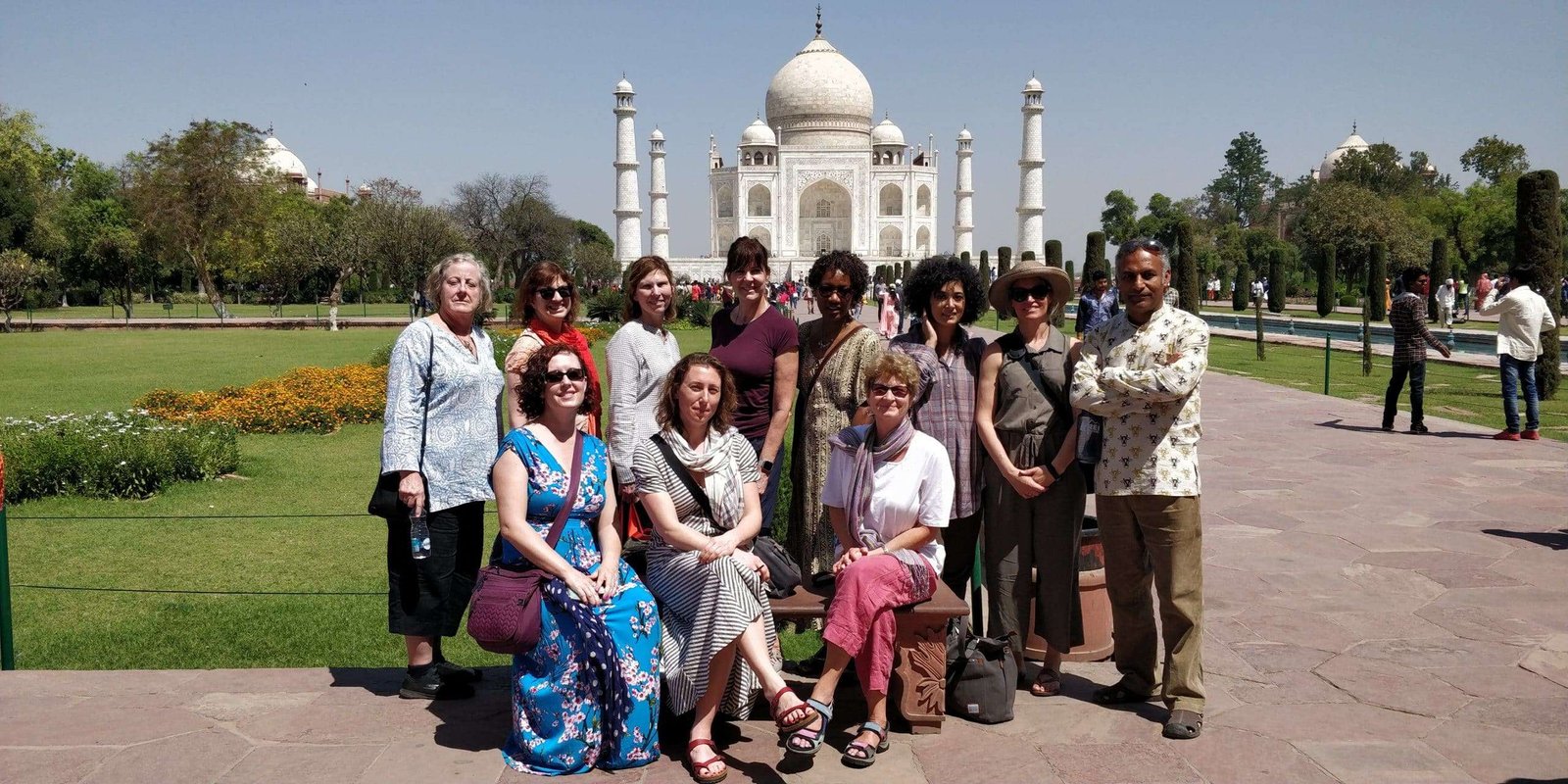
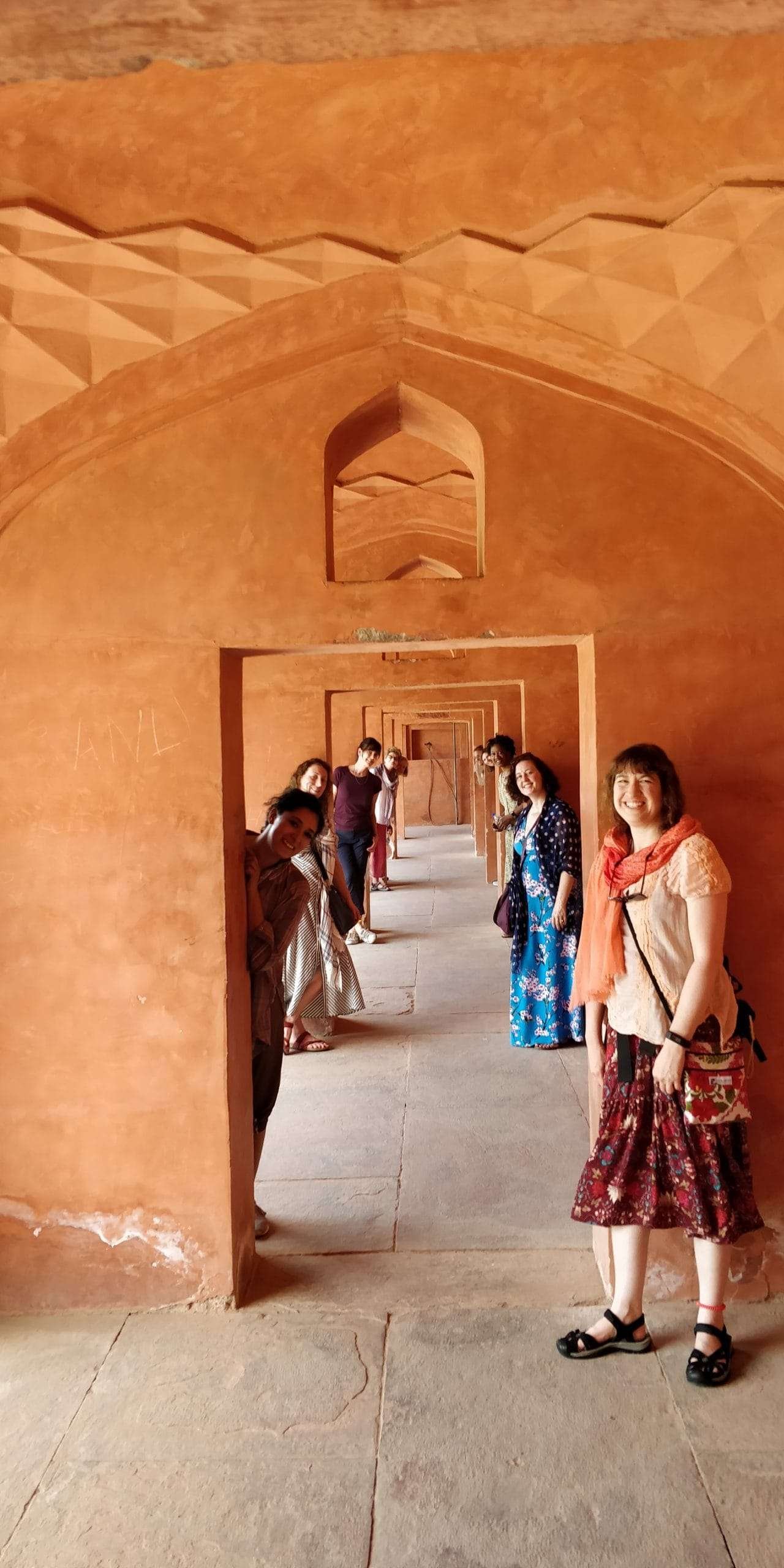
This love story inspired a wonder of the world.
We start the day early and drive to Agra in a private coach to see the Taj Mahal. The four hour drive from our hotel will allow you to rest or sleep off some of your jet-lag.
We will try and get back in time for a short session on travel and writing soon after. The round trip will take a full day.
Lunch will be at one of the highly rated restaurants in Agra. We will have dinner and stay the night at our Delhi base.
Topic of the Day: Observation and Specific Detail (no workshop)
The liminal state of travel (and even jet-lag!) is perfect for observation—you’re extra-sensitive, raw, and open to experiencing your new surroundings in a more passive and receptive way.
Today, we’ll take advantage of any discombobulation to practice openness to specific sensory detail via close observation of the world around us.
Over breakfast, you’ll receive brief instruction on our observational tasks for the day, designed to enrich and expand upon your experience at the Taj Mahal.
After we return, we will reconvene over dinner to discuss our observations and tools for using those specific details in our writing during the days to come.
Day 3, Apr 2, Saturday.
Off to the Mountains!
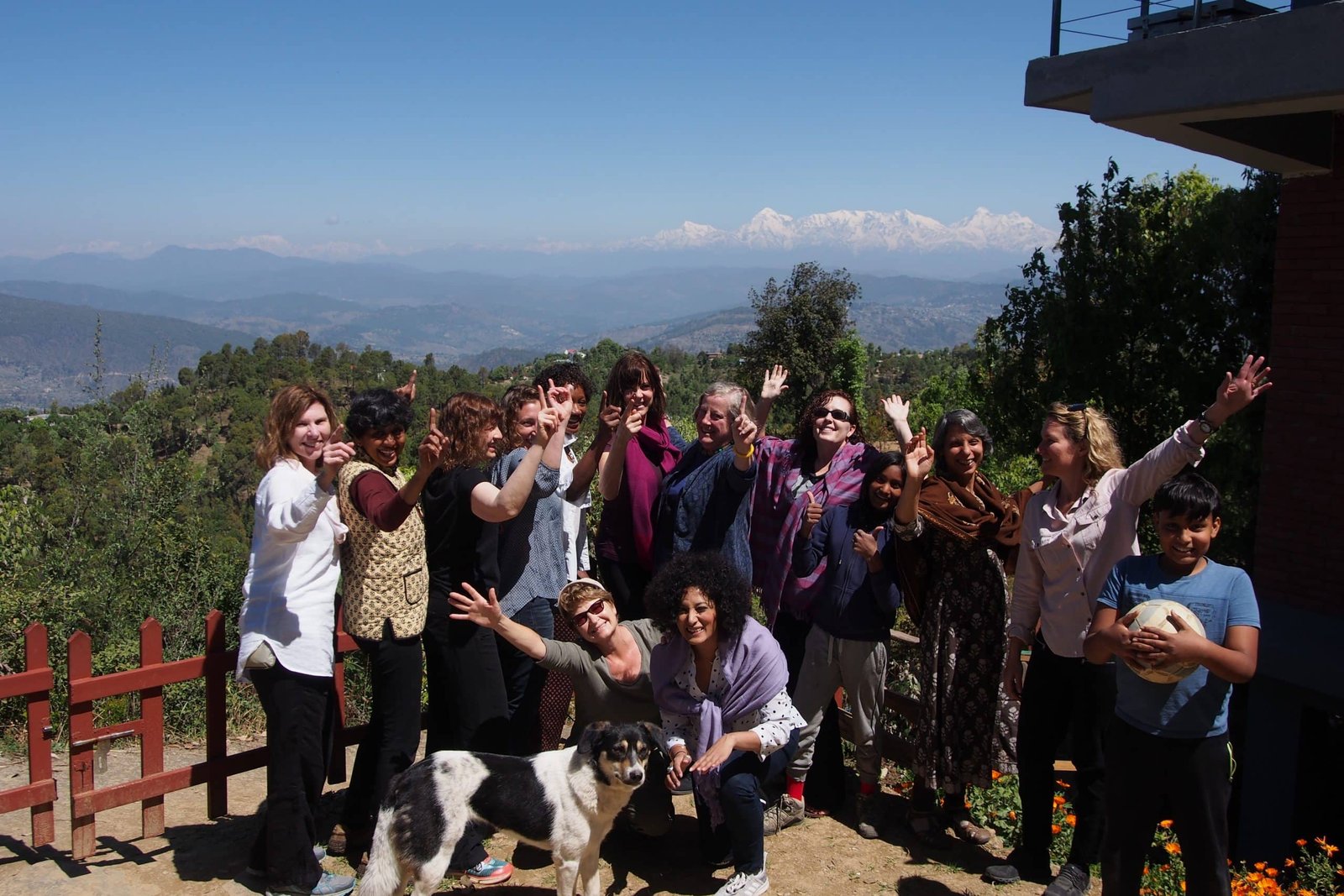
We head out early and board the train from New Delhi Railway Station to head towards the Himalayas. We board the Kathgodam Shatabdi Express train and travel First Class to the town of Kathgodam (5 hours and 40 minutes). This is where the mountains start. We transfer to taxis for the last three hours of our travel. Halfway home, we stop for lunch at the iHeart café owned and run by a couple from Bozeman, Montana (really!) who specialize in awesome coffee. We arrive at The Himalayan Writing Retreat (THWR) in Satkhol Village – our home for the next seven days.

The Himalayan Writing Retreat is custom-built for Writers. It is built for inspiration and serenity. This niche property has six double-occupancy guest rooms and a full staff to cater to your needs with love and the highest standards of hygiene. The food is tasty, fresh and includes a lot of local cuisine. And while we have pasta on the menu, it may have an Indian tinge. We grow many of our own herbs, fruit etc.
We reach the Retreat around 4 PM and have a short session in the evening where we discuss our plan for the next few days.
Topic of the Day: What’s Your Story?
You can have polished, beautiful prose, but it won’t get you anywhere unless you are writing the right story. We’ll examine successful fiction and memoir passages from writers who have used the subjects that they are passionate about to create impossible-to-put-down stories. We’ll also try out exercises to make sure we’re on the right path to create the story that we were meant to tell.
We will also use excerpts from Vivian Gornick’s The Situation and the Story. According to Gornick: “Every work of literature has both a situation and a story. The situation is the context or circumstance, sometimes the plot; the story is the emotional experience that preoccupies the writer; the insight, the wisdom, the thing one has to say.”
Please note: Throughout we use the term ‘story.’ This applies to both fiction and narrative non-fiction.
Fiction and Narrative non-fiction use the same craft elements, and the same story shapes. Writing is where we can find the meaning of what really happened to us (or what we imagine for our characters). In nonfiction writing, we have to make ourselves into characters. You are, for the story’s sake, a static character in time. We stick to the truth (and emotional truth) of the event, but we are still creating a story, a felt experience.
The big difference, of course, is that in fiction we can make things up and in nonfiction, we stick to what actually happened. But you still have to be selective with which details and scenes you choose to write. We are a supportive group and we will do everything we can to help you create the story you are meant to write.
Day 4, Apr 3, Sunday
- Early Morning: Yoga session (evening session available, based on demand)
- Morning: workshop sessions and craft class at the Himalayan Writing Retreat.
- Afternoon: an optional trip to the local NGO run Chirag School and a social enterprise (http://b2r.in/ ). For those interested we can walk back – it is a 2 mile walk through the forest.
- Evening: Open Mic Bonfire after sundown.
Topics of the Day: Structure and Pacing
We’ll analyze plot, and the different ways we can use it with our structure and pacing. We will discuss story arcs and ways to push our characters into conflict. Every character (and person) has a breaking point. Once we find it, we increase the tension in our fiction and nonfiction. We’ll study successful breaking points in stories and memoir, and then we’ll do some exercises to push our characters to the places they don’t want to be, and find our characters (and stories) in the process. (When we use the term ‘character,’ this also applies to memoir and the person we put on the page. We will also study Philip Lopate’s “Writing Personal Essays: On the Necessity of Turning Oneself Into a Character” to help us make ourselves into characters in our nonfiction writing. This also helps with fiction character building, especially if using 1st POV.)
Consciousness means community—even the most reclusive among us need human interaction and relationships. How do we relate to each other in both sympathetic and antagonistic ways? How do we relate to groups of people, cultures, and social systems, as opposed to how we relate to individuals? How do those relationships and interactions promote narrative growth and change? We’ll study aspects of narrative relationships, and continue the learning during our (optional) visits to the local elementary school and non-profits.
Day 5, Apr 4, Monday
- Early Morning: Yoga session (evening session available, based on demand)
- Morning: optional hike & write. After breakfast we head out for a short hike to a nearby temple on the hilltop. Along the way we stop and write sitting on a ridge in the pine forest.
- Late morning/lunch: Workshop and craft class at the Himalayan Writing Retreat.
- Afternoon – open time at the Himalayan Writing Retreat, or explore the forest reserve.
- Evening: Bollywood movie night. It’s kitschy, yes. But it is part of the India experience. So we watch a Bollywood movie with English subtitles. And popcorn.
Topics of the Day: What Is Your Place in the World?
“There are no general stories. One doesn’t hear general stories as a therapist. One hears unbelievably specific, intimate, detailed stories. There is no big picture. There is only this particular moment in this particular life.”
– Amy Bloom
We’ll discuss how to use setting to get to know your characters and your plot. It’s time to explore the world of your story, and how best to maximize it on the page.
For setting we go to a dramatic one. in 1889, the British started the Indian Veterinary Research Institute (IVRI). The Institute has its own captive forest called the IVRI forest reserve – some 12 sq. miles of pristine beauty. We head into the forest reserve and do our workshop sessions and craft class at a 110 year old Cattle Krall that the British built. The Himalayan Writing Retreat crew accompany us and serve us a packed lunch.
Since we are subjective beings, the way we experience our surroundings is through the lens of our emotions. An executioner and a four-year-old will experience the same sunset in very different ways. In this craft class, we’ll look at the natural world through the lens of personality, experience, and emotional content. What does nature bring to us, and what do we bring to it? How can we evoke our own emotions through nature and the world around us? After class, you are free to continue this exploration on your own in the forest reserve.
Day 6, Apr 5, Tuesday
- Early Morning: Yoga session (evening sessions also available, based on demand on all days)
- Morning: optional walk through a local village.
- Late afternoon: generative class on writing and reflection.
Topic of the Day: Eureka! Finding Your Epiphany
James Joyce defined an epiphany as the moment when a person, an event, or a thing is seen in a light so new that it is as if it has never been seen before. But too often we work on draft after draft of stories and essays and we still can’t find our epiphany. We’ll analyze successful fiction and nonfiction epiphanies, and then use exercises to discover the moment of what your story is all about.
Day 7, Apr 6, Wednesday
- Early Morning: Yoga session ((evening session available, based on demand)
- Morning: workshop session and craft class at the Himalayan Writing Retreat.
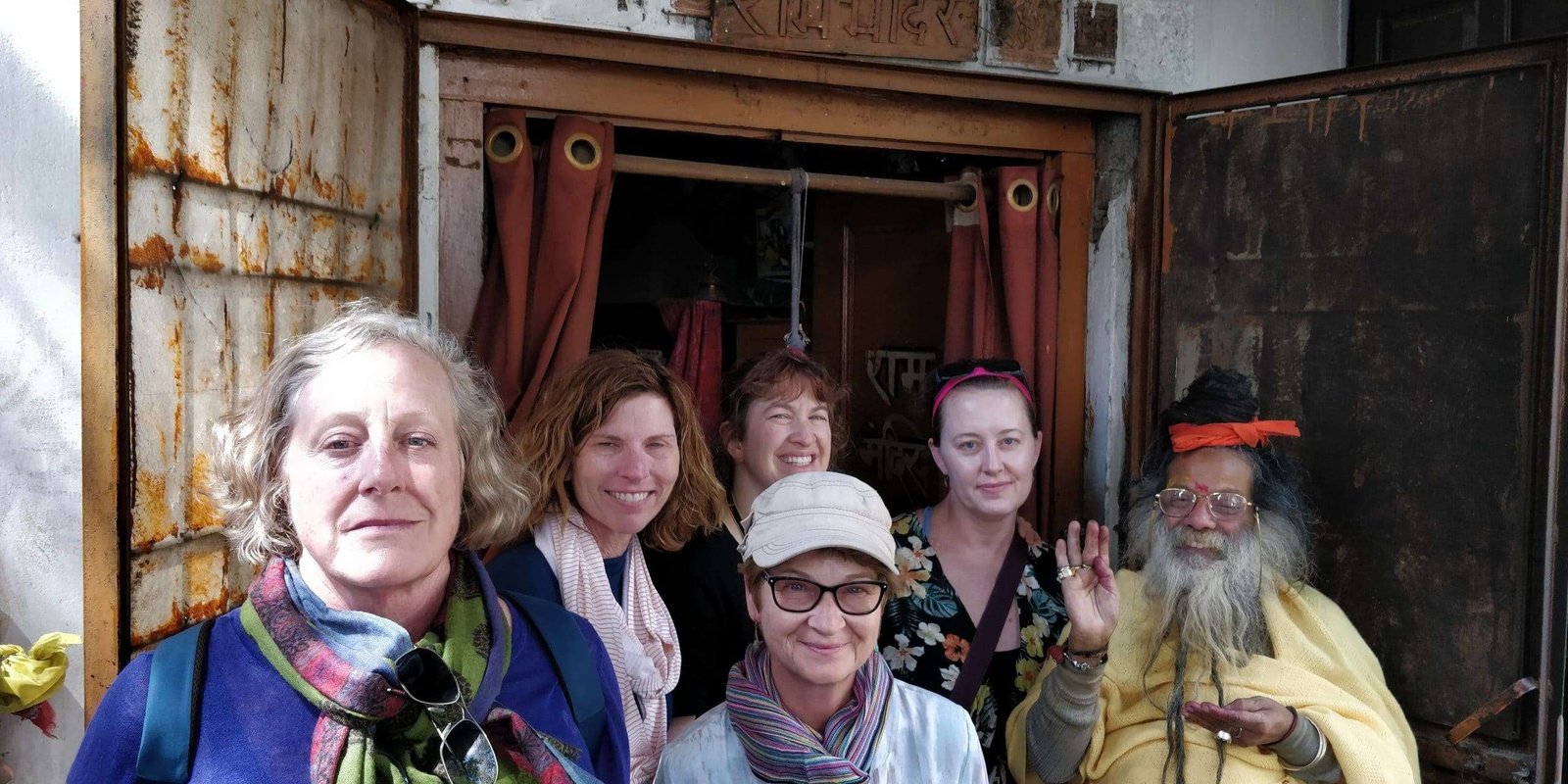
- Midday and afternoon: We head over to the hill-town of Mukteshwar, a one hour drive. We visit the ancient temple of Mukteshwar (https://bit.ly/2ujZUbJ ).
Topics of the Day: Creating Emotion and Avoiding Melodrama
“Writing is the opportunity to take the worst things that have happened to you and turn them into the most beautiful.”
— Ellen Bassist from “Unsolicited Writing Advice You Want”
“Honest writing always makes people nervous, and they’ll think of all kinds of ways to make your life hell. One day a long time from now you’ll cease to care anymore whom you please or what anybody has to say about you. That’s when you’ll finally produce the work you’re capable of.”
—JD Salinger
Now that we know our stories, let’s make sure we’re making the most of our big moments. Sometimes we’re so afraid of melodrama that we avoid emotion in our writing. But to convey important moments and break a reader’s heart, you have to learn how to use the page and words to convey the deepest emotion. You’ll learn some tricks and discuss how to bring emotion to your important scenes, and how to avoid the dreaded melodrama.
Too many stories don’t last because they lack the emotional resonance and insight that we long to have from a stellar piece of writing. We’ll study successful passages of stories and essays to find solutions and inspiration and then try out exercises to help you dive below the surface of your story.
We’ll also explore the spiritual sides of our work, and then visit the Mukteshwar Dham Temple to explore more facets of spirituality and its intersection with narrative.
Day 8, Apr 7, Thursday
- Early Morning: Yoga session
- Morning: free writing time at the Himalayan Writing Retreat, or explore on your own.
- Afternoon: Workshop session and craft class at the Himalayan Writing Retreat.
Topic of the Day: Playing with the Shapes of Fiction
In Jerome Stern’s book, Making Shapely Fiction, he analyzes the different story forms, such as Iceberg, Onion, Journey, and Visitation. We’ll try out plenty of writing exercises and discuss the different shapes we see in stories. As Stern says, “A shape invites you to fill it. The shapes of fiction inspire by presenting ways to embody your experiences, memories, and imaginings.”
We will also make sure we use Stern’s ‘intrigants.’
“An intrigant, a word whose meaning I have somewhat bent (from “one who makes intrigues” to “that which does intrigue”), is any device that keeps readers going.
An intrigant gets the story started in the first place. If you begin with a dog walking down a street with a Bible in its mouth, you hope you have aroused your readers’ curiosity.
Then you need to keep their attention. In longer fiction intrigants are crucial to momentum. If an unstable situation creates interest, readers want to know what happens next. What happens next should generate another instability, another intrigant, which, in turn, makes readers say, “What happens next?” Plot itself is an interlinking of intrigants.”
Day 9, Apr 8, Friday
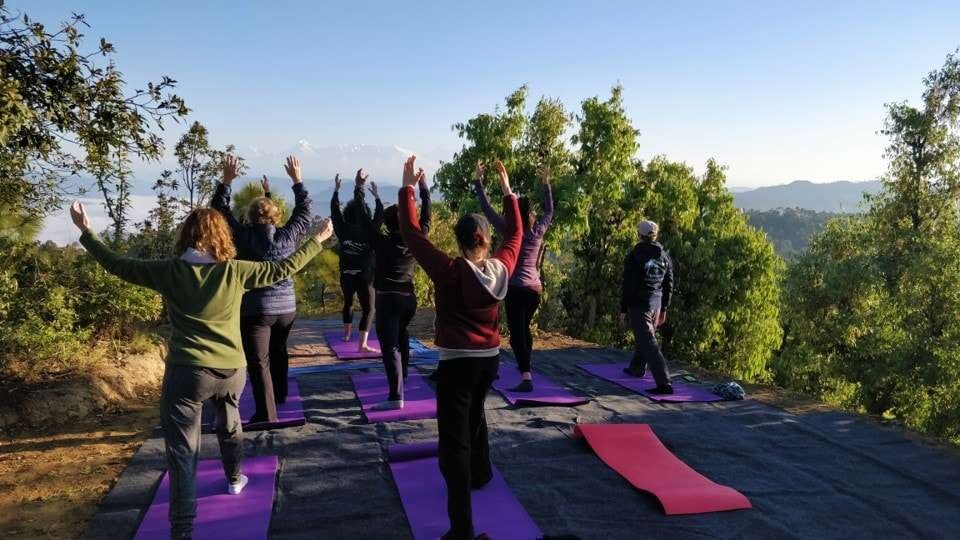
- Early Morning: Yoga session (evening session, also on option based on demand)
- Morning: workshop session and craft class at the Himalayan Writing Retreat.
- Afternoon: Optional hike to visit the ancient Kapileshwar temple (over 1000 years old).
Topics of the Day: Oh So Little Time
Writing is tricky. An entire book can last one day or span hundreds of years. Learn some time tricks from one day in a life to a hundred years later. You’ll be much more confident handling time in your writing. We will also go over a three timelines writing exercise to help you get a firm sense of how time is handled in the world of your manuscript, and outside of it. We’ll get time to work for you.
Every story begins at a point in time for which there is a past, present, and usually a future. How does the past influence the present, and more interestingly, vice versa? What histories can you bring to your work that will deepen and enrich the worlds you create for your characters? After we explore histories, you can put your ideas in motion (literally) during a long hike to a 1,000-year-old temple.
Day 10, Apr 9, Saturday
- Early Morning: Yoga session
- Morning: We pack up and head back to Delhi by taxi and train. Our stay in Delhi the night of April 9th is again at the Tree of Life.
Day 11, Apr 10, Sunday
Morning: After breakfast we check out from the hotel and head out for a guided tour of the old city. We start with the spice market – where all your senses will be on overdrive. We’ll then step back for a rooftop view of the old city. A short rickshaw ride and we find ourselves outside the red fort, one of India’s historic icons. We go through some more of old Delhi and end our tour with a visit to the Gurudwara Sis Ganj Sahib, a Sikh temple, where you will get a deeper insight into Indian culture and values. This tour is conducted by the highly rated operators.
In the second half we will have some free time and the option to do our last minute shopping at Dilli Haat (https://bit.ly/2LyyBWv ). Airport drops are arranged for everyone based on your flight schedule. Those wishing to keep the room for an extra night can stay on at a pre-negotiated rate.
When: 31 Mar – 10 Apr, 2019
Who: The workshop is led by Paula Younger & Chetan Mahajan . (For instructor profiles, click here or scroll down.)
Where: The Himalayan Writing Retreat, Satkhol Village. Uttarakhand – 263138 (India). Details here.
How much : USD 2800 all inclusive.
The price includes all classes, yoga sessions, transfers, in-country travel, hotel stays, retreat accommodation, food and tips. However, we do not cover any personal expenses such as shopping, visiting places on your own, extra nights before or after the retreat etc. Alcohol is not included in the price, but you can grab some at Duty free or at a local store.
If you have questions about India , click here to read our India travel FAQs.
Only ten participants accepted on a first-come first-serve basis. To apply, click the button below.
About the Instructors
Paula Younger
Paula Younger earned her MFA from the University of Virginia, and received the Henry Hoyns and Bronx Writers Center fellowships. She has taught fiction and memoir for eighteen years–at the University of Virginia, in the South Bronx, University of Denver, and over fifteen years at Lighthouse Writers Workshop, where she is core faculty and received the Beacon Award in Teaching Excellence.

Her personal nonfiction has appeared in The Manifest Station, The Nervous Breakdown, The Georgetown Review and is forthcoming in Roxane Gay’s Gay Magazine. Her fiction has appeared in Harper Collins’ e-book Forty Stories, the Chicago Tribune’s Printers Row Journal, The Southeast Review and The Rattling Wall.
You can learn more about her from here https://www.paulayounger.com.
Chetan Mahajan
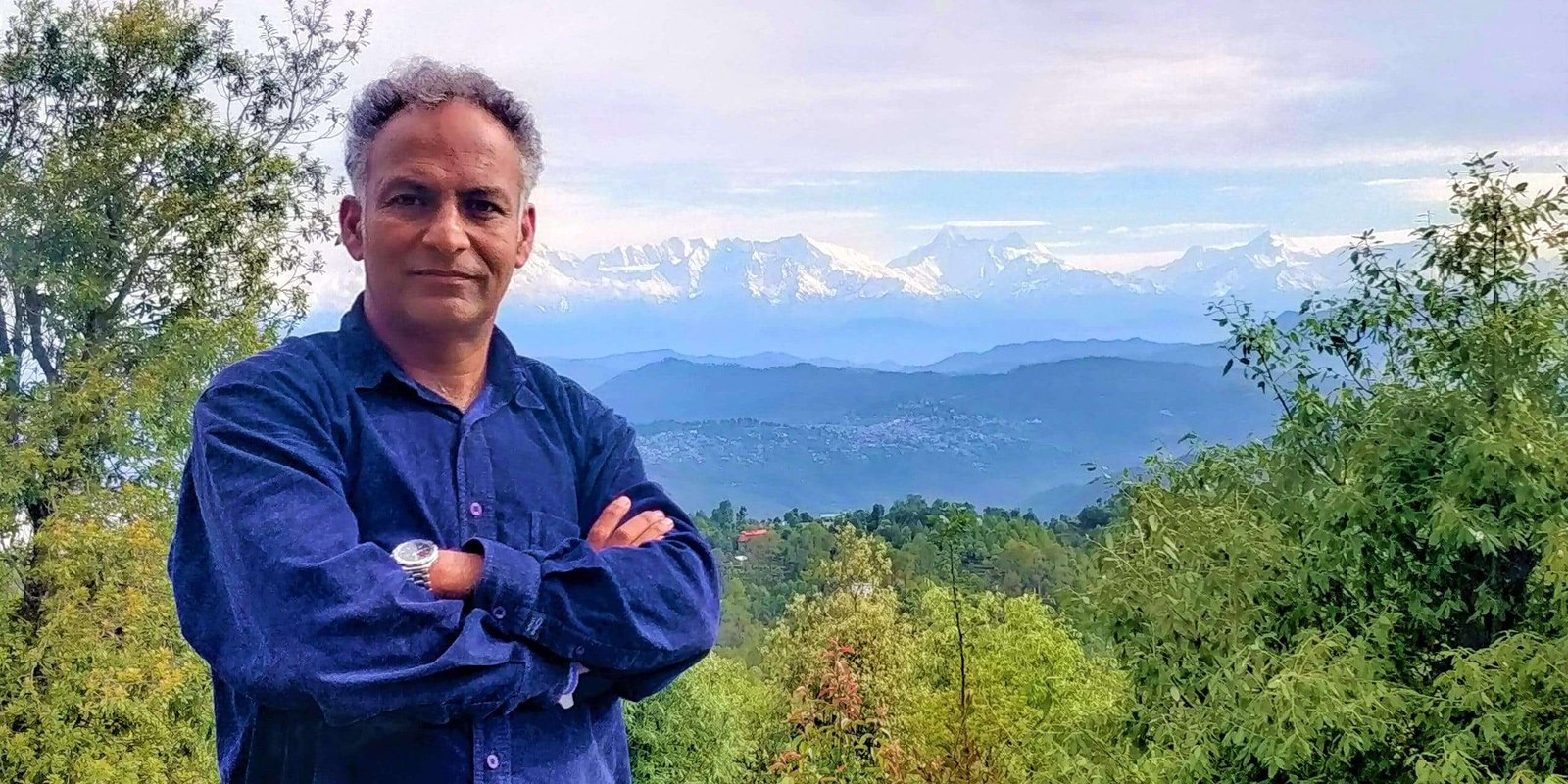
Chetan Mahajan is the founder and co-host of the Himalayan Writing Retreat.
A Penguin-published author, he quit the corporate world and moved to a village in the Himalayas to be a full-time author and blogger seven years ago.
The Himalayan Writing Retreat is all about helping people with their writing. Chetan blogs about living in the mountains here. His blog won the Indiblogger award for humour and writes columns for many mainstream Indian Magazines and newspapers. He is also a writing coach with the London based the writing coach.
FAQs
You’re probably traveling to India for the first time and have many questions you want answers to. We’ve tried to answer some of those here. We’ll also answer specific questions during online info-sessions we have with all participants before your travel.
Q. Do I need a Visa?
A . Citizens from some countries need visas in advance. Travelers from Maldives and Japan can get a visa on arrival. To get more details, please check out https://en.wikipedia.org/wiki/Visa_policy_of_India#Visa-free_entry . Citizens of most countries (including UK, USA and Singapore) can obtain an e-visa for their travel. The latest updated information is at https://indianvisaonline.gov.in/evisa/tvoa.html .
Q. Okay, so I need a visa. How do I get it?
A. It’s actually pretty simple, as now you can get an e-visa. That means you don’t have to go anywhere in person or stand in Iine. You can apply online, and the visa will come to you in the email. Simply carry a printout of it with you. You can apply for the e-visa here. https://indianvisaonline.gov.in/evisa/tvoa.html
Q. When is the best time to buy my ticket?
A. The sooner you buy your ticket, the better the price you get. If you decide to buy a non-refundable ticket, do so once you have your visa in hand. Sometimes visa processing can take longer than anticipated. And you wouldn’t want potential visa related delays messing up your travel budget. So to get the best fare, apply for the visa at the earliest.
Q. Are there any non-stop flights? Should I fly non-stop or take a stopover?
A. A non-stop flight can mean 15 hours on a plane. It’s a very personal call. We’ve always enjoyed a layover at a city like Frankfurt or Istanbul. Amsterdam is a personal favorite for the amazing cheese they sell. But that’s us.
United, Air India and American offer non-stop flights from big cities like Chicago/New York. They’re usually more expensive.
Q. Do I need travel insurance?
A. Yes, you need travel insurance. It is simplest to buy online. You can also use a trusted agent.
Q. What about food and water? Will I get sick?
A. You should only drink bottled water. Never drink tap water, or even brush your teeth with it. We provide for safe bottled water for all your travels. The food you eat should be freshly cooked and from the safest sources. Avoid anything raw or from the street. Avoid uncookeds foods like cut fruit or salads. Travelers diarrhea can happen to tourists anywhere and the best way to avoid it is to eat and drink from safe places. In addition, maintain the highest standards of hygiene by frequently washing your hands and so on.
All the places where you will stay or eat with us are very sensitive to the needs of international tourists, and maintain the highest levels of hygiene.
Q. Do I need shots?
A. Yes. Visit your local doctor before your trip and get a round of shots. More detailed information is available here .
Q. What sort of weather should I expect?
A. India is a warm country. Your stay in the plains will be in Delhi. During spring and fall days Delhi is warm and sunny, sometimes hot. Evenings may be comfortable. You can see the climate chart for Delhi here.
The bulk of your time will be spent in the Himalayas in Satkhol village. Satkhol is not on the weather map but you can see weather forecasts for Mukteshwar which is six miles away (and 1000 feet higher). The climate chart for Mukteshwar is here.
The temperature in the Himalayas varies during these seasons. It can go from warm, sunny days to cool evenings and cold nights – colder if it rains. Although fall and spring are not the rainy season, showers can happen so it’s best to pack layers. Buildings here do not have heating so you’ll wear warm layers indoors as well.
Q. How should I plan to dress for India?
A. Except for big cities like Delhi, Indians tends to dress conservatively. While men can wear whatever is comfortable for them, women face some challenges.
– Shorts, tank tops and tops that show cleavage – though comfortable for Delhi – are not appropriate for public places or religious monuments
– Short sleeve tops are fine everywhere (bare shoulders/sleeveless tops are okay for Delhi)
– Any lower that is mid calf or longer – tights worn with long tops, capris, trousers, skinny jeans, skirts, dresses – are fine for everywhere
– Most people find keeping a scarf or thin cotton shirt to wear over a top (if it’s sheer or figure hugging) and trousers or long dresses handy when travelling around.
It is also best to bring a wide brimmed hat, shades and lots of sunscreen. These will come in handy when dealing with the Delhi sun/heat as well as the bright sunshine of the mountains.
Q. How much money should I carry?
A. Your stay and transfers are all taken care of by us. Credit cards work in urban areas but not in Dilli Haat (where you may go shopping). In the rural Himalayas – where the retreat is – there won’t be too much to buy. Avoid carrying too much cash on you.
Q. What about electrical devices? Will my laptop / phone charger work?
A. The power supply in India is the same as UK and the Middle-east, although the plug points are different. India’s power supply differs from the US. Indian power is 220 volts while the US is 110 volts. Avoid bringing high wattage things like hair dryers, etc. We’ve actually seen stuff like that go “poof” in a cloud of smoke.
Electronic devices such as laptop and phone chargers mostly work with 220 volts. Please read the voltage range given on the devices you plan to carry. If the “input” reads 110-240 volts you’re good. But if the input says “110 volts” only then you may need to buy an adapter or charger for India.
Q. Will there be Wi-fi?
A. The Delhi hotel “Tree of life” has internet connectivity in all rooms. The Himalayan Writing Retreat also has fairly decent broadband, but not in all rooms. We have broadband in most common areas. Our Wi-fi is a 100 Mbps fiber-optic line with an uptime of 95%+.
However, because of our remote location, the occasional outage can happen. A local Jio SIM/ Dongle is a good backup. That can also come in handy in case of the rare event of the power failure for more than 3-4 hours (our two inverters last that long).
Q. Can I get a local mobile phone connection? Will I need one?
A. Your phone company probably offers an international roaming package. They can be expensive but maybe the simplest choice. There are also some other services such as https://www.trabug.com/ but we don’t have any first-hand reports on these yet.
Will you really need one? Since you will mostly be in a group with people you know it is not essential, but it does help if you have one. It can be helpful for coordinating things, and certainly if you like to go exploring on your own.
Q. What should I do when I land in Delhi?
Most flights reach Delhi at a rather unearthly hour. When you exit the airport, someone will be waiting there holding a prominent placard with your name on it. After you link up with the person picking you up, we will request you to give a confirmatory call from the phone of the person receiving you. We will share India contact phone numbers, names and other details with you during the info session. If by any chance you cannot spot your name on the placards, call the contact number we give you.
Q. Do I need to carry any medicines?
If you take specific medicines on an occasional or regular basis, please carry enough to last your entire trip. Medicines are available in Delhi but the brands, salts and dosage might be different from what you are used to. The Himalayan Writing Retreat is located in a rural area. We have doctors at hand but we are 2 1/2 hours away from the nearest emergency room and well stocked medical store. So, it may be wise to carry a basic medical kit (the kind you would carry on a hike). You could include medicines for an upset tummy, travel/motion sickness (if you suffer from it), jet lag (optional), fever, common cold, allergies, aches and pains.
* Please also let us know if you suffer from any food related allergies, or have specific dietary requirements.