



My evolution into an author started with the pandemic. The time, not so long ago, when we were all locked down at home, consumed by the uncertainty of getting Covid-19 and the certainty of a toilet paper crisis. I took to blogging, to process my emotions and to record this strange time in our history. My blogs were enthusiastically received by my doting family, friends, and all three of my social media followers. A couple of friends encouraged me to write my “Year in Provence” story about my life in Goa. I was delusional enough to think I could turn these blogs into a published book.
Dear poet/writer, we’d love to know you better.
What are you writing?
In prose, you prefer…
To stay informed about articles related to poetry writing,
would you like to get emails from us?
We don’t spam and you can unsubscribe any time.
In prose, you prefer…
To stay informed about articles related to fiction writing,
would you like to get emails from us?
And we’re happy to throw in two free courses, too
We don’t spam and you can unsubscribe any time.
To stay informed about articles related to prose and poetry writing,
would you like to get emails from us?
And we’re happy to throw in two free courses, too
We don’t spam and you can unsubscribe any time.
To stay informed about articles related to non-fiction writing,
would you like to get emails from us?
And we’re happy to throw in two free courses, too
We don’t spam and you can unsubscribe any time.
I have had articles published in magazines and newspapers years ago, so I knew I had some basic journalism skills. But my last byline in the national press in India was in 1993, a time when the odd dinosaur could still be spotted walking the earth. Those were the days of typewriters, when appointments for interviews were made over a scratchy landline or worse, a payphone, and research meant going to a library or an archive. There was no Google, email, or WhatsApp.
From 1993 to 2003, when I lived as an expat in Dubai, I wrote for PR. Later, in 2010, I learned academic writing for my Master’s in Education in London. I wasn’t sure which of these different styles – journalistic, academic, and blogging – would serve best to tell my story. Clarity came when I focused on the one style I was confident about: the personal narrative. It was my go-to for blogging. That said, creative writing was a genre I knew nothing about. I would need basic creative writing skills to make it interesting and rewarding for the reader. I had a story to tell, but could I write an entire book? I knew that writing a blog is very different from writing a book.
First-time book writer’s search for a literary agent
To understand how the book publishing world works, I asked a friend who was a published author, an insider. He emphasised, “Find a literary agent. They will give you feedback. They will help you craft the storyline and ready your manuscript to pitch to a publishing house. You need a book proposal. Google it. Put one together and send it to a literary agent.” “What’s a literary agent?” I asked. “They are agents who will find you a publisher. They earn a commission directly from the publisher. Publishers trust literary agents, so your manuscript has a better chance of being traditionally published if you go through a literary agent.” This friend added a word of caution. “Writing a book is a lot of work. You will make no money. But at least with traditional publishing you don’t have to pay anyone. Are you sure you want to write it?”
Somehow, I knew I needed to write this book; the idea had consumed me, it was all I could think about. I agonised over every word and drafted the proposal to send to literary agents. The proposal typically includes an outline of the book, something about you, why you are the best person to write that book, your writing credentials, a list of chapters, three sample chapters, and sometimes social media handles. Broadly, the literary agents in India have similar expectations, though the formats differ. Scanning the requirements, I realised I had a better chance writing non-fiction, as fiction, short stories, and poetry from first-time writers seemed much harder to get published through the traditional route. I found a list of literary agents on the Himalayan Writing Retreat (HWR) website and wrote to many of them. This is something you are not supposed to do. The literary agent code is to write to one, and wait for a reply in a six-to-twelve-week turnaround time before sending the proposal to the next one.







It was soul-destroying, augmented by the self-doubt to write pitches to literary agents, to wait and then receive rejections. That’s when I considered self-publishing. By now, the idea of writing this book and chronicling how fast Goa was changing had become my life’s mission. I felt compelled to record what I knew, had researched, and what I had learnt first-hand about the Goan way of life, which is so different from the popular Instagram Goa.
I spoke to a few self-published authors. They were convinced that self-publishing was the best way forward. “Don’t waste your time waiting for some lit agent to get back to you. You will lose control of your story and your words. You don’t want some young, small-time editor in a big-name publishing house messing with your manuscript. I used Notion Press. They were good. I did not have to pay them. With self-publishing, you will keep control and get all the money. If you go to a publishing house, they get all the money for your hard work.” I thought about it but didn’t have the confidence to self-publish. I was sure I needed professional editorial help.
I went to a publisher in Goa, who said, “Don’t give up on finding a literary agent. There is an interest in books on Goa. Your angle on Goan identity in Goa today could find wide appeal. A big publishing house could bite, since you are writing non-fiction. Fiction is much harder to sell. These big publishers have all the data on how the market works. They will edit, package, and distribute your book for you.” He also told me to think about commissioning illustrations with “It will help readers to visualise Goa today.”
Another traditionally published author researcher friend cautioned me against self-publishing. “You will be harassing your poor family and friends to buy copies. Knocking on neighbours’ doors, sitting at village markets and book fairs to beg people to buy your book. You will be stuck with unsold copies. It is very hard to sell books these days.” Other reasons he cited against self-publishing included lack of credibility and professionalism, fact and proof checking, layout and cover design, production values. In my research I also heard about “vanity publishing” and “be careful of buy backs in your contract.” I am still not sure I completely understand what these publishing options entail.
Continuing to learn
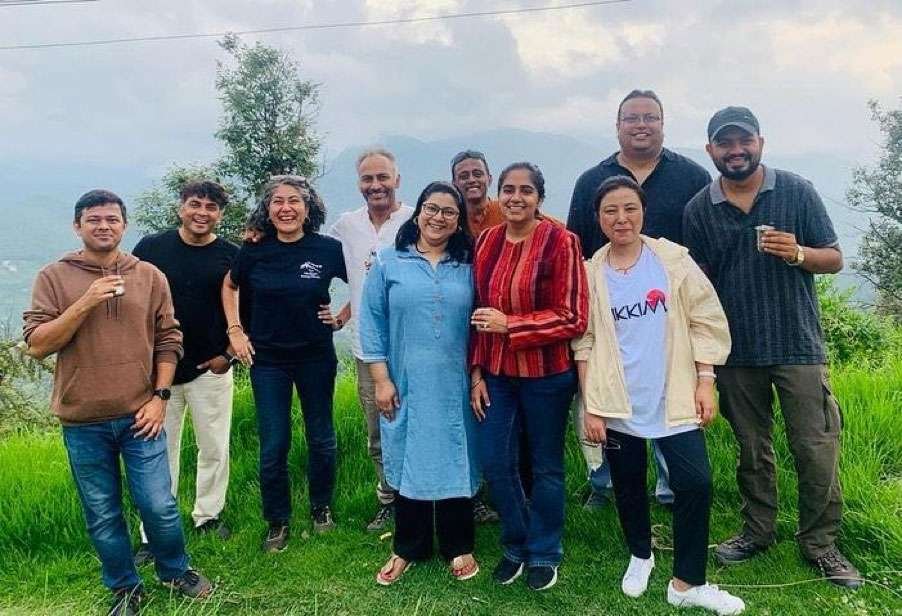
I decided to give the literary agent and the traditional publishing route my best shot. I was lucky that in July 2022 the prestigious Jacaranda literary agency signed me on and encouraged me to write my story. At around the same time, I ventured to Uttarakhand for a creative writing workshop with co-founder Chetan Mahajan at the Himalayan Writing Retreat. There, I found a supportive cohort and a community of writers. It gave me hope. I discovered I was a pantser, not a plotter. This wasn’t a good thing, as I wrote by instinct, with emotion, without a clear plan and outline. I wrote reacting to situations rather than crafting a narrative. I learned that adverbs and passive voice are not good writing and a couple of apps could help me be watchful of using them. I experimented with show don’t tell, using dialogue, creating characters and conversation.
Persevering through it all
I persevered despite my sometimes paralysing self-doubt. A memoir is the story of your life, which leaves you vulnerable. I had to overthink what I needed to include and what I needed to leave out for the narrative arc. Identity is a complicated issue and more so in these terrible times with migrants and refugees moving across countries and continents for opportunity and safety grappling with questions, “Where am I from? Where is home? Where do I belong?” Most nights I woke up sweating with a knot in my stomach and a weight on my chest. I was very nervous about the ideas and themes the manuscript was addressing, my writing style, and how the book would be received by a wider audience. Beyond my poor husband and two adult children, I reached out to dear friends across the country and the world who were avid readers to read draft chapters. I did the same with Goaphiles who knew the history and the polity to verify my research on Goa. Each of them came back with very useful feedback that helped me improve the draft. I had been cautioned, “Be careful, people steal your work, don’t share your writing before it is published.” I was not worried. I knew I could trust my community. No one else could write this book. Not even AI, which is threatening to disrupt the creative and content industries.
Fate and sweat took their course, and Jacaranda signed me up with Penguin Random House India in February 2023. The editors were angels who coaxed my ramblings into a coherent narrative. There were rounds of edits from the commissioning editor on structure and organisation. The draft manuscript was then handed over to the line editor, who went over every word. It was rigorous; I needed to find references for every claim I made. We discussed how best to translate the Konkani and Portuguese words. I wanted to retain them, as they give local flavour. I preferred footnotes rather than a glossary at the back of the book.
It took me months of sleepless nights and a lot of angst to spill my guts. They wanted the personal, my connection, my story. Not something you could get from a newspaper article, another book, or blog. I wrestled with what to include and how to write objectively as a chronicler of today’s Goa. Writing a memoir leaves you exposed. You will be judged and condemned in the court of public opinion. I wrote for long hours and slept little. The slog paid off. Seeing a typeset PDF with your name in print next to a Penguin logo is sobering.
This PDF evolved into a creative nonfiction book. There has since been debate about the exact genre, due to the diverse elements I deal with. Memoir and travelogue are the biggest buckets it falls into.Somewhere along the way, I had commissioned illustrations to help with the storytelling. I was lucky that Rutuja Jahnavi, a talented young illustrator I knew from Pune, read an early draft and created the illustrations without requiring further photos and references. There was another conundrum: the final manuscript had lost two chapters, for which there were a few very cool illustrations. I had to juggle some text and anecdotes to fit these fabulous visuals and write captions to engage the reader. (Many mornings, my two-year-old grandniece would “read” my book and give me her version of the captions for each of the illustrations.)
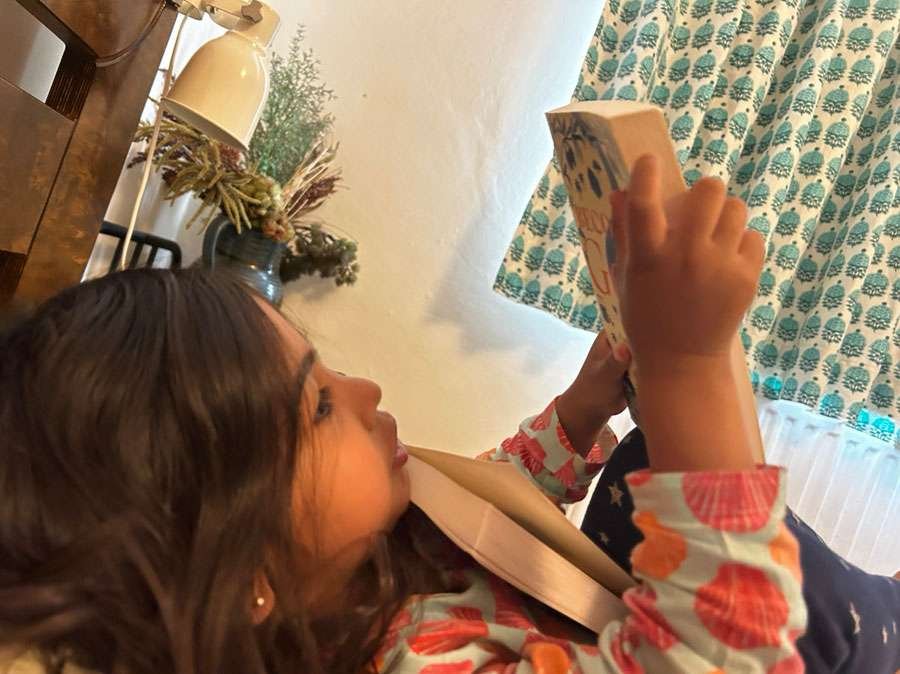
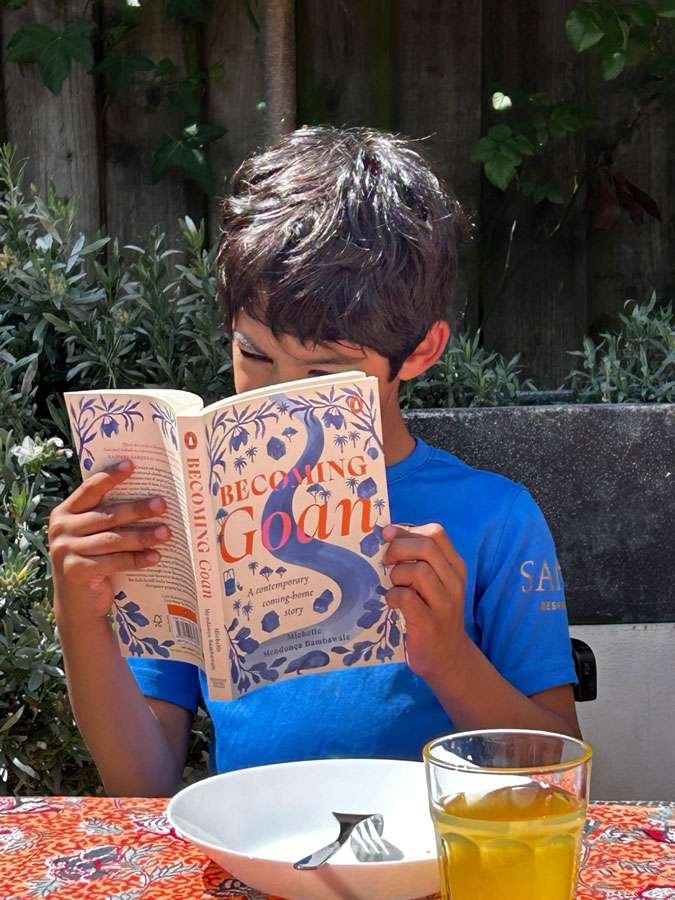
Her six year old brother is very pleased he has a mention and has been persevering to read the book to find it.
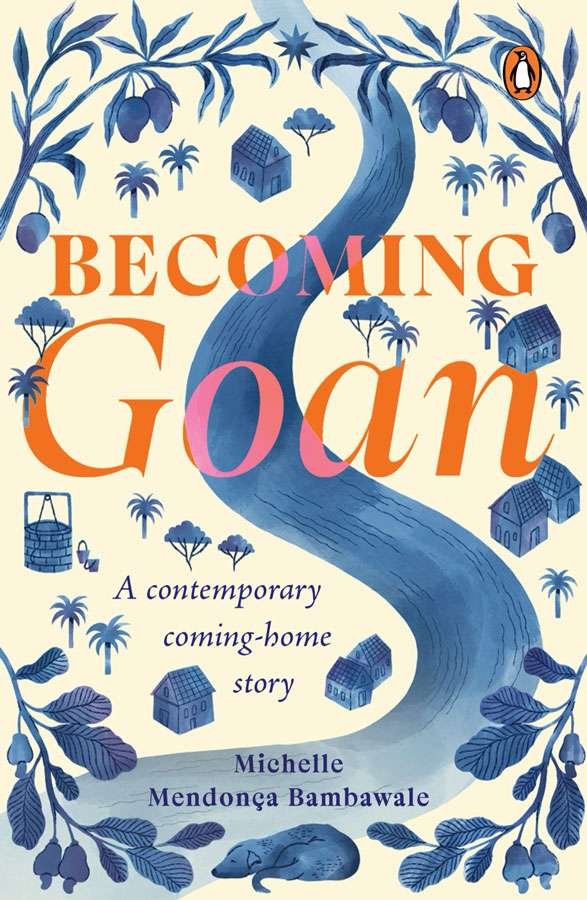
The editors at Penguin commissioned a cover designer and illustrator. They crafted a beautiful and memorable cover using important elements from the story that invites curious prospective readers to pick up the book. The team are experienced in the nuances of book covers and we agreed on a design that everyone liked. My guess is large publishers have a secret spreadsheet to fit in first-time authors. This document encourages good writing but minimises their financial exposure and what makes business sense. Boxes to tick could be the number of words, number of pages, print run, pricing, soft cover versus hard cover, cover design, and typography, etc.
Book promotions & distribution
Another question I debated on promoting a book was “Do advance recommendations work?” I had noticed that some books have pages of them, some on the front cover, others have none. As with most things, people in the publishing and reading world took two extreme views. Some said, “Don’t bother, no one picks up a book because Amitav Ghosh recommends it.” The others said, “I will definitely buy a book if Amitav Ghosh recommends it. Better still Salman Rushdie.”
I decided to take the middle path and asked well-known Goan journalist Rajdeep Sardesai to read my book. He was amazing, despite his punishing travel schedule and tight deadlines. He sent me a very nice blurb at very short notice. This appears on the back cover.
My book – Becoming Goan – A contemporary coming home story published by Penguin Random House India, anonymously appeared in bookstores in Goa in early December. It was “released” on Amazon on 22 December 2023. Since then, it has been finding its way to airports, and bookshops across the country.
I had a prestigious publisher that came with great editing support, cover design, and distribution. They also had a marketing plan. I soon realised that I was just one in their long list of authors who hit the shelves in December 2023. The publisher backs the favourites with their budget. The big names they know will sell – celebrities, how to make money and self-help books. Other writers (famous journalists, folks with MFAs) who get support and are showcased at literary festivals and events are the ones who can win them literary awards. My book was neither. I soon accepted that they had published my book, but they did not have the time or the budget to promote it.
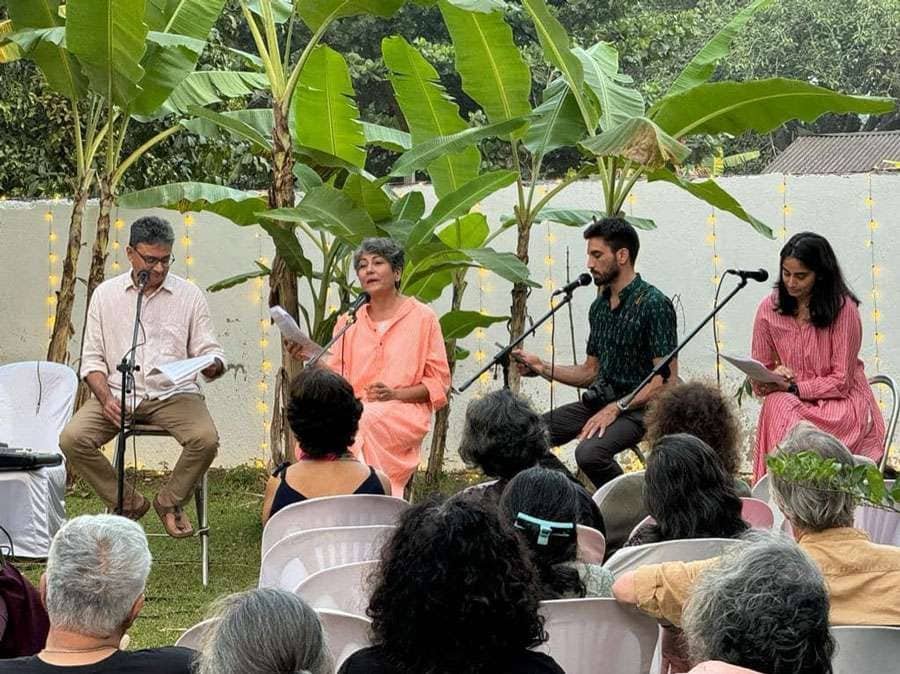
Another important learning for me was that only these favoured few get an official book launch. Others get one, only if your publisher or lit agent has the budget for your book. I did not have this luxury. I had a constant question from family and friends: “When is the book launch?” So, I organised one for myself, at my home in Goa, where the book is set. This felt the right place to host it. My long-suffering husband Bharat and two articulate adult children humoured me. They interviewed me. We collaborated on a script for our home-style book launch. It was overwhelming that 160 members of my community of neighbours, friends, and well-wishers came over to support my story. The best part for me was there were regulars at literary events and book launches. But, there were also many for whom this may be the only book launch they ever attend. A local bookseller set up a table in the garden to sell my books. I signed most of them. I was flattered that Siolim’s famous homegrown international fashion designer Savio Jon gave me one of his fabulous creations to wear. I was a Penguin published author. It was a novel evening that journalist Vivek Menezes wrote insightfully about it in his column.
Many writers in Goa were interested in my book, my motivations for writing it and published pieces in local papers and in their newsletters, blogs and journals. My first interview was with Frederick Noronha, a well-respected journalist in Goa for a local YouTube channel on 20th December. I was terrified. At that stage I did not know how my book would be received. Frederick was a great interviewer. It felt like a friendly chat. He did not interrupt too much! He also coached me on media and interview skills. I have since been learning and practising this craft. Frederick also reviewed the book for a popular local paper. Becoming Goan – a contemporary coming home story was also recommended by Anuradha says, a prominent television journalist in January 2024 on her YouTube channel.
I spoke to other writers, my literary agent and independent bookstores to understand how book publicity works. Every publisher, literary agent, and author has a different deal. Some publishers have great distribution, others have better marketing, but if you wanted your book to be noticed you needed to do the work yourself. This seems to be an international phenomenon, as I discovered reading this recent Guardian story. A few authors I spoke to confessed, “Why bother? I do the work. The publisher makes the money.” Another offered, “Hire someone; I have found a great communications agency, they understand the industry and they handle the marketing for me.” Many cringed at the thought, and told me, “I am a writer. My writing should speak for itself. Great literature will find an audience. I write, not talk about my writing.”
Some sage advice I have followed was: “Don’t give away your books for free and don’t discount your book. It undervalues your work. It is not a lot of money. You have worked hard. Let people buy it at full cover price. He continued, “Don’t do any book events where you can’t sell books. You are your book’s sole evangelist.” This was confirmed when I walked into bookshops wearing my newly acquired author’s hat instead of my regular reader’s hat. There were so many fabulous books to buy. Bookstores have limited shelf space. You are competing for real estate with all the classics and literary giants from across the country and the world. As a first-time author your book does not get displayed. I knew then, if I didn’t talk about my own book, it would never fly off these shelves.
I developed my own marketing plan. The publisher had theirs. There were overlaps. The publisher gave me a small fraction of their publicist’s, social media marketing person, salespeople for physical distribution, and Amazon for online sales support. Through this team, they sent the book for review to the press, newspapers, magazines, inflight magazines, Bookstagrammers, Goa social media influencers. They posted on Twitter and made a couple of Insta reels. I accepted this was as much as I could expect from them. As a first-time book writer, I was not a priority; publishers have bigger horses to back. It was time to put my own marketing plan into action.
I have learnt that independent bookstores are your friends. They encourage authors and are happy to host book events. Diviya from Literati in Goa organised a very well-attended book launch in January 2024. In Goa, I visited most of the popular independent bookstores to confirm they had my book and have since been sending people to them to buy it. I have done the same in all the places I have visited. Independent bookstore owners have given me some very good advice on publicising my book.
Price also plays an important role in people picking up the book. Under Rs 500, ideally Rs. 300-400 seems to be a sweet spot in India. Mine is reasonably priced at Rs. 399. Many people, friends, family and strangers have ordered multiple copies to send/give to family and friends. Here again, pricing helps.
My lit agent advised me to wait for 5-6 weeks after the official release date for the book to be distributed and available in bookstores across the country before promoting it. I decided to promote the book on all my social media handles and organise my own book tour. I knew I wanted to have the conversation, as I believed my book had a message and many talking points. The message had found a platform with a big-name publisher, but as a first-time author I needed to do the marketing slog myself. (I also can’t delegate, am impatient, and have some experience and instinct with PR and social media marketing).
Social media does get the word out. It can generate a modest measure of sales. However, most Bookstagrammers are in it to create an income for themselves. Their interest in my book is a transaction. (To this day, they continue to target me with statistics and costs.) They claim their reviews will increase my book’s sales even though many of them who DM me can’t spell and don’t use spell check. I don’t buy their spiel. I’m not willing to pay them. When they hear this, they disappear. I have not yet investigated getting a Meta verified account, boosting posts or making sticky reels. More social media marketing work awaits.
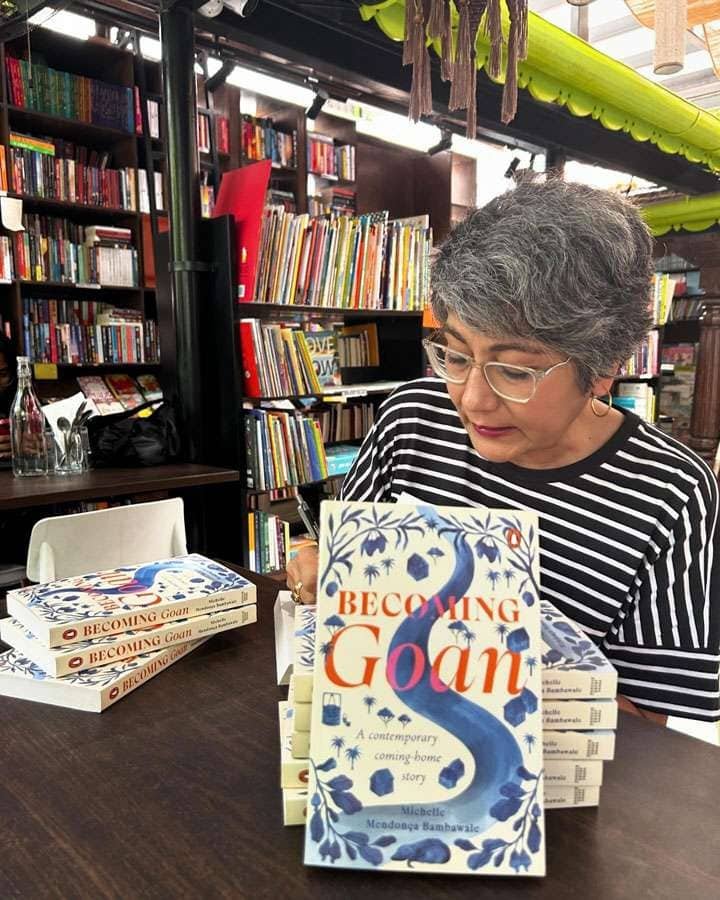
Penguin has very good distribution, so they have made sure my book reached the major reading markets. Since mid-January, I have included book promotion on all my work and leisure trips. I checked in each city I was visiting that bookstores had my books. It takes a lot of time, effort, and follow-up to organise events; I needed to scope for a venue, a suitable person to read the book and interview me, (on my request Penguin often sends them a review copy of the book in advance), create Canva invites (in some cases, the publicity team at Penguin have done them), send the invite to family and friends, and follow up to make sure they attend. I also post on social media. I chase the publisher to confirm a local book seller will sell my book at each venue, which is another important task. Informing them well in advance of travel plans so that they can organise book signings in bookstores and at airports in the cities I was visiting is yet another. I have signed books in bookstores in Pune, Bombay, Bangalore, Delhi, and Gurgaon. Also, at Bangalore airport. These are good social media photo ops for both the first-time author and the bookstore.
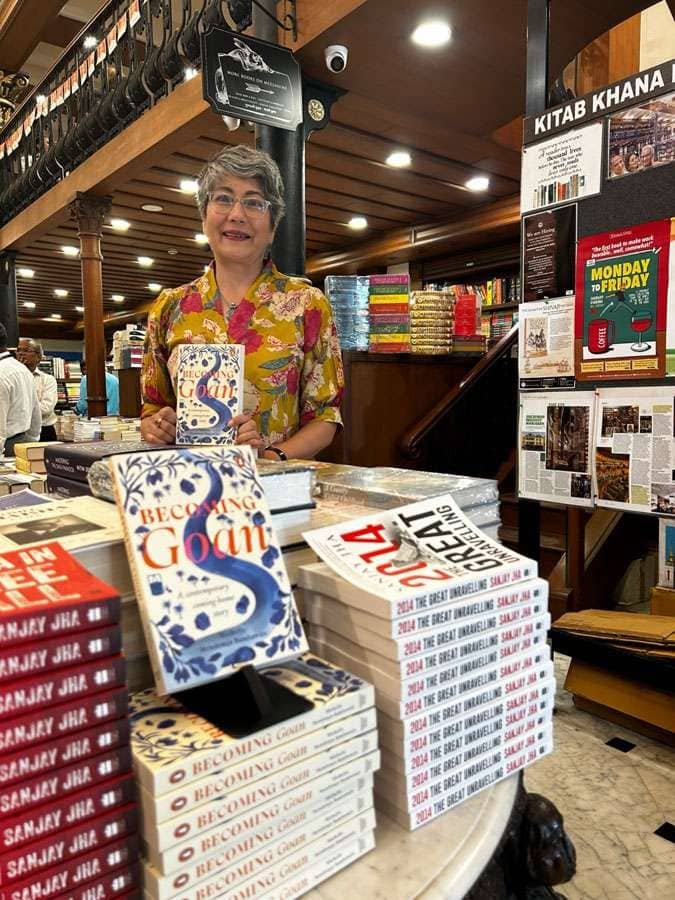
I have been lucky to, misquoting the Beatles, get by with not a little but a lot of help from my friends and the kindness of strangers. In every city people went out of their way to support my story. I have not had to pay for over 90% of my book events – I paid for only three out of the almost 30 that I have done over the last six months. These three helped me with brand building and credibility and got me more book events in those cities. The reason I paid for three was I scheduled them in the early days when I thought I had to pay. Also, these were community spaces that encouraged books, reading, and creativity. I paid for one in each city I visited at a nominal fee, less than a meal in an Assagao restaurant. None in Goa.
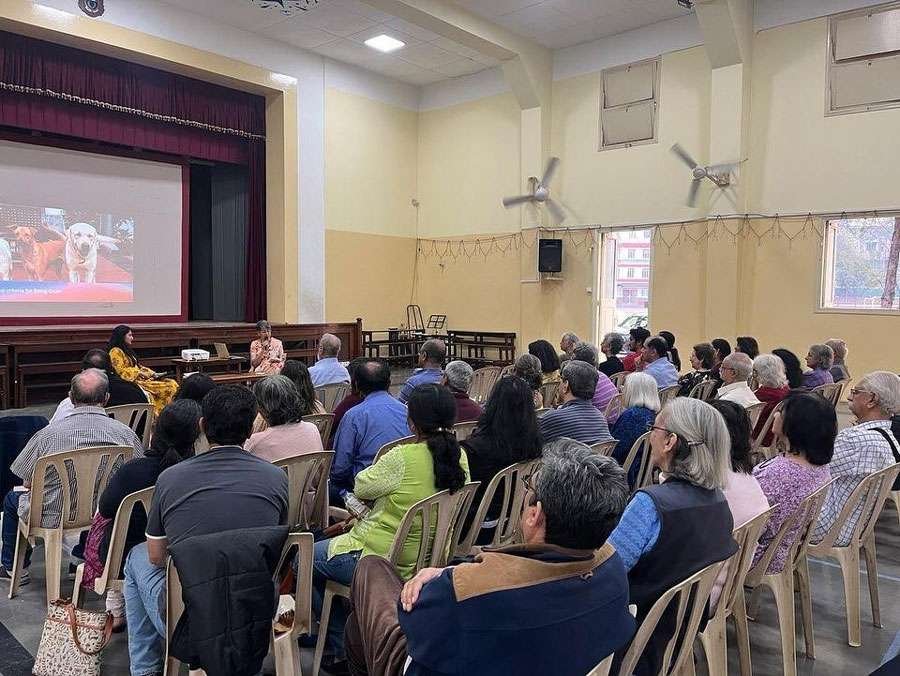
As and when required, I have created different scripts for storytelling. These have been important to manage the messaging and make people interested in buying and reading the book. Vishal, who runs Pagdandi – an independent bookstore in Pune – asked me to use an illustrated story to discuss themes from the book. I created a PowerPoint presentation using photos of Goa and Siolim then and now, and illustrations from my book. I have been adapting it for different audiences including an online Pune book club, to talk to students at Goa University, at the Bangalore Club and at the Otters Club in Bandra, Mumbai. I discovered that book clubs and clubs are an author’s friend. They have readers and library committees; they need authors to talk about their books. I realise older folks read books, have money to buy books and are looking for face-to-face engagements. The conversations have been great learning opportunities for me. It gives me feedback on how people have reacted to the book.
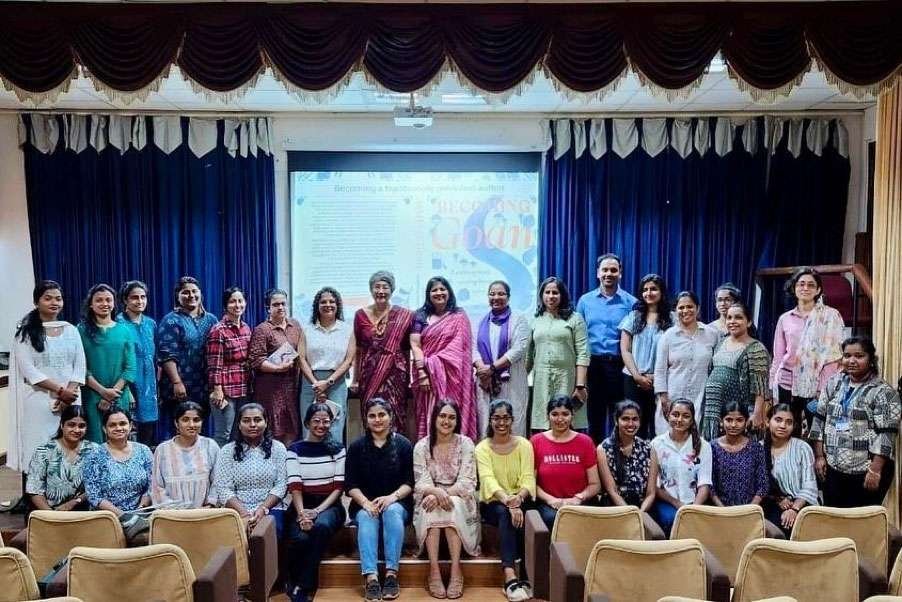
An independent bookshop owner informed me, “80% of the audience comes because of the author, only 20% attend because of our efforts.” This was even more frightening. In places with an established reputation and regular clientele, this statistic was reversed. I have chatted with an intimate circle of eight attendees and been intimidated by an auditorium packed with almost 80 people. The average attendance has been around 25 – 30.
These book chats run for about an hour. 40-45 minutes of the interview or presentation. Then 15-20 minutes of audience questions and answers, followed by book signing. I have avoided physical posters, banners or backdrops. For me these are a waste of money and another burden on the environment with single use. Book displays in the foreground and background are the most effective. If possible, I have used my book cover as a projection in the background. Most bigger venues provide mikes, projector and sound systems. I always arrive 30-60 minutes in advance to check on the arrangements and to confirm that the books are set up to sell.
The book conversations have been early evening. I was sure I wanted people to come to hear about the book, not for the free food, definitely not the wine and cheese. The fanciest food I have had so far has been feni and choris at my book launch at home in Siolim. Most events have no food at all or, at the most a cup of chai and biscuits, in a couple of cases, samosas. Clubs have hosted a modest plate of snacks for their members as part of their regular hospitality.
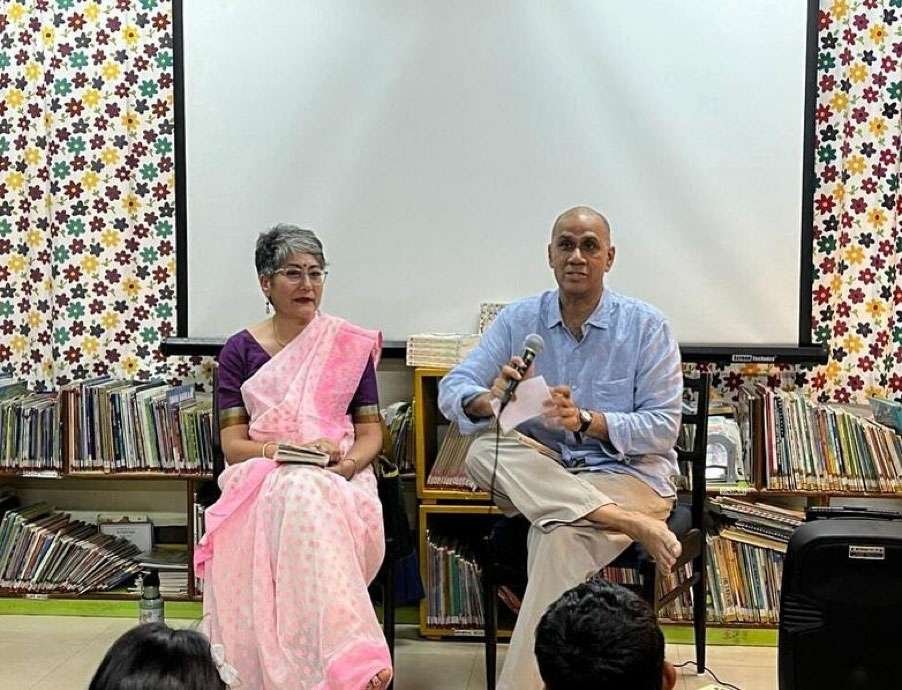
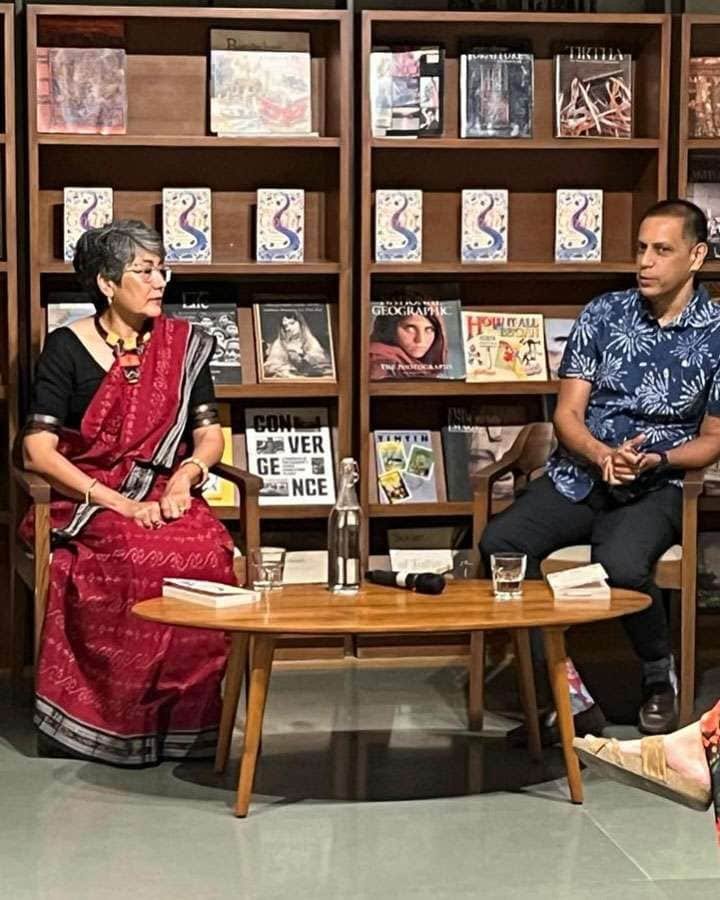
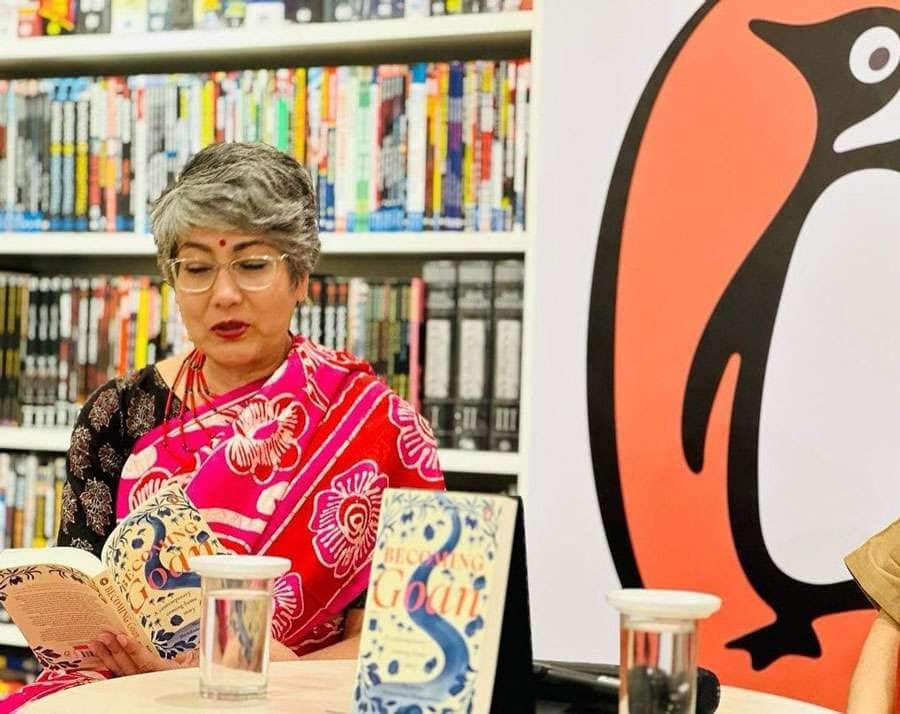
I have been lucky to have been interviewed by some of India’s top independent journalists Naresh Fernandes and Samar Halarnkar on their home turf, Naresh in Bandra, Mumbai and Samar in Bangalore. Both have deep Goan-expat Goan insight. Both are at the top of their game and masters of their craft. Vinutha Mallya in Pune. Same with scholars Tino de Sa and Rinald D’Souza S.J. in Goa, and academics Sabina Pillai and Simran Chadha from Delhi university. Additionally, a long line up of inspiring readers, writers, teachers, doctors and journalists have questioned me about Becoming Goan – a contemporary coming home story. Living in Goa and being a part of the Goa Writers group, I was fortunate to be able to talk about my book here at the iconic Goa Arts and Literature Festival (GALF) 2024, curated by 2022 Jnanpith award winner Damodar Mauzo and journalist Vivek Menezes. I was in conversation with Mrinalini Harchandrai on writing as belonging? Her Rescuing a River Breeze (Bloomsbury, 2023) made the short list for the Asian Prize for Fiction 2023. We found commonalities in the setting, the culture, the red earth. This imagery from our books was so far removed from the “beach, drink and party” stereotype Goa is known for today that is being pushed by Bollywood and social media.
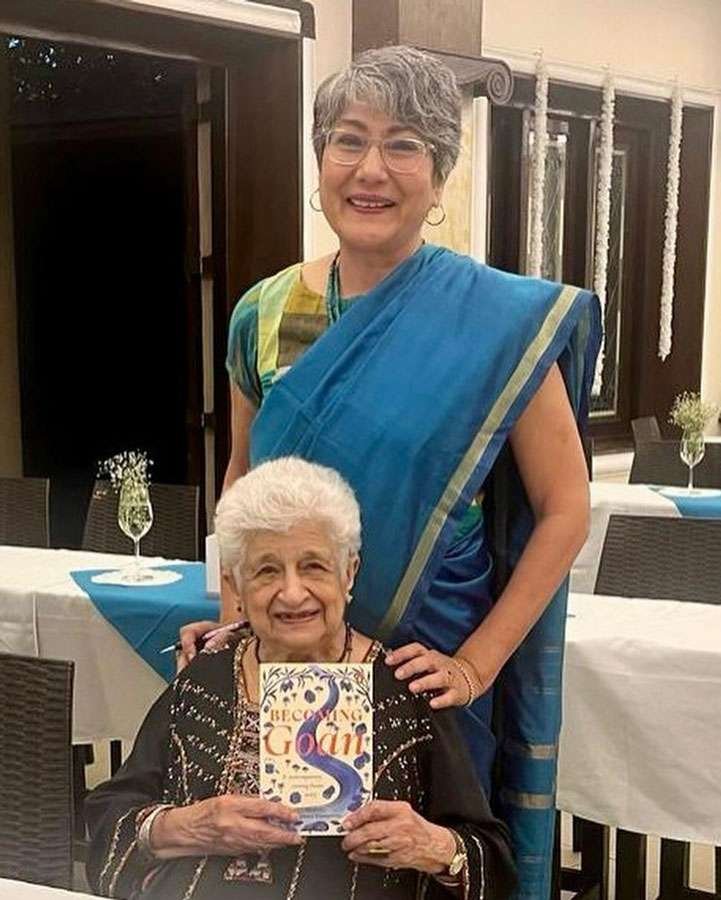
Over more than 25 book conversations, I have reconnected with my past, which has been very rewarding. I have met people after 30 and 40 years. People who knew my parents have come to hear my story; kids who I knew as babies, now in their twenties and thirties, have come to meet me. I have also met and made friends with so many new people who were interested in my story and issues in Goa today. This upside of my self-inflicted and exhausting book tour has been hugely gratifying.
From January to March 2024, I focused on places close to home, Goa, Bombay, Pune and Bangalore. The furthest I’ve been is Delhi-Gurgaon. I extended a work trip in March. I have lived and worked in the NCR so have friends and colleagues there. Delhi is also rumoured to be the literary capital, so is crucial to include on a book tour for a first-time author. I hope to reach another three or four reading cities in India later this year and early next year – Chandigarh, Chennai, Hyderabad and Kolkata. Hopefully I can sustain this momentum. It needs a lot of stamina. After my own hectic schedule in the first quarter, promoting the book has taken on a life of its own, with friends, acquaintances, social media followers and strangers reaching out to host book events, interview me, invite me to speak at literary events and volunteer to sell my book in their stores.
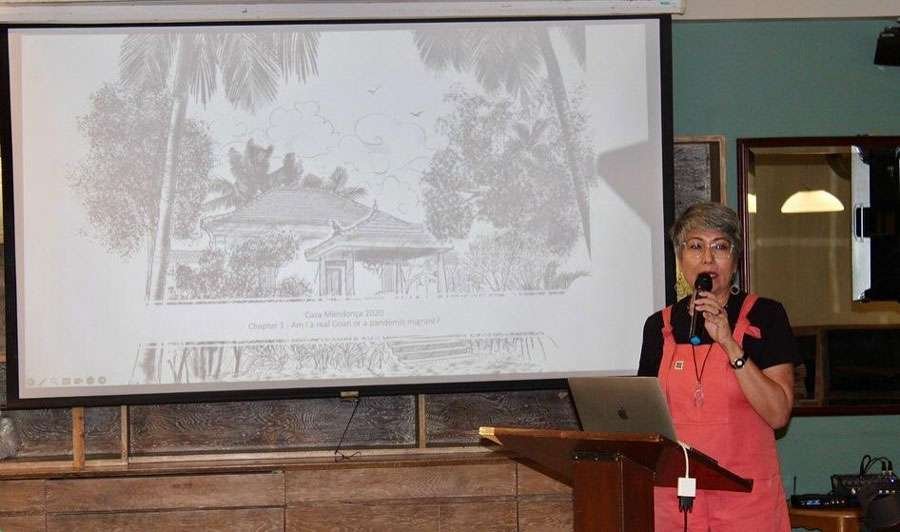
I have also been in touch with colleagues and friends who are teachers, professors and principals. Educational institutes are often looking for people to talk to students about ideas beyond the curriculum. I hope to chat with school and college students about issues of identity that my book confronts and about the writing, publishing process. However, organising these takes a lot of time and effort as I need to coordinate with the school/college’s already packed schedule.
The summer and monsoon are not a great time to physically promote books in India. I have been contemplating YouTube videos and Spotify Podcast ideas. I was in Dubai in March 2024, so I did a podcast/youtube interview with a Goan podcast channel “Kiss me, I’m Goan”. I was in London in May. I managed to host a meet the author event at the fabulous Nehru Centre (the Indian High Commission’s cultural centre) in fancy Mayfair. It was a great honour to be on the stage there. I was in conversation with fellow Goan author Selma Carvalho. Another out of body experience was speaking in Gulati Hall in Pune to my hometown crowd. It was a stage I had acted and sung on as a child from the convent school next door.
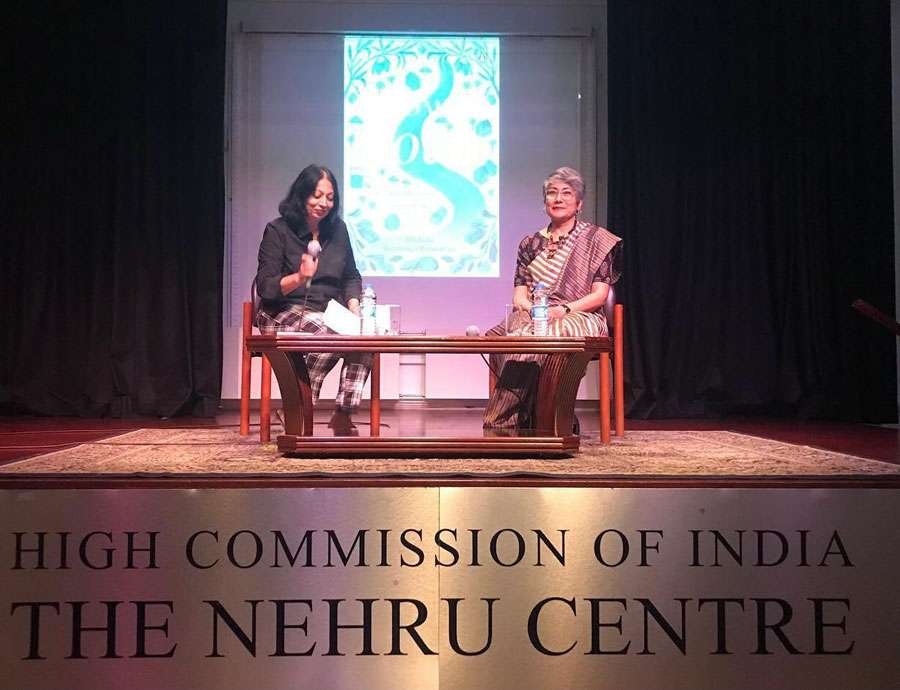
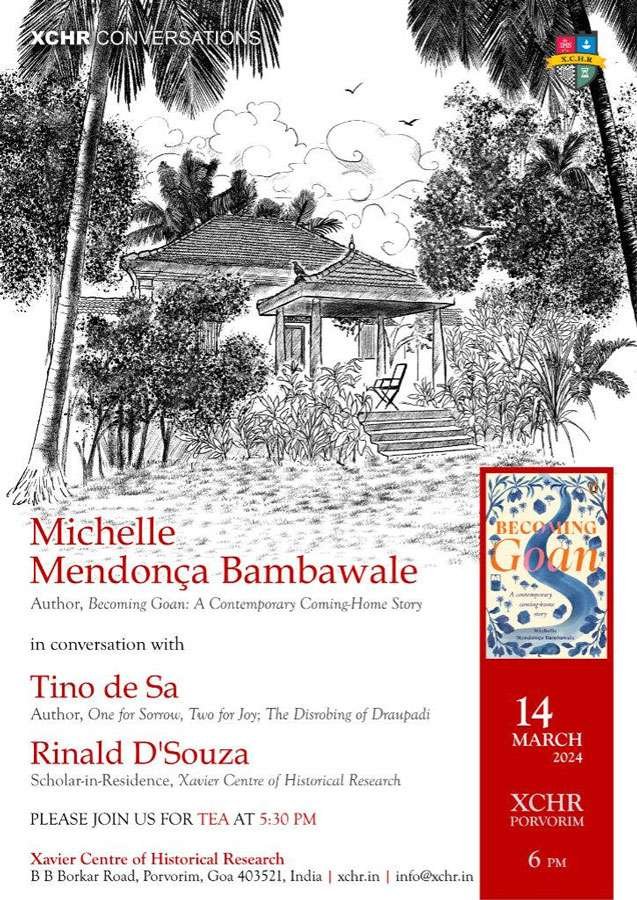
How many “launches” can one book have? That may be the question I will ask myself when I am finally done with this self-inflicted “book tour.” I also learnt that word of mouth is underestimated but remains the most powerful book promotional tool.
Alternate channels of book distribution have been a game changer for me. By this I mean finding alternate book sale locations beyond bookshops. My book is also available in 10-12 popular places including clothing, lifestyle, eco stores and museums in Goa. Savio Jon, Ethico and Green Chokrees in Siolim. OMO in Fontainhas, No Nasties in Assagao and Fontainhas, Yellow House Parra, Paperboat Collective (Goa and Bangalore), Museum of Goa and Museum of Christian Art in Old Goa, Green Essentials in Socorro, WISH in Vasco, Medini Eco lifestyle in Mapusa. Mine is often the only book for sale in some of these stores, and with its reasonable price, it’s being snapped up.
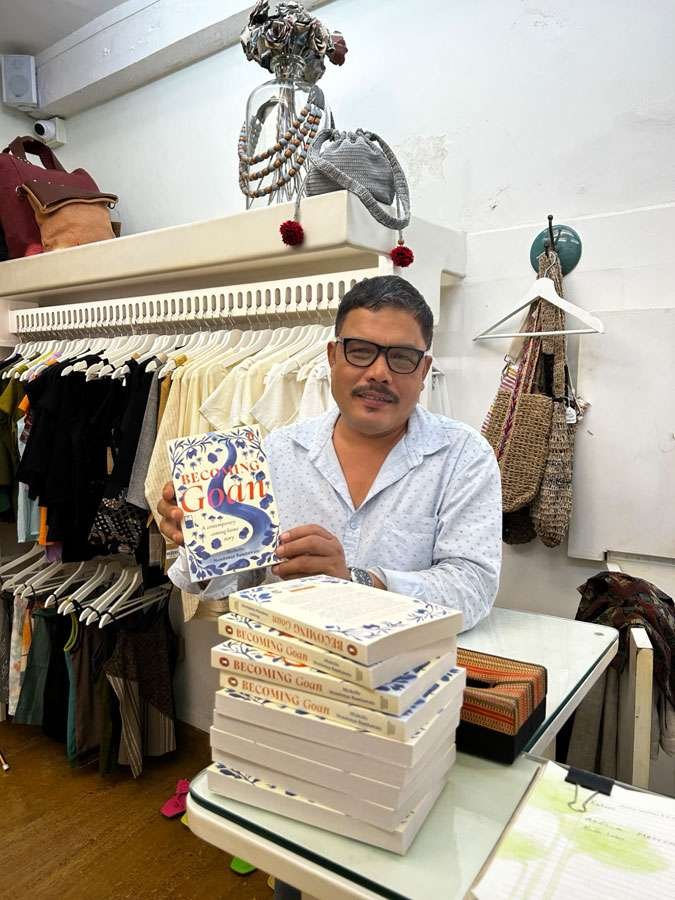
To organise these alternate book sales locations, I had to be both creative and entrepreneurial. The distributor and publisher’s sales team were not willing to stock my book in non-bookshops in Goa. Their concerns included vendor inventory, returns, bad debts, and that Goa is too small a market. An enterprising salesman advised me: “Buy your books with your author discount and then you stock it in all these places. Since you know them and trust them to sell your book. We can’t do it for you as these stores do not meet our book sales requirements.”
Putting this distribution channel in place was a steep learning curve and even more physical and paperwork. It required creating an invoice, figuring out commissions and consignment payment options. Some of these outlets chose to pay for each order of my book in advance, others to pay me every month for the number of books sold. I was fine with either option as my only goal was to get the book to as many people as I could. I spoke to my tax consultant and realised the income would be so minuscule the income tax department would not care. It could be accounted for under “income from other sources.” The proprietors, curators and sales staff in all these cool places have been amazing. They call me to let me know when stocks are running low. Then Bharat or I deliver more books to them. At the beginning of every month, they promptly send me the sales data and pay me for the books sold. Now the whole sales process is very smooth. Every time I think no one will buy my book, one of these boutiques’ reorders. So far, I haven’t looked at cafes/restaurants/bars. Though my dentist in Siolim has been buying copies to give away and my jeweller in Miramar has got new business thanks to Becoming Goan readers. Many old time Siolkars contact me directly to buy my book as they don’t leave Siolim, don’t frequent bookshops nor do they shop on Amazon. I am happy they still want to read my story.
Other book writers I met were dismissive: “Who has the time and money to buy and distribute books. My job is to write. The publisher should do this work for me.” A few were curious. “How do you know so many people? How did you manage to organise so many of these book events? I know the publishers don’t help with organising more than a couple or so book launches. I am also going to try. I need to push myself to do some book talks, signings and look for alternate places to sell my book.” Others were, “It sounds exhausting. I don’t want to work so hard at promotion.”
All that comes after!
Since I became a Penguin published author, I have not changed but people’s perceptions of me have. I now get about two calls and/or messages a week from friends and friends of friends, all aspiring book writers, asking how I got published. I go through my whole story detailing writing proposals, lit agents, rejections, editing, deleted chapters, rewriting, and sleepless nights. They are unmoved. Their questions are, “I am writing a book. I have the manuscript ready. I just need a publisher now. Can you connect me to your editor at Penguin.” Some others ask outright, “How much did you pay to publish your book with Penguin.” or “What do you have to pay the literary agent?” And some take it further, “I am not happy with my lit agent or publisher; they did not help me with enough promotion and publicity. Please send me your agent and publishers’ number; I need them to publish and promote my next book.” A few messages asked: “How many words did you write? How many words is a book? I am at 40,000; is that enough for Penguin to publish my book?” Two vital discoveries I have made about traditional publishing: one, you don’t have to pay the literary agent and two, you don’t have to pay the publisher. Both these are red flags. The literary agent earns a commission from the publisher; it is part of the contract.
An aspect of publishing I need to understand better is international book rights. I have a large circle of friends and family across the world. I lived as an expat in three different countries. I have written about these adventures for this trailing spouse blog. Becoming Goan – a contemporary coming home story is one of their summer reading recommendations. The international school community I belong to is highly mobile, moving around the world every three to five years. I have friends and colleagues spread across every continent. Friends from Japan, Thailand, South Africa, and Brazil, all wanted to buy my book. Additionally, there is a sizable Goan diasporic population spread across the world who are curious about Becoming Goan. I managed to mail copies with family who were travelling to the US, Canada, Europe, and Oz after the Christmas break. More copies to the US, with friends who were heading over for the summer holidays. I carried copies to London for a friend from South Africa to take back with her.
I knew I needed to acquire the international rights to make it available on Amazon in key markets around the world. In early May 2024, I woke up to a message from a friend in Tokyo. It had a photo of my book cover and a message: “Just got my copy and can’t wait to read it, congratulations once again.” A week later another message, “Got a copy of your book on Amazon. When are you coming to Singapore? I need you to sign it for me.” Similar messages came in from friends and family in Oz and in the US. On closer investigation, I discovered an Indian reseller/distributor had bought copies here in India and was shipping it and earning the dollars. It still said on the back cover. “Only for sale in the Indian subcontinent.” Since then, I have signed international rights with Penguin to make my book available around the world on Amazon. From 15 July 2024 it will be available internationally as an eBook on Kindle and as a physical book.
I don’t know much about how Amazon and GoodReads book reviews work and I have not looked closely or regularly at them. I did not realise how important they are. The publisher has been sending the book to reviewers. I know Amazon has a verified purchase algorithm, and somehow those reviews go higher. Also, all reviews don’t appear on Amazon immediately. I know regular reviewers who have been disconnected from Amazon. This blogpost from the HWR online writing community details Amazon reviews. They also change their algorithms regularly. Between the bots and ChatGPT I couldn’t earlier tell what or who is real. I can now recognise ChatGPT reviews for my book. I hear Amazon can take action and take down your book if they find too many of these fake/ChatGPT reviews. I know you can pay to run ads on Amazon which I am not doing, though the publisher is doing some bundling and discounting deals.
I have not been able to get a Good Reads author account yet. I am not sure if I need one and if it is worth the effort. There the reviews are more honest, some of them brutal. So I need a strong stomach to read them. But I guess when you put yourself out there and write a book with opposing views on both sides, it can be polarising. I need to grow a thicker skin.
On the up side, I discovered that book promotion opportunities are endless. I am still merely scratching the surface. A few book marketers recommended I do a Siolim walk to show people the places my book discusses. I am not sure I have the patience or the presentation skills, but you never know.
In all my ongoing research, both anecdotal (talking to writers, publishers, and independent bookstore owners) and data-driven, all point to about 80% of book sales globally still being in print, which is higher in India. So even though people are moving to buying books online (unfortunately, on the mega Amazon, that we can’t seem to live without) the market for physical books is much higher than eBooks. Also, more independent bookshops are opening across the country and the world, which means more people are buying print books. It continues to be tough for first-time authors to find an audience, as the number of authors is also growing.
I know nothing about audio books. I never thought I was, but I guess I am – old fashioned! I read books and listen to music. I hear the audio book market is huge and is growing exponentially. Something for first-time authors to think about.
In mid-June, I checked my bank statement to file my income tax returns. I saw my first royalty payment. It was so small; I had missed it! I still can’t afford a meal at an Assagao restaurant. Nor will it pay for the Onitsuka Tiger trainers I promised my husband Bharat with my earnings from this book!
Everyone who was an insider in the publishing industry warned me to write for the love of writing and not for the money. They were right. I am glad I wrote the book. Since December, every few days I get a message from someone thanking me for writing Becoming Goan – a contemporary coming home story, telling me how much they learned, how closely it resonated or recommending it to their family and friends. These messages make my day and help with the debilitating self-doubt. I do hope the book finds a bigger global market and I earn some dollars, pounds and euros to buy those blue and white Onitsuka Tigers for Bharat soon.
Michelle Mendonça Bambawale
Siolim, July 2024
8 Responses
Humor is your hook. The journey is by turns inspiring, daunting, supportive, and always sounds true. Missed the box with an excerpt.
Thanks so much for this Vibha. I hope my humour and honesty come through. Good idea to include an excerpt. You can read a sample chapter on Amazon and Google Books. Hope that helps.
Really loved your story. It’s such an honest piece of writing. As an aspiring author, it’s great to get a realistic view of the whole process.
Thanks so much for reading and commenting. It is always rewarding to know it is helpful. Good luck with your book.
Michelle, having read the book, I agree with you – only you could have written this book! Your hard work is visible on every page.
This article is a glimpse into the hard work that goes into book selling – not sure how many writers will share their journey this honestly! Thank you.
Thanks Gouthami for reading and replying here. I hope my honesty helps other hopeful writers.
Michelle has been blatantly honest with her process of writing and launching her book. For ‘the love of writing’, I self-published my book ‘DONA PAULA’ several years ago, but honestly, I have not been as courageous as Michelle, to do all necessary to make my book known beyond my friends circle! Some day soon, I intend to put some time and effort into promoting it! My wife has a copy of ‘Becoming Goan’ and I will read it during my upcoming trip to Goa. I am sure the writing style will be as enjoyable as this article. Congratulations Michelle!
Good Luck Joseph.