


April 20, 2024 – April 24, 2024
Writing facts isn’t easy. In many ways it is harder that writing fiction.
First, you have to do the work of finding facts – you can’t just make them up. Then you have to take dry facts and weave meaning into them. Connect dots and find patterns and insights. A well-written book of non-fiction can bring pleasure and insight. It can change people’s attitudes and minds.
Aakash Singh Rathore is a master of the craft of non-fiction. He is prolific and has written nine books in addition to having edited 17. He also writes articles and short form content for various platforms. Aakash’s detailed profile is shared below.
In this workshop Aakash takes us from ideas in your head to words on the page to books in the readers hands. Aakash lives in Cambodia, and we are lucky to have him teach for us as he juggles teaching assignments at both Ashoka University and Jindal University.

In this non-fiction book writing course you learn the craft of great writing over three intense days. What are you trying to share or explain? How do you generate interest and build an argument? How do you bring research into your book without making it sound like a tired rehash? Are rational arguments and data enough, or do we need to bring in emotions as well?
Once you’re done, the reader should not just understand but internalize your wisdom. The reader should gain these insight as effortlessly as possible.
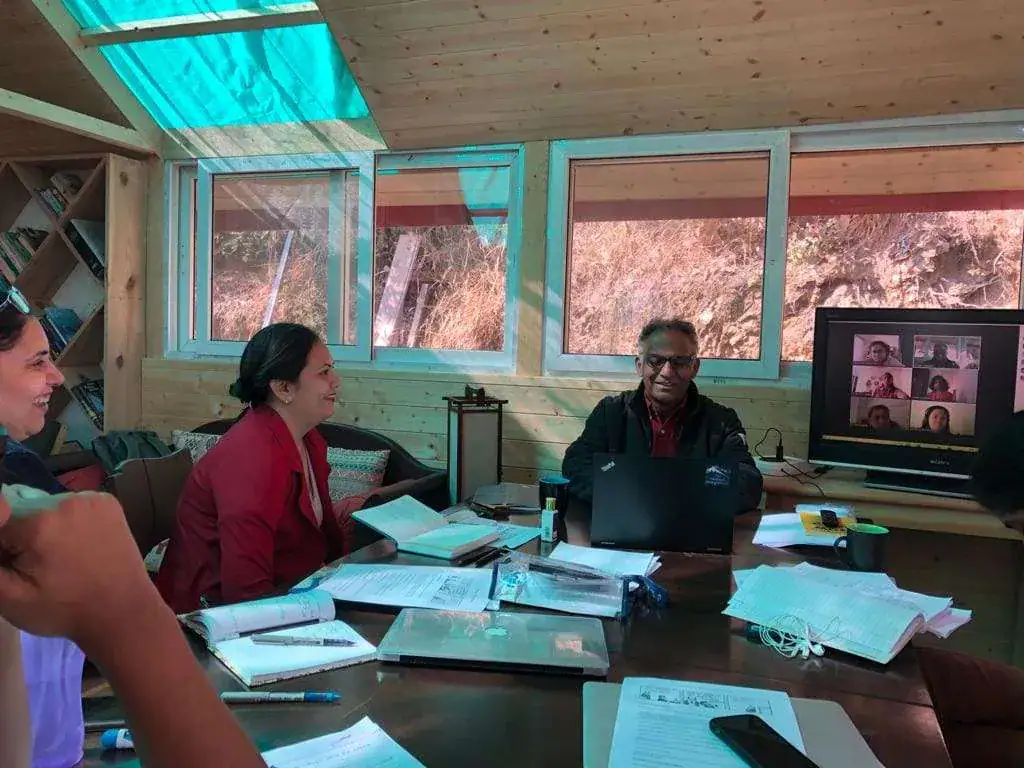
The sessions are held in the open or in the book lounge. Some meals maybe served in the open too if the weather is good. The mountains are our muse.
The small group experience ensures personalized learning and feedback. To write a great book, leave your distractions behind for three days and learn in the serenity of The Himalayan Writing Retreat.
One of our past attendees has beautifully captured her experience of traveling to and staying at the retreat. You can read her post Here.
To apply for this non-fiction book writing course, please click the blue button below and fill out the application.
About the Instructor
Aakash Singh Rathore
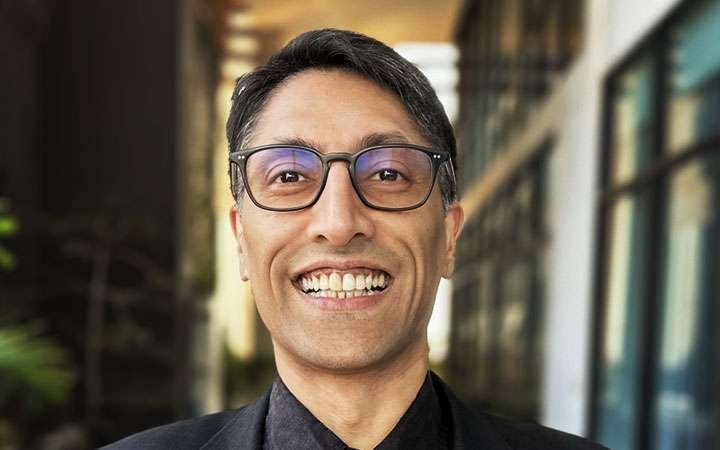
Aakash Singh Rathore is an internationally-reputed author of nine books, including the just-released Becoming Babasaheb: The Life and Times of Bhimrao Ramji Ambedkar (Harper Collins, 2023), and the best-selling Ambedkar’s Preamble: A Secret History of the Constitution of India (Penguin, 2020). He has also published 17 edited books ranging from literature and philosophy to law and religion, and even on wine (The Complete Indian Wine Guide, Roli Books, 2007). His Hegel’s India (Oxford University Press) was short listed for the Non-fiction Book of the Year at the Tata Literature Live Book Awards 2017. Rathore’s books have been reviewed and featured in Scroll.in, The Wire, Outlook, The Caravan, The Quint, The Print, Livemint, The Week, EPW, The Hindu, The Indian Express, The Tribune, Deccan Herald, and many other popular print and online media outlets.
Rathore writes the monthly column “Poorva Paksha” for the Deccan Herald, and has bylines in The Indian Express, Outlook magazine, The Times of India, Firstpost, Huffington Post, The Quint, The Print, Scroll.in, and other magazines and papers. Rathore is also a top-ranking triathlete, and has finished eight grueling Ironman Triathlons, known as the world’s most difficult one-day sporting event. He has featured, both as an athlete and as an author, on the Asia News Network, News18, The Caravan, Pragati podcast, The Seen and the Unseen podcast, Deccan Herald, The Sunday Times, The Hindu, The National, and NDTV. He has also spoken at the Jaipur LitFest, The Times of India Delhi LitFest, the Vidarbha LitFest, the Bangalore LitFest, and other litfests around the world. He regularly delivers talks, lectures, workshops and courses throughout India and abroad.
Detailed Program – Non-fiction Book Writing Masterclass
Day 0: Reach the Himalayan Writing Retreat
Pre-Work:
Prior to your arrival, during your journey, or upon arrival at the Himalayan Writing Retreat, you must draft a 1-page project proposal that includes: (a) a 250-word synopsis of the book that you want to write (including a tentative title), just like the blurbs that you find on the inside flap of a published book; (b) a detailed timeline that includes the date you intend to begin research and writing, the number of days/weeks/months that the writing will take you, and the date that you plan to send the completed manuscript to the publisher (assuming that you’ve found a publisher).
Day 1: IDEAS (in your head)
Does every book idea deserve to become a written book? Does every written book manuscript deserve to be a published book? Why do you want to write the book that you want to write? Why do you think your idea/book merits publication and dissemination? How can you persuade others to agree? Published books all begin as immaterial thoughts. Generally, clarity of thought translates into effectiveness of a manuscript. The more effective a manuscript is in conveying the ideas that you sought to convey, the more likely it is that a commissioning editor will see it as meriting publication, and a reader will see it as worth reading. Day 1 is all about ideas. Generating them, clarifying them, upgrading them — and then launching the process of writing them out systematically. By the end of Day 1 you will have drafted the dreaded book proposal, the quintessential foundation for publishing any non-fiction book.
Day 2: WORDS (on a page)
In the notes app on my phone are 12 well-conceived ideas for books, each with title and outline, most with chapter-headings and sketches of the content, and a couple as completed book proposals. As much mental anguish as it would cause me to delete the app and lose all of this, nothing would actually change in the real world — because these mere ideas are most likely never destined to become typed-out words on pages. This move, from potential to actual, is almost miraculous. And for this miracle to be realized, it does not take genius; it does not really even take talent. What it takes is discipline. On Day 2, we focus on the discipline of writing. This includes revisiting how you do your research, how and why you read, how much time you put in to filling up your head, and how much time you put into emptying it out onto the page — and where, physically, you do it, when (what days, what time?), and how do you shut up your kids (or siblings or parents) while you’re at it? This is the discipline of writing. On Day 2 we will do a lot of writing together. We might also do pushups.
Day 3: BOOKS (in the readers’ hands)
Let’s assume that the miracle has occurred: you have a complete draft manuscript. What does it take to get all these words on the typed pages to transmogrify into a published, physical book that you — or better, that a reader — can hold in hand? This includes (a) the arduous task of finding a publisher (which in itself presupposes the book proposal), (2) the production of the book (copy-editing, layout/design, proofreading, indexing, cover art, blurb, author bio, back-cover endorsements, etc), and (3) its promotion (getting reviews, features in press/media, author interviews, talks, appearances at LitFests, etc). Day 3 will be spent learning how to approach these three aspects of non-fiction book production, publication and promotion, with hands-on writing exercises, and a huge number of hacks revealed by your instructor, based on his 20 years of writing/publishing experience.
Day 04: Departure
Breakfast, and get signed up for the follow-up session to be held online 90 days from now (approx 01 August 2024). Departure from Himalayan Writing Retreat.
Travel and Stay
The Himalayan Writing Retreat is built for writing and learning. We are rated 5-star on google and facebook.
Once here, you will be sharing a room with a fellow participant (unless we’ve confirmed a single). All essentials like food, hot water, towels etc. are provided. No hidden costs.

It can snow in winter. Weather can vary and the weather chart of Mukteshwar (12 km from the retreat) is here. A pair of sturdy walking shoes, some rain protection and an extra layer or two are always a good idea.
Our rooms are built to let nature in and inspire you. To see pictures of the rooms click here . To see pictures of the writing spaces click here
Depending upon where you travel in from, you can reach us by road, train or air. Even if flying or taking a train, the final stretch is a drive, and the last 150 metres is a walk.
By Road
The retreat is a 370 km/9 hours drive from Delhi. If driving, we recommend you leave early. Note that parking at the retreat is on the road – we do not have any private parking. We have limited driver accommodation, so please check in advance.
Overnight Volvo buses ply between Haldwani and Delhi, the more reliable of which are government operated. You can book those here. Private Volvos and Sleeper buses also ply between Delhi and Haldwani, which you can book on redbus. Make sure you pick a bus with a high (4+) rating.
By Train
There are three trains a day from Delhi to Kathgodam, the nearest train station. Some others also come in from Kolkata, Lucknow and Dehradun. From Delhi, Ranikhet Express is a convenient overnight train both ways, but finding tickets can be difficult.
Most people prefer to take the Kathgodam Shatabdi (Delhi dep: 6.20 AM, Kathgodam Arr: 11.40 AM). A cab from Kathgodam to Satkhol takes about 2.5 hrs / Rs. 2200 (more for a big car). Cabs are often shared by participants.
By Air
There are daily flights from Delhi to Pantnagar. A cab from Pantnagar to Satkhol takes about 3.5 hr / Approx INR 4K.
There are direct flights from Mumbai and Bangalore to Bareilly 3-4 days a week. Satkhol is a 5hr / INR 5.5k cab ride from Bareilly. (More for a big car). Cabs are often shared by participants.
Frequently Asked Questions
- What can one expect from the Non-Fiction Writing Workshop (Online/ At the Himalayas)?
You can expect to learn a lot about non-fiction writing.
You can also expect to be able to work on your (long-pending) book and see it published. Our participants win awards. They write short stories and have published over 45+ books so far. Check them HERE.
To add further, this workshop will be beneficial for anyone interested in writing non-fiction. For e.g. books like Do Epic Shit, Atomic Habits, etc, or a book of essays on personal experiences. If you are planning to write a book of essays that are opinion-based, theoretical in nature, and backed by research and stats, then that is pure non-fiction. A book on management, how-tos, tips and tricks, guides, etc. are all non-fiction.
- Can I have recordings of all the sessions for Online Workshops if I miss them?
As a matter of policy, we do not record any of our sessions. The idea is to build on each others’ knowledge through interactions and feedback while working together throughout the workshop.
- I write in my mother tongue which is not English. Can I attend this workshop?
Yes, you can. We have had participants before who write in Bengali, Punjabi, and Tamil. However, the medium of instruction is English, as are the class readings, etc. So some proficiency in English is essential. If you write in a language other than English, please share this in the form.
- I have never written a book but want to write one about my experience of working as an HR head for 25 years with a specific focus on analysing people before hiring them. Will this workshop be helpful for that?
Our Non-fiction Writing Course (both physical and in the Himalayas) is recommended for writers who want to write non-fiction. So yes, this workshop will help you write that book.
- What is the pre-work?
Pre-work for this Non-fiction Writing Course is both reading and writing. A set of excerpts are to be read by all participants. These are used as examples and context to discuss and understand various concepts in the workshop. Further, each participant has to prepare a one-page project outline which they will then build on during the Non-fiction Writing Course. The pre-work is shared a few days before the workshop to give you ample time to go through it.
- Is the pre-work mandatory?
Yes, it is mandatory.
- What is the daily schedule (different for online and offline)?
The schedule for the Himalayan workshop is shared below. For the Online Writing Workshop, it is the Day 1-3 schedule (9 AM – 5 PM over 3 days) without the Day 0 and Day 4 activities.
Day 0 ( a day before the workshop starts) reach Satkhol anytime.
Day 1-3
- 8.15 am Breakfast in the lounge
- 9 am – 1 pm Attend the workshop with the rest of the participants
- 1 -2 pm Lunch Break
- 2-5 pm Attend the workshop with the rest of the participants
- After 6 pm Go on nature walks, watch the sunset and enjoy the beauty of the Himalayas.
Day 4
- 8.15 am Breakfast in the lounge
- 10 am Checkout
- Can I decide which sessions to attend and pay accordingly?
The workshop has a sequential structure. Each day builds on the previous one, and sessions are often connected. Ideally, you should attend the full workshop to get the most out of it. You cannot cherry-pick sessions you’re interested in or pay part of the fees.
- What if I miss out on any of the sessions for personal reasons?
Our sessions are live and not recorded. Hence, in case you miss out on any of the sessions, there is no way you can attend it again except perhaps ask any of the other participants to brief you on those topics.
- What’s in store after the workshop is over?
We believe in creating a community for writers. After attending one of our courses, the participants stay connected and work as a writing group. The close bond formed from the shared experience means you share, get feedback, become beta readers, critique each others’ works, and much more.
We also host free events like the Himalayan First Draft Club and the Himalayan Book Club. You can also join our Facebook Group: Let’s Talk Writing, where, as the name suggests we just talk about writing and nothing else.
- What should I do to get the most from the Non-fiction Writing Workshop?
Firstly, participate diligently, and throw yourself into the process with an open mind.
If you can, try and keep a few days in hand to write after the course is done. Don’t jump right back into your daily grind after the workshop. A few participants who have attended the workshop at the retreat have locked themselves up for days after the workshop and focused 100% on their writing. They have reported massive progress. Not returning to your everyday life immediately after the workshop helps you apply what you learn.
The Non-fiction Writing Workshop will fill you with inspiration and ideas. Tapping into that energy and enthusiasm right after the workshop can be magical. So if you can, stay on for some time after the workshop – either with us or elsewhere. We offer a great deal for participants wanting to stay on.
If participating online, try and create some time after the Non-fiction Writing workshop to work on your writing.
12. Can I reach out to Chetan Mahajan after the workshop?
Working one-on-one is very time-intensive, and Chetan does very little one-on-one work.
He works as a writing coach with a few select authors. His coaching calendar is full right now. The details for it can be found here. You can go through this and reach out in case you wish to consider joining the waiting list to work with him as your Writing Coach.
Have more questions? Feel free to write to us at info@himalayanwritingretreat.com or connect with us at +91 73035 16665 (Call/ WA/Signal).
* * *
Check out participant Rohan Banerjee’s experience at The Himalayan Writing Retreat in Aakash Singh Rathore’s Non-fiction Writing Workshop. Read it here.
Event Summary
** Early Bird Price: Rs.25,000/- (+GST). Early Bird ends on April 06, 2024
** Regular Price: Rs.27,400/- (+GST)