International Writers Retreat in the Himalayas with Jacqui Lofthouse
Spring 2024 – Retreat Schedule
April 2, 2024 – April 12, 2024

India is wonderfully contradictory. It is ancient yet modern. Throbbing yet calm. Welcoming yet scary.
This 10-day experience is curated and designed for writers. Guiding you on this literary adventure will be Jacqui Lofthouse, the founder of The Writing Coach, UK. The Himalayan Writing Retreat conducts many such events every year, and has a track record for its teaching as well as hospitality.
The retreat begins with a warm welcome for each participating writer at Delhi International Airport. Elephants, snake charmers and slums are the cliches of India. So is the Taj Mahal. We’ll visit the Taj – the most compelling, majestic cliché we’ve ever seen. And then we’ll head to silence and nature in the Himalayas, where birds chirp and silence sings. Here, you can clearly, loudly hear your inner voice.
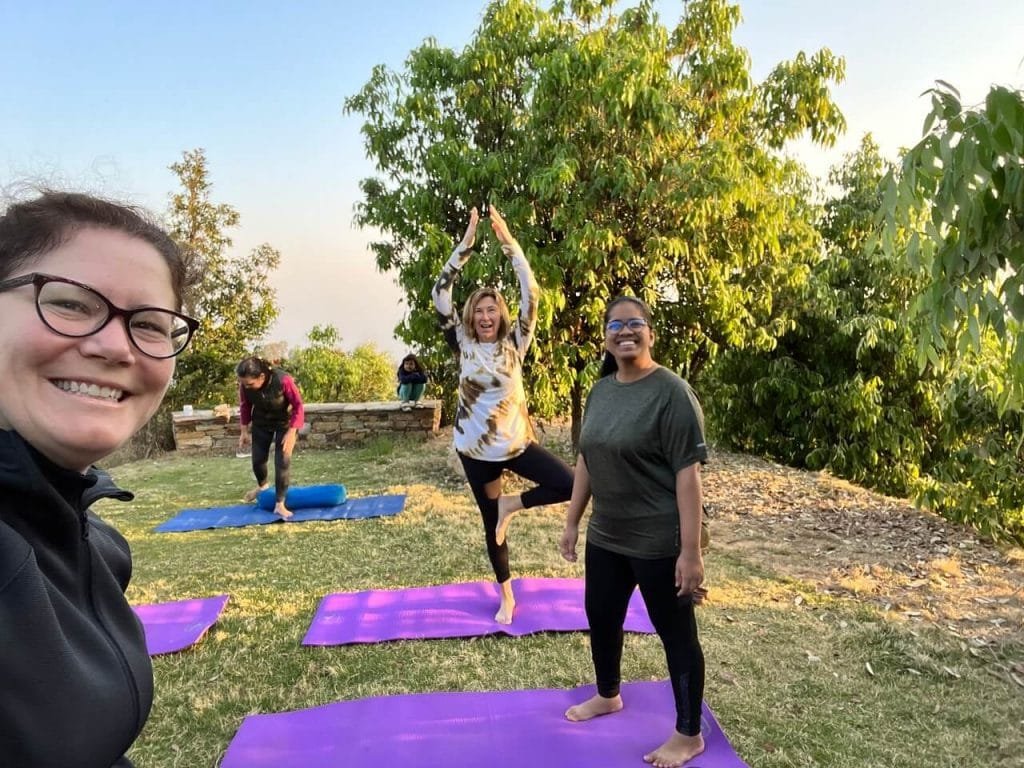
All stays are pre-arranged, all transfers are by private coaches or First Class trains. The serenity of the rural Himalayas is a stark contrast to the touristy India of the first two days. In the mountains, you continue to discover a sliver of India everyday, but at a relaxed, unhurried pace. A dedicated yoga teacher holds sessions everyday. You spend many hours free-writing in the halo of Himalayan peaks six times taller than Ben Nevis. You’ll end with a night stay at a 150-year-old Indian Haveli (Mansion) in the Old city of Delhi, which is now a UNESCO Heritage Hotel.
The craft sessions center on character and dialogue and also touch upon plot and editing. Every participant gets feedback through a workshop with the retreat leaders – Jacqui Lofthouse and Chetan Mahajan.
Jacqui Lofthouse is the founder of The Writing Coach, a leading London-based mentoring and development organisation for writers. She is the author of four novels and was nominated for The Booker Prize by Penguin for her first novel ‘The Temple of Hymen’. Her novels have sold over 100,000 copies in the UK, the USA and Europe, and have been widely reviewed. She is motivated to help other writers to bring their important stories into the world.
Chetan Mahajan – a memoir author and writing coach – will support her. A graduate of Northwestern University, USA, Chetan is a Penguin published author, columnist and cofounder of the Himalayan Writing Retreat. This ten-day retreat will be held in April 2024. For other international retreats conducted by the Himalayan Writing Retreat, click here.
Event Summary
* 4 Seats Left *

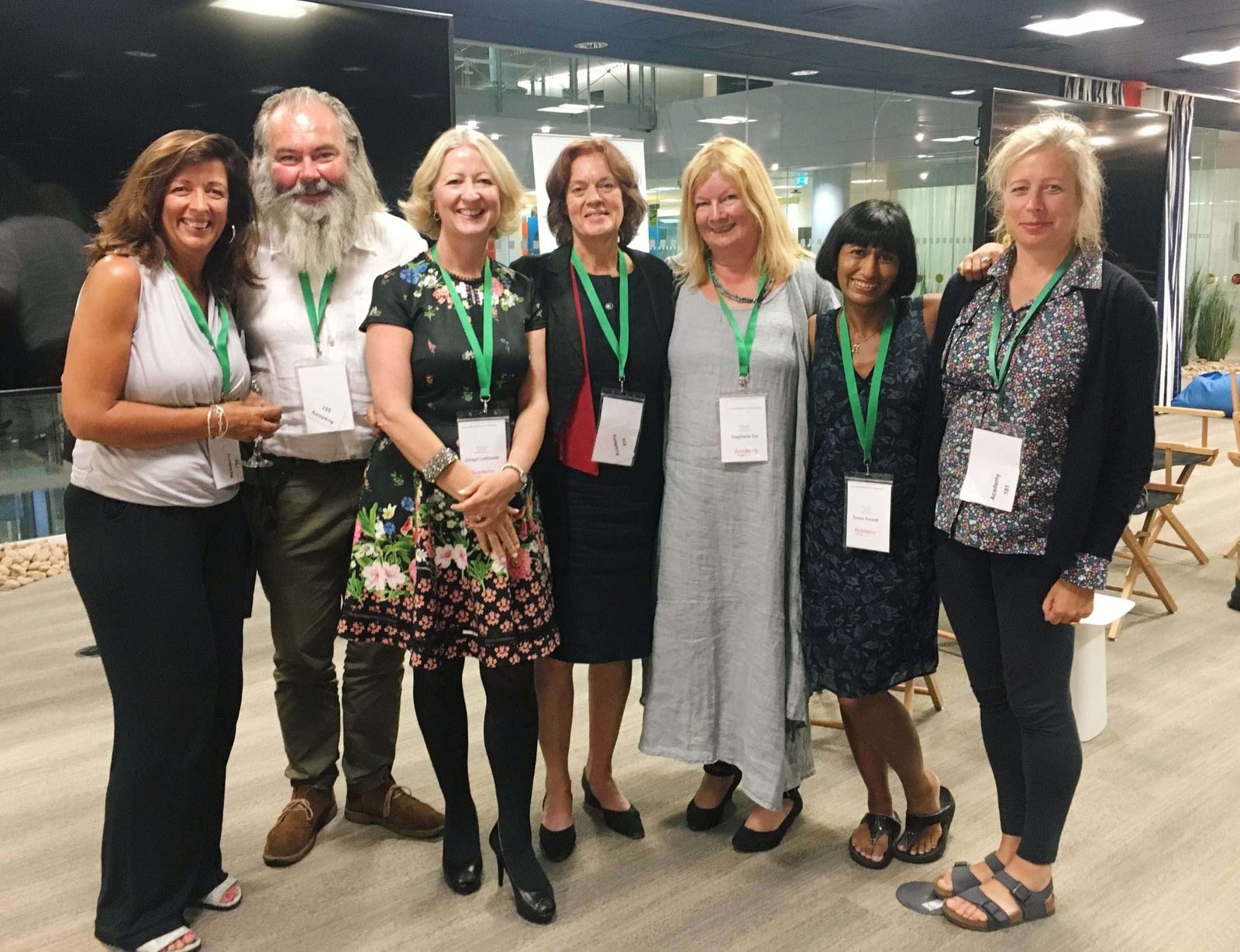
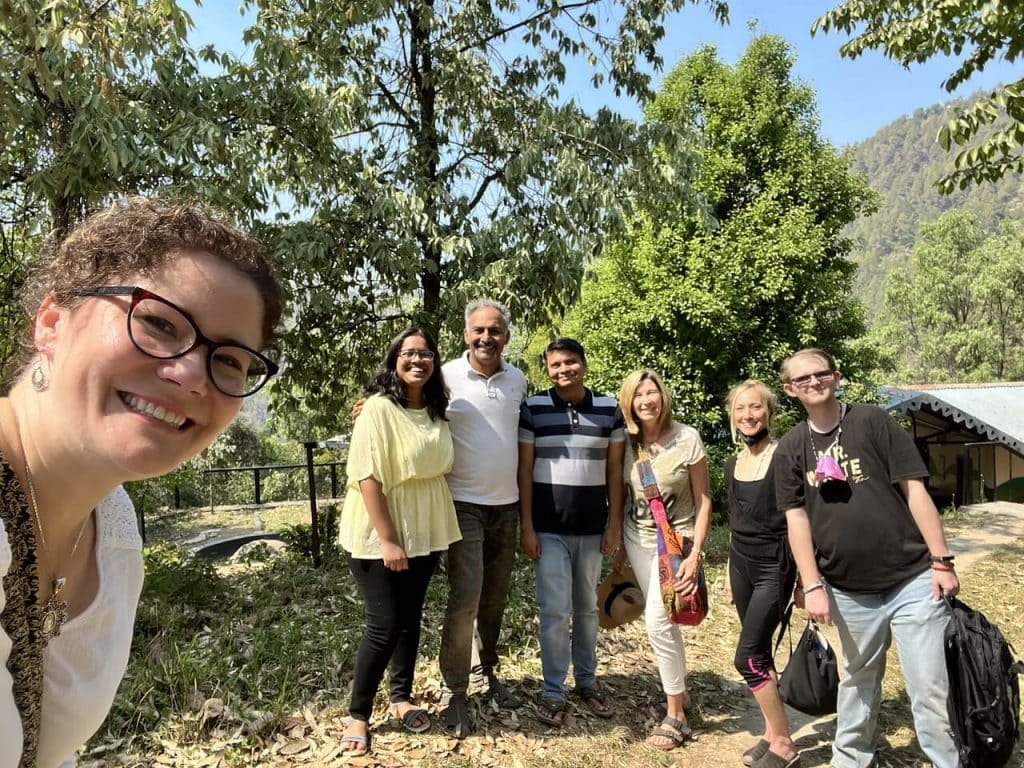
Jacqui Lofthouse (third from left) chairing a panel event at Google Academy
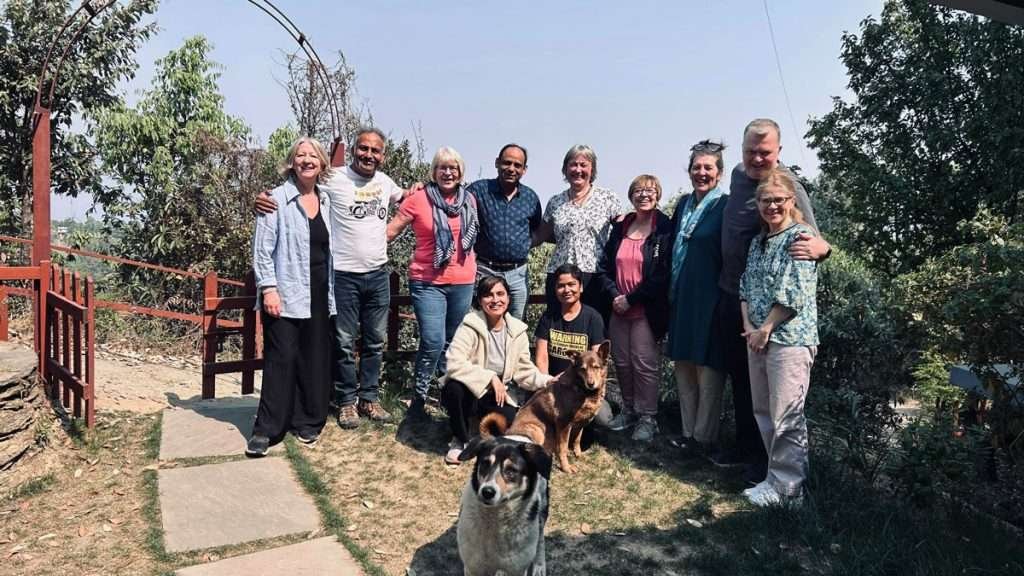
L-R (sitting in front) : Aparna Dalakoti, Debdatta Dasgupta
Standing in front: Po the dog
Location : Himalayan Writing Retreat, entrance lawn
Summary Schedule.
April 02
Lunch
At Bungalow 99 (or equivalent), our Delhi Hotel.
Afternoon / Evening
Received at the airport and brought to the Delhi Hotel.
Dinner
Dinner at one of Delhi’s nicest restaurants
April 03
Breakfast
6.30 – 7 AM
Morning Session
(7 AM leave for Taj Mahal, Agra – a four hour drive.)
Work: Observation and specific detail.
Lunch
After seeing the Taj, at one of Agra’s finest restaurants.
Afternoon/Evening
Drive back from Agra to Delhi
Dinner
At the hotel
When
Tuesday, 2 April, 2024 – Friday, 12 April, 2024
Who
The workshop is led by Jacqui Lofthouse & Chetan Mahajan. (For instructor profiles scroll down.)
Where
The Himalayan Writing Retreat, Satkhol Village. Uttarakhand – 263138 (India).
How much
GBP 2900 all inclusive.
If your application is accepted, you can confirm your spot with a non-refundable registration amount of GBP 600. The balance payment of GBP 2300 would be due on January 15, 2024.
The price includes all classes, yoga sessions, transfers, in-country travel, hotel stays, retreat accommodation, food and water. The price does not cover flights and personal expenses such as shopping, visiting places on your own, extended stays before or after the retreat, tips etc. Alcohol is not included in the price, but you can grab some at Duty free or at a local store.
Only ten participants accepted on a first-come first-serve basis. To apply, click the button below.
About your Mentors
Jacqui Lofthouse

Jacqui Lofthouse is Founder of The Writing Coach, a leading London-based mentoring and development organisation for writers. She is the author of four novels and was nominated for The Booker Prize by Penguin for her first novel ‘The Temple of Hymen’. She is also the author of ‘Bluethroat Morning’ (Bloomsbury), ‘Een Stille Verdwijning’ and ‘The Modigliani Girl’. Her novels have sold over 100,000 copies in the UK, the USA and Europe, and have been widely reviewed.
Jacqui began her career as an actor touring India as Sheila in J.B. Priestley’s ‘An Inspector Calls’. She went on to study Drama and English at University of Bristol and subsequently worked in radio production and media training. In 1992 she studied for her MA in Creative Writing at the University of East Anglia under Sir Malcolm Bradbury and Rose Tremain.
Jacqui has taught creative writing in a broad variety of settings from City University, London to Feltham Young Offenders Institution. She has coached and advised many advanced writers including international prize-winning authors, broadsheet newspaper columnists, academics from the Universities of Oxford and Cambridge, and MA Creative Writing graduates. She has also taught English and Drama in London secondary schools.
She is motivated to help other writers to bring their important stories into the world. Jacqui has recently completed her first YA novel.
Chetan Mahajan

Chetan Mahajan is the co-founder of the Himalayan Writing Retreat. A Penguin-published author, he quit the corporate world and moved to a village in the Himalayas to be a full-time author, blogger, and teacher almost a decade ago. He is also a writing coach with the London based “the writing coach”.
Chetan blogs about life in a Himalayan village at www.uncity.blog. This blog won the Indiblogger award for Humor in 2017.
He is currently working on his first novel “Tara and Vishnu” and also co-authoring a non-fiction book. Chetan often writes columns for Readers Digest, Mint, Outlook Magazine, Hindu Business Line, and the Hindustan Times (Brunch).
Detailed Program
Spring 2024 – Retreat Schedule.
We begin in the cities of Delhi and Agra. Then we travel to the Himalayas. All stays and transfers are pre-arranged. The serenity of the rural Himalayas is a stark contrast to the touristy India of the first two days. In the mountains, we continue to discover a sliver of India every day, but at a relaxed, unhurried pace. Up here, you write in the halo of Himalayan peaks – 20,000 feet taller than the tallest peaks in the UK. If you have questions about India, click here to read our India travel FAQs.
Program
The daily program is outlined below. We plan on having craft classes/topics each day. In addition, we’ll have two one-hour one-on-ones with the instructors (2 manuscripts a day).
Day 1: April 02, Tuesday
Welcome!
Arrive at Delhi Airport any time after 12 noon on the 2 nd of April. One of the Team members from the Himalayan Writing Retreat (we’ll share these details before your arrive) will meet you at the airport and bring you straight to your hotel. Your stay is arranged at the Bungalow 99 (or equivalent), one of Delhi’s best Boutique hotels. In addition to being highly rated, the hotel is also close to Dilli Haat – a great place to explore India’s handicrafts and traditional arts, and also to shop.
No class on this day.
Today, we’ll get settled and have an opportunity to get to know one another better.
Note: Many international flights land in Delhi at unearthly hours. If your flight gets in before noon on the 2nd of April, we will still meet you at the airport and take you to your hotel. We’ve also negotiated a great room rate at which you can stay for an extra night. Please confirm your travel itinerary to us at the earliest opportunity so that we can book accordingly.
Day 2: April 03, Wednesday
This love story inspired a Wonder of the World.
We start the day early and drive to Agra in a private coach to see the Taj Mahal. “Jet Lag is for Amateurs” say’s Dick Clark but it is real, and this four hour drive from our hotel will allow you to rest or sleep off some of your jet-lag. We will try and get back in time for a short session on travel and writing soon after. The round trip will take a full day. Lunch will be at one of the best hotels in Agra. We will have dinner and stay the night at our Delhi hotel.
Topic of the Day: Observation and Specific Detail (no workshop)
The liminal state of travel (and even jet-lag!) is perfect for observation—you’re extra-sensitive, raw, and open to experiencing your new surroundings in a more passive and receptive way. Today, we’ll take advantage of any discombobulation to practice openness to specific sensory detail via close observation of the world around us.
Over breakfast, you’ll receive brief instruction on our observational tasks for the day, designed to enrich and expand upon your experience at the Taj Mahal. After we return, we will reconvene over dinner to discuss our observations and tools for using those specific details in our writing during the days to come.
Henry James said: “Try to be one of the people on whom nothing is lost.” This is good advice for human beings in general, but especially for writers. As we visit the Taj Mahal, consider: what can you notice in these surroundings that everyone might notice? What can you notice that very few people—or even no one but you—might notice? As you do so, remember that most people rely on their sense of sight above all the others. Can you use not only sight but also hearing, touch, smell, and taste as you try to let nothing be lost? What do the details that you take note of say about the place and the people in it? What do they say about you, the observer?
Day 3: April 04, Thursday
Off to the Mountains!
On the train ride to continue honing our skills of observation and connection to place, try to write a story or poem in the voice of a personified map. It can be a street map, a treasure map, an ordnance survey map etc., but use the voice to speak directly to the reader in order to get them to do or understand something. An obvious choice of map might be the route you have encountered so far in your journey to get here—the airport you flew out of at your point of origin, the one at the New Delhi Airport, the hotel, the Taj Mahal, the train station. But you could also go further afield. As we did yesterday, can you have this map also appeal to all five senses? Not merely sight, but hearing, touch, smell, and taste?
We head out early and board the train from New Delhi Railway Station to head towards the Himalayas. We board the Kathgodam Shatabdi Express train and travel First Class to the town of Kathgodam (5 hours and 40 minutes). This is where the mountains start. We transfer to taxis for the last three hours of our travel. Halfway home, we stop for lunch at the iHeart café owned and run by a couple from Bozeman, Montana (really!) who specialize in awesome coffee. We arrive at The Himalayan Writing Retreat (THWR) in Satkhol Village – our home for the next seven days.
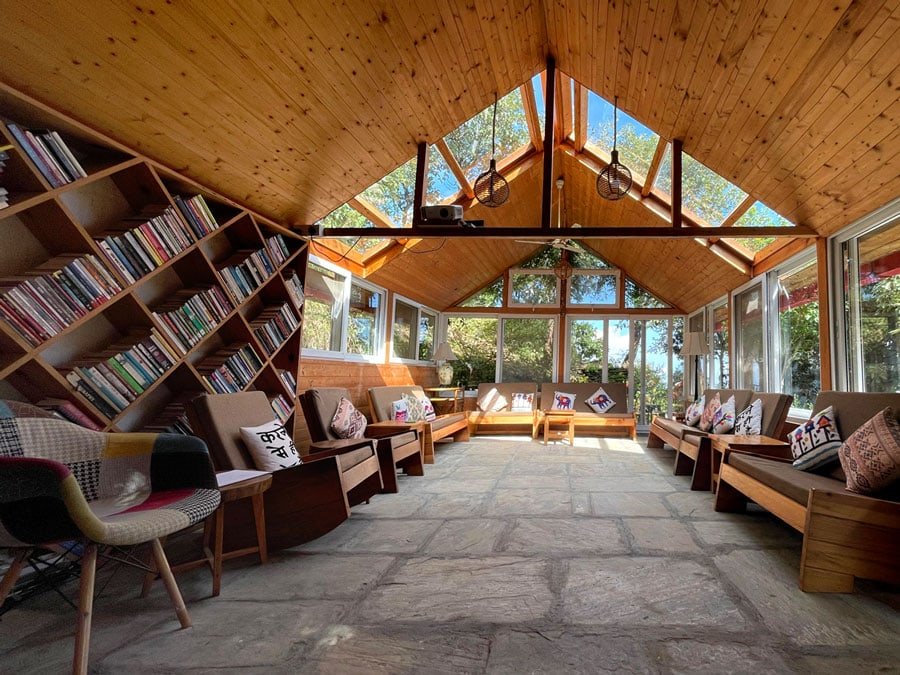
The Himalayan Writing Retreat is custom-built for Writers. It is built to provide inspiration and to offer a sense of serenity. This niche property has six double-occupancy guest rooms and a full staff to cater to your needs with love and the highest standards of hygiene. The food is tasty, fresh and includes a lot of local cuisine.
We reach the Retreat around 4 PM and have a short session in the evening where we discuss our plan for the next few days.
Topic of the Day: The First Mystery
Our central idea for our time together is ‘Authenticity of Voice and Story’. Whether you are writing fiction, non-fiction, poetry, or take a hybrid approach, our aim, this week, will be to enable you to ‘experiment in order to come home’ to a voice and a story that is entirely your own.
This evening, we will consider novelist Rose Tremain’s concept of ‘the first mystery’. Using the essay of the same name as a starting point, we’ll explore what our own ‘first mystery’ may be. We will examine why that ‘mystery’ is authentically ours and how it relates to our personal story and the themes and fascinations that are unique to us.
Day 4: April 05, Friday
Early Morning: Yoga session (evening yoga session also available on demand)
Morning: Workshop sessions and craft class at the Himalayan Writing Retreat.
Afternoon: an optional trip to the local school (www.chiragschool.org) and a social enterprise (http://b2r.in/). For those interested we can walk back – it is a 2 mile walk through the forest.
Evening: Open Mic Bonfire after sundown.
Topic of the Day: The Teller of the Tale
In order for a story to cohere and even to enchant us, we need to feel drawn in by the ‘voice’ of the piece. An unforgettable voice carries us through a work of literature and holds us in a ‘fictive spell’. Understanding ‘where’ the voice of any individual work comes from – in time, in place, in relation to the narrative – gives us a kind of anchor in the tale. Whether the teller is an omniscient narrator or a first-person character, what matters is that the voice of a work feels true and consistent. The Teller of the Tale is our guide and we want to trust them.
Using Jeanette Winterson’s refrain ‘I’m telling you stories. Trust me’ to inspire us, we consider ‘where’ in time and place our own narrator ‘might’ be placed. We will use the word ‘might’ often this week, as writing is an organic process and does not always have to be nailed down in a perfect first draft. We’ll also consider Graham Swift’s essay ‘Postscriptive Therapy’ as a way into the idea of the ‘urgency of the telling’.
Day 5: April 06, Saturday
Early Morning: Yoga session (evening yoga session also available on demand)
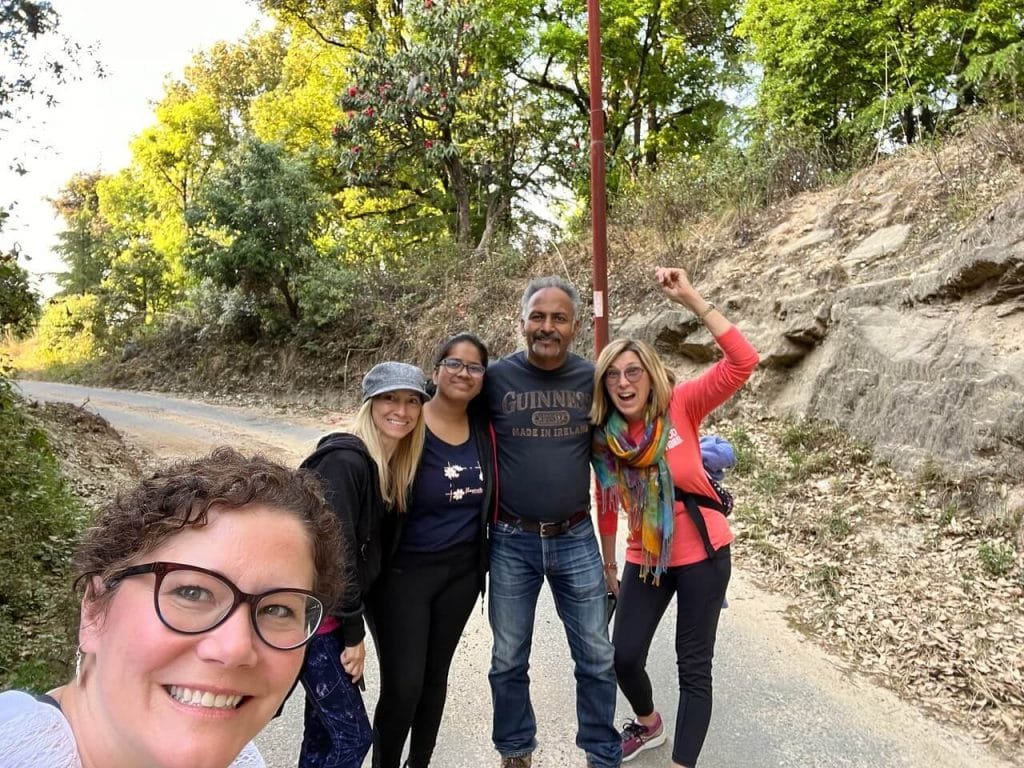
Morning: Optional hike & write. After breakfast we head out for a short hike to a nearby temple on the hilltop. Along the way we stop and write sitting on a ridge in the pine forest.
Late morning/lunch: Workshop and craft class at the Himalayan Writing Retreat.
Afternoon – open time at the Himalayan Writing Retreat, or explore the forest reserve.
Evening: Bollywood movie night. It’s kitschy, yes. But it is part of the India experience. So we watch a Bollywood movie with English subtitles. And Popcorn.
Topic of the Day: Words, Words, Words
Hamlet’s famous phrase is used here to tempt us into an exploration of the nature of language. What is it in a writer’s individual ‘voice’ that makes us ‘recognise’ them instinctively? Why do we fall in love with the ‘style’ of a particular author and how does their use of language contribute to our immersion in the narrative, as well as conjuring emotion?
Whether you are writing memoir, fiction or poetry, your choice of vocabulary, register, use of figurative language and sentence structure, matter. In our discussion, we will consider sensory language, concrete nouns, strong verbs, dialect and metaphor.
By examining work by Arundhati Roy, Kazuo Ishiguro and Wendy Brandmark, we’ll gain
insights into how the ‘essence’ of an individual writer’s voice is made up of the many choices they make in relation to language. We begin to unravel how word choice affects the way we engage with the narrator and how specific language also conjures mood.
Day 6: April 07, Sunday
Early Morning: Yoga session (evening yoga session also available on demand)
Morning: Optional walk through a local village.
Late afternoon: generative class on writing and reflection.
Topic of the Day: Memory and Instinct in Character Portraits
We all remember characters in fiction who have drawn us in entirely so that we become
entranced by them and their stories – almost as if they were real people. Sometimes, however, we may have experienced narrators who ‘judge’ the character, yet we feel the narrator’s views don’t match our own perception. Why? Because we have seen how the character acts, what they say, how they appear and what they think.
Yet how do we, as authors, create characters who come fully alive to the reader? Today, we use painted portraits as starting points to inspire written character portraits. We consider how character is often revealed through conflict and we also discuss how characters may develop organically during the writing process.
Reading work by Roopa Farooki, Douglas Stuart and Sybille Bedford, we ask questions about the role of knowledge and memory, as well as research in our character portrayals.
Day 7: April 08, Monday
Early Morning: Yoga session (evening yoga session also available on demand)
Morning: workshop session and craft class at the Himalayan Writing Retreat.
Midday and afternoon: We head over to the hill-town of Mukteshwar, a one hour drive.
We visit the ancient temple of Mukteshwar (https://bit.ly/2ujZUbJ).
Topic of the Day: Beneath the Surface: Action and Subtext in Dialogue
A good actor can easily tell good dialogue from bad. The actor must inhabit the text and make the conversations within it seem real. Where dialogue is ‘clunky’, even the best actor will struggle. But when the dialogue is working successfully on multiple levels, then the actor can use the full range of their skills, appear entirely natural in their speech, hint at sub-text, play with delivery and affect the other characters within the piece.
Today we will explore how great dialogue enables the reader to more fully believe the characters and enter into their worlds – even when they are not the main narrator. Dialogue reveals each character and is a window onto their experience, as well as their intentions, wants and desires.
We will look at the work of Jhumpa Lahiri, Donna Tartt and Ernest Hemingway in relation to dialogue, sub-text and ‘action’.
Day 8: April 09, Tuesday
Early Morning: Yoga session (evening yoga session also available on demand)
Morning: Free writing time at the Himalayan Writing Retreat, or explore on your own.
Afternoon: Workshop session and craft class at the Himalayan Writing Retreat.
Topic of the Day: Balancing Organic Growth with Traditional Plotting
John Fowles wrote: ‘I do not plan my fiction any more than I normally plan woodland
walks; I follow the path that seems most promising at any given point, not some itinerary
decided before entry.’
So many authors begin by writing fragments. And it is easy to fear – in this world of
Hollywood tales – that this approach is somehow wrong. That if we don’t begin with a three-act structure, a clear inciting incident and mapped out series of plot points, then we will run into trouble. Yet in truth, we all have a sense of ‘story’ and ‘structure’ and we
bring our sub-conscious awareness of traditional forms into our work even when we are
not insisting on it.
Our focus today is how we balance our instinct with a desire to follow the ‘rules’. We consider questions relating to structure by looking at work by Sarah Waters, Italo Calvino and Virginia Woolf.
And we keep writing our fragments.
Day 9: April 10, Wednesday
Early Morning: Yoga session (evening yoga session also available on demand)
Morning: Workshop session and craft class at the Himalayan Writing Retreat.
Afternoon: Optional hike to visit the ancient Kapileshwar temple (said to be over 1000 years old).
Topics of the Day: ‘The Fictive Spell’ and its role in Revision and Editing
When we read a work of fiction, a memoir, or a poem that transports us, when we feel so
involved that we feel we entirely leave the real world behind, just for a short while, we have entered ‘The Fictive Spell’.
This is the alchemy that is our writing. When the work is fluent, a sense of place is fully realised, characters act according to their intention and the prose is tight and polished – the effect is that we feel caught in a spell, entranced.
We can use our knowledge of this ideal in our editing work. When we read our own work back –our rough, unpolished drafts – we might notice the parts when we achieve this fluency and other moments where the narrator is too intrusive, the point of view inconsistent or the word choice flat. Once we have an eye for this, we can begin to look out for anything that ‘breaks the spell’ and we understand that this is the place to put our attention. Sometimes just changing a sentence or two can alter the entire feel of an extract. On other occasions, a reinvention is more effective. We will look at both and consider what is needed in our own work.
Today, we will have time to re-read some of what we have written this week, and to develop our understanding of our own strengths. We will return to the idea of authenticity and voice, as we understand the nature of our own particular kind of fictive spell. We spend time articulating our identity as a writer – what we have discovered about our voice this week, and how we will use these new insights as we move forwards with our writing lives.
Day 10: April 11, Thursday
Early Morning: Yoga session
Morning: We pack up and head back to Delhi by taxi and train. Our stay in Delhi the night of April 9 th is at the Majestic Golden haveli in the old city, which is a part of the Dhampura Haveli, a Unesco awarded Unique Heritage Hotel (Detail here: https://www.havelidharampura.com/).
Day 11: April 12, Friday
Morning: After breakfast we check out from the hotel and head out for a guided tour of the old city. We start with the spice market – where all your senses will be on overdrive. A short rickshaw ride takes us through more of old Delhi where we visit a Jain temple, a mosque end our tour with a visit to the Gurudwara Sis Ganj Sahib, a Sikh temple. The tour is a deep dive into Indian culture and values. This tour, again, is conducted by the highest rated operators in India.
After lunch back at the Haveli, we can head out for some shopping or you can wait at the hotel for your flight (for waiting here and keeping a room, extra charges may apply).
Airport drops are arranged for everyone based on your flight schedule. Those wishing to stay longer can do so at a pre-negotiated rate.
Travel and Stay
The Himalayan Writing Retreat is built for writing and learning. We are rated 5-star on google and facebook.
Once here, you will be sharing a room with a fellow participant (unless we’ve confirmed a single). All essentials like food, hot water, towels etc. are provided. No hidden costs.

It can snow in winter. Weather can vary and the weather chart of Mukteshwar (12 km from the retreat) is here. A pair of sturdy walking shoes, some rain protection and an extra layer or two are always a good idea.
Our rooms are built to let nature in and inspire you. To see pictures of the rooms click here . To see pictures of the writing spaces click here.
FAQs
You’re probably traveling to India for the first time and have many questions you want answers to. We’ve tried to answer some of those here. We’ll also answer specific questions during online info-sessions we have with all participants before your travel.
Q. Do I need a Visa?
A . Citizens from some countries need visas in advance. Travelers from Maldives and Japan can get a visa on arrival. To get more details, please check out https://en.wikipedia.org/wiki/Visa_policy_of_India#Visa-free_entry . Citizens of most countries (including UK, USA and Singapore) can obtain an e-visa for their travel. The latest updated information is at https://indianvisaonline.gov.in/evisa/tvoa.html .
Q. Okay, so I need a visa. How do I get it?
A. It’s actually pretty simple, as now you can get an e-visa. That means you don’t have to go anywhere in person or stand in Iine. You can apply online, and the visa will come to you in the email. Simply carry a printout of it with you. You can apply for the e-visa here. https://indianvisaonline.gov.in/evisa/tvoa.html
Q. When is the best time to buy my ticket?
A. The sooner you buy your ticket, the better the price you get. If you decide to buy a non-refundable ticket, do so once you have your visa in hand. Sometimes visa processing can take longer than anticipated. And you wouldn’t want potential visa related delays messing up your travel budget. So to get the best fare, apply for the visa at the earliest.
Q. Do I need travel insurance?
A. Yes, you need travel insurance. It is simplest to buy online. You can also use a trusted agent.
Q. What about food and water? Will I get sick?
A. You should only drink bottled water. Never drink tap water, or even brush your teeth with it. We provide for safe bottled water for all your travels. The food you eat should be freshly cooked and from the safest sources. Avoid anything raw or from the street. Avoid uncooked foods like cut fruit or salads. Travelers diarrhea can happen to tourists anywhere and the best way to avoid it is to eat and drink from safe places. In addition, maintain the highest standards of hygiene by frequently washing your hands and so on.
All the places where you will stay or eat with us are very sensitive to the needs of international tourists, and maintain the highest levels of hygiene.
Q. Do I need jabs/vaccinations?
A. Yes. Visit your local doctor before your trip and get a round of vaccinations. More detailed information is available here .
Q. What sort of weather should I expect?
A. India is a warm country. Your stay in the plains will be in Delhi. During spring and fall days Delhi is warm and sunny, sometimes hot. Evenings may be comfortable. You can see the climate chart for Delhi here.
The bulk of your time will be spent in the Himalayas in Satkhol village. Satkhol is not on the weather map but you can see weather forecasts for Mukteshwar which is six miles away (and 1000 feet higher). The climate chart for Mukteshwar is here.
The temperature in the Himalayas varies during these seasons. It can go from warm, sunny days to cool evenings and cold nights – colder if it rains. Although fall and spring are not the rainy season, showers can happen so it’s best to pack layers. Buildings here do not have heating so you’ll wear warm layers indoors as well.
Q. How should I plan to dress for India?
A. Except for big cities like Delhi, Indians tends to dress conservatively. While men can wear whatever is comfortable for them, women face some challenges.
– Shorts, tank tops and tops that show cleavage – though comfortable for Delhi – are not appropriate for public places or religious monuments
– Short sleeve tops are fine everywhere (bare shoulders/sleeveless tops are okay for Delhi)
– Any lower that is mid calf or longer – tights worn with long tops, capris, trousers, skinny jeans, skirts, dresses – are fine for everywhere
– Most people find keeping a scarf or thin cotton shirt to wear over a top (if it’s sheer or figure hugging) and trousers or long dresses handy when travelling around.
It is also best to bring a wide brimmed hat, shades and lots of sunscreen. These will come in handy when dealing with the Delhi sun/heat as well as the bright sunshine of the mountains.
Q. How much money should I carry?
A. Your stay and transfers are all taken care of by us. Credit cards work in urban areas but not in Dilli Haat (where you may go shopping). In the rural Himalayas – where the retreat is – there won’t be too much to buy. Avoid carrying too much cash on you.
Q. What about electrical devices? Will my laptop / phone charger work?
A. The power supply in India is the same as UK and the Middle-east, although the plug points are different. India’s power supply differs from the US. Indian power is 220 volts while the US is 110 volts. Avoid bringing high wattage things like hair dryers, etc. We’ve actually seen stuff like that go “poof” in a cloud of smoke.
Electronic devices such as laptop and phone chargers mostly work with 220 volts. Please read the voltage range given on the devices you plan to carry. If the “input” reads 110-240 volts you’re good. But if the input says “110 volts” only then you may need to buy an adapter or charger for India.
Q. Will there be Wi-fi?
A. The Delhi hotel, “Bungalow 99 (or equivalent) has internet connectivity in all rooms. The Himalayan Writing Retreat also has fairly decent broadband, but not in all rooms. We have broadband in most common areas. Our Wi-fi is a 100 Mbps fiber-optic line with an uptime of 95%+.
However, because of our remote location, the occasional outage can happen. A local Jio SIM/ Dongle is a good backup. That can also come in handy in case of the rare event of the power failure for more than 3-4 hours (our two inverters last that long).
Q. Can I get a local mobile phone connection? Will I need one?
A. Your phone company probably offers an international roaming package. They can be expensive but maybe the simplest choice. There are also some other services such as https://www.trabug.com/ but we don’t have any first-hand reports on these yet.
Will you really need one? Since you will mostly be in a group with people you know it is not essential, but it does help if you have one. It can be helpful for coordinating things, and certainly if you like to go exploring on your own.
Q. What should I do when I land in Delhi?
Most flights reach Delhi at a rather unearthly hour. When you exit the airport, someone will be waiting there holding a prominent placard with your name on it. After you link up with the person picking you up, we will request you to give a confirmatory call from the phone of the person receiving you. We will share India contact phone numbers, names and other details with you during the info session. If by any chance you cannot spot your name on the placards, call the contact number we give you.
Q. Do I need to carry any medicines?
If you take specific medicines on an occasional or regular basis, please carry enough to last your entire trip. Medicines are available in Delhi but the brands, salts and dosage might be different from what you are used to. The Himalayan Writing Retreat is located in a rural area. We have doctors at hand but we are 2 1/2 hours away from the nearest emergency room and well stocked medical store. So, it may be wise to carry a basic medical kit (the kind you would carry on a hike). You could include medicines for an upset tummy, travel/motion sickness (if you suffer from it), jet lag (optional), fever, common cold, allergies, aches and pains.
* Please also let us know if you suffer from any food related allergies, or have specific dietary requirements.
Have more questions? Feel free to write to us at info@himalayanwritingretreat.com .
International Writers Retreat 2019 – Video
International Writers Retreat 2022 – Pics